Pakistan Cricket: The System in the Dock
What will you read in this article?
Root causes of the decline: The reasons behind consecutive, humiliating defeats against teams like the USA, Bangladesh, and England.
The selection dilemma: The downsides of relying on past reputations and big names—rather than merit and current form—when selecting the team.
Coaching and leadership crisis: Instability caused by frequent changes in coaches and captains, and the lack of a long-term policy.
Wasted young talent: The tragedy of new players failing to receive consistent opportunities and confidence despite their potential.
Future roadmap: The need for a robust 4-to-5-year policy and strict accountability to save Pakistan cricket, rather than simply making individuals scapegoats.
If the current state of Pakistan cricket is attributed merely to poor form, the weak leadership of a single captain, the lackluster performance of one or two players, or the flawed decisions of a single coach, it would mean we are turning a blind eye to the real issue.
Pakistan cricket team results
If one looks at the Pakistan cricket team’s results over the past two or three years, the picture that emerges is not merely one of failure in a single series or tournament, but rather a pattern of sustained decline; while opposing teams, formats, captains, coaches, and selection committees have all changed, the nature of Pakistan’s failures remains unchanged.
Defeat against Ireland in T20
From the T20 defeat against Ireland and the World Cup upset at the hands of the USA to failing to reach the next stage of the 2024 T20 World Cup; from being whitewashed in a home Test series by Bangladesh and suffering an innings defeat against England on home soil despite scoring 556 runs, to consecutive failures against New Zealand, failing to win a single match in the Champions Trophy, missing the semi-finals of the 2026 T20 World Cup, losing ODI and Test matches to Bangladesh, and now the 3-0 Test series whitewash by England—all these events collectively raise a major question that can no longer be evaded: where exactly does the problem with Pakistan cricket lie?
Seeking the answer to this question solely in the field is not enough.
Seeking the answer to this question solely on the field of play is insufficient, as the defeats witnessed there often stem from decisions made long before the match began. Factors such as team selection, the definition of player roles, the choice of captain, the autonomy granted to the coach, fitness standards, the quality of domestic cricket and the pathway from there to the national team, as well as strategies for major tournaments—all combine to shape the team’s circumstances. If any or several of these links are weak, then expecting an extraordinary performance from the eleven players on the field becomes an unreasonable demand.
The Crisis of the 2024 Multan Test
The Multan Test of October 2024 is perhaps the most striking example for understanding this crisis. Pakistan scored 556 runs in the first innings against England—a total that seemingly promised a strong grip on the match—yet England responded by amassing 823 runs, handing Pakistan a defeat by an innings and 47 runs.
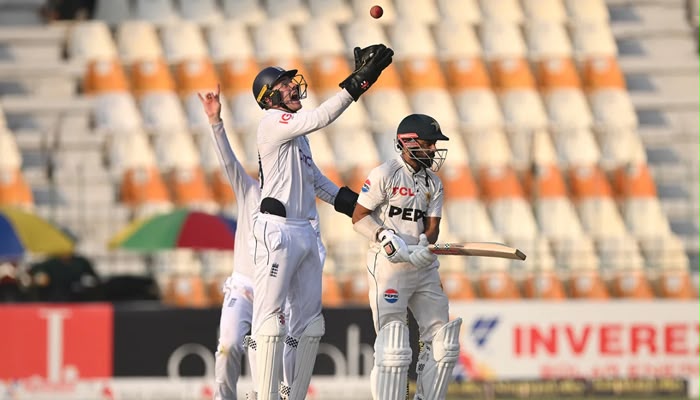
Suffering an innings defeat despite scoring 556 runs was not merely a case of poor bowling performance; it raised fundamental questions about Pakistan’s planning, ability to read the game, capacity to build pressure, and aptitude for adapting strategies to changing conditions. When a team finds itself so helpless in a match despite posting over 550 runs in its first innings, the problem clearly extends beyond any single bowler or batsman.
Pakistan cricket against Bangladesh
The defeats against Bangladesh have exposed yet another alarming dimension of the decline in Pakistan cricket. There was a time when Bangladesh viewed a match against Pakistan as a contest against a formidable team; however, in 2024, they defeated Pakistan 2-0 in a Test series on home soil and subsequently beat them 2-0 in 2026 as well. Consequently, Pakistan has lost four consecutive Test matches to Bangladesh. By winning successive series against Pakistan, Bangladesh has demonstrated that past reputation and historical superiority hold no weight on the field of play.
This situation is particularly concerning because Bangladesh has worked on its traditional shortcomings—improving its fast bowling and addressing specific weaknesses while integrating young players—whereas Pakistan has remained caught in a dilemma over whether to continue relying on past stars or to build a new team. While Pakistan certainly possesses talent, the system responsible for translating that talent into consistent international performance is now facing serious scrutiny.
USA and Pakistan in the T20 World Cup
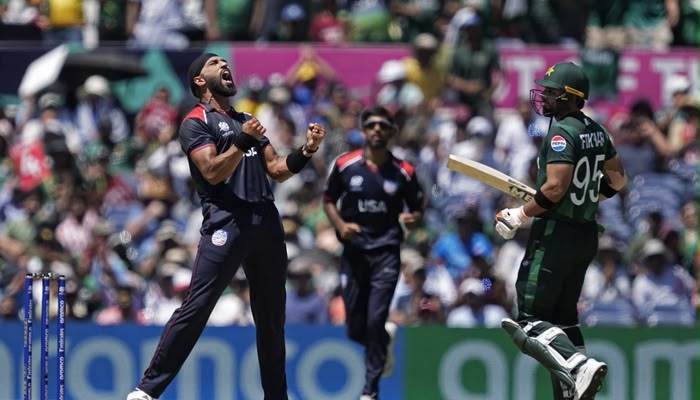
Pakistan’s defeat at the hands of the USA in the 2024 T20 World Cup was initially labeled a major upset; however, such a label is only justified if the team subsequently rectifies its shortcomings. Pakistan failed to advance to the next stage of that tournament and, two years later, also failed to reach the semi-finals of the 2026 T20 World Cup. Between these two global events, Pakistan changed captains and coaching setups and shuffled the squad, yet fundamental weaknesses persisted—specifically, the inability to handle pressure in major tournaments, score runs at the required pace, and make the right decisions at crucial moments.The question is not why Pakistan does not win every World Cup; the question is why, in major tournaments, Pakistan consistently finds itself in a position where, during the final stages, it has to rely on the results of other teams, complex calculations, or extraordinary performances.
Pakistan’s performance against New Zealand
Pakistan’s performance in several recent matches against New Zealand reflects this very issue. In one T20 match, Pakistan was bowled out for just 91 runs, whereas in another, New Zealand amassed 92 runs in the first six overs alone. In modern T20 cricket, the opening six overs are the most crucial part of any team’s strategy; the batting side aims to maximize scoring opportunities, while the bowling side strives to contain the damage. If Pakistan fails to score runs during these opening overs while the opposing team—at that same stage—Conceding 92 runs would be seen not merely as a single day of poor bowling, but as a sign of failure to grasp the evolving demands of the game. The string of consecutive losses to New Zealand over recent years makes the question even more pressing: what exactly has Pakistan learned from these defeats?
Pakistan’s performance in the Champions Trophy
The Champions Trophy once again brought this very question to the fore. Pakistan had the opportunity to play a major global tournament on home soil, yet the team failed to win a single match and did not make it to the semi-finals. This failure was significant not merely because of the results, but also because Pakistan’s batting often appeared out of sync with the pace of modern One Day cricket. Issues such as a lack of necessary aggression during the powerplay, difficulty maintaining the run rate in the middle overs, and immense pressure in the closing overs kept recurring. When the same weakness manifests repeatedly across different series and against various opponents, it can hardly be dismissed as a coincidence.

This is where the most questions arise regarding Pakistan’s selection policy. After all, on what basis are players selected for the national team? Is current form the primary criterion? Does performance in domestic cricket truly play a decisive role? Is a player’s specific role considered, or is greater importance attached to their fame and past record? Successful teams around the world first determine their needs and the required roles, then select the players best suited for those roles; in contrast, the impression often created in Pakistan is that players are selected first, and a suitable role is sought for them afterward.
This is why Pakistan must now make a fundamental decision: should the national team be built around names from the past or based on future requirements? A player’s greatness or past achievements do not place them beyond scrutiny. While Babar Azam, Mohammad Rizwan, Shaheen Shah Afridi, Naseem Shah, or any other senior player may be assets to Pakistan cricket, a permanent spot in the national team should be determined by current performance and team needs rather than past records. Big names deserve respect, but a place in the national team is not guaranteed.
The debate surrounding Babar Azam
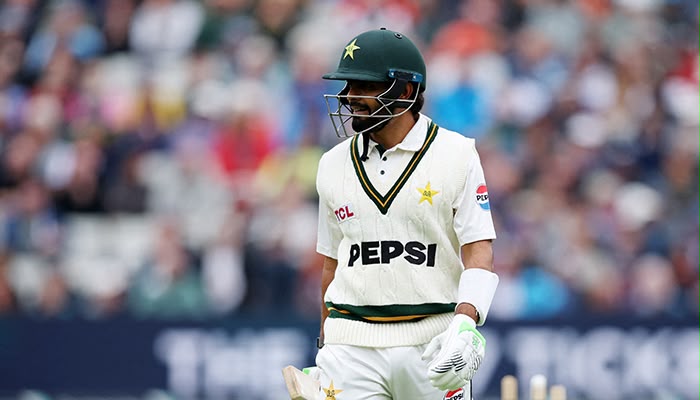
In this context, the debate surrounding Babar Azam needs to be viewed through the lens of performance rather than emotion. Babar ranks among Pakistan’s finest batsmen—a fact attested to by his world records—yet questioning his current form and role within the team constitutes professional accountability rather than a campaign against the player. The fundamental question, then, is: what role does Pakistan expect Babar to fulfill, and does the current composition of the Test or T20 team effectively leverage that role?
Legendary former captain and fast bowler Wasim Akram
Wasim Akram, Pakistan’s legendary former captain and fast bowler, has also expressed profound disappointment regarding the current situation. During the recent series against England, he remarked that he had anticipated Pakistan might lose the series 3–0; he also raised questions about the overall structure of Pakistan cricket, the prevalence of short-sighted thinking, and the culture of constant changes. When one of Pakistan’s greatest former players voices such deep disappointment about the national team, it cannot simply be dismissed as an emotional comment from a former athlete. It is a symptom of the crisis of confidence that has now enveloped Pakistan cricket.
The Coaching Crisis
The issue of coaching is also part of this crisis. Experienced foreign coaches like Gary Kirsten and Jason Gillespie were brought in for long-term planning, yet neither could remain part of the system for long. Subsequently, interim arrangements were made, coaching staff was changed, and questions persisted regarding the scope and authority of decision-making. Achieving sustained success in any sport requires more than just appointing a coach; they must be granted authority, clear responsibilities, and the time to implement their strategies. If the team’s mindset, selection, and strategy shift every time the coach changes, then instead of building a cohesive long-term squad, every series turns into a fresh experiment.
The recent England series has further highlighted this crisis.
The recent series against England further highlighted this crisis. Pakistan lost the series 3-0, and during that time, sweeping changes were made to the team: several players were sent home, and the coaching staff was reshuffled. The question arises: if such drastic changes became necessary during the series itself, on what basis was the preparation conducted beforehand? Who selected the squad? Who assessed the players’ fitness and form? Who devised the strategy? And if all of that was flawed, who bears the responsibility for that failure?
Amidst this entire situation, there is one aspect that offers a glimmer of hope. In the third Test against England, young Razaullah played an aggressive innings of 81 runs, demonstrating that Pakistan still possesses players capable of playing fearless cricket. The nine sixes and four fours in that innings reflect the mindset required in modern cricket. The question is not how a youngster managed to score 81 runs in a single innings; rather, the question is why Pakistan has to wait for such a feat from a young player before giving them a regular opportunity in the national team.If a youngster can play aggressive cricket against a strong English attack—free from pressure—in his very first Test, then perhaps the issue is not a lack of talent among young players, but rather a lack of confidence, clearly defined roles, and consistent opportunities.
The biggest tragedy of Pakistan cricket
Perhaps the greatest tragedy of Pakistan cricket is that, following every defeat, we seek out a single individual to hold responsible—believing that by doing so, the issue is resolved. Sometimes the captain becomes the scapegoat; at other times, it is the coach, the selection committee, or one or two players. Yet, if the team continues to lose despite changing the captain, if the same flaws persist despite changing the coach, if the same controversies arise despite changing the selection committee, and if results remain unchanged despite swapping players, then the problem likely transcends these individuals—the problem lies within the system itself.
Responsibilities of the captain, coach, selectors, and the board.
Pakistan cricket no longer needs another interim coach, another ad-hoc selection committee, or another hasty “reset.” What it requires is a clear cricket policy spanning at least four to five years—one that entails distinct strategies for Test, ODI, and T20 formats; establishes clear, measurable selection criteria; aligns domestic cricket with the national team’s needs; defines player roles in advance; and clearly delineates the responsibilities of the captain, coach, selectors, and the board. Above all, there must be a genuine performance review following every major tournament and tour to determine where errors occurred, who made the decisions, and who bears the responsibility for rectifying them.
See more: The System in the Dock
Pakistan cricket still possesses talent and fans today.
Pakistan cricket still possesses talent, a dedicated fan base, and immense passion, along with a vast global audience. What has faltered, however, is confidence, consistency, and direction. To transform Pakistan back into a world-class team, the first step is perhaps to acknowledge that the defeats suffered over the past several years were not merely a matter of bad luck. While some losses were undoubtedly part of the game or the result of exceptional performances by opponents, the repeated emergence of the same weaknesses against diverse rivals—such as Ireland, the USA, Bangladesh, Afghanistan, New Zealand, and England—means that attributing these outcomes to fate is simply an attempt to evade reality.
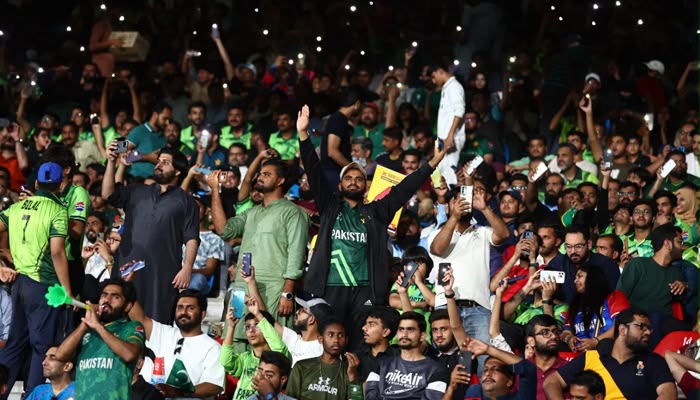
How long will Pakistan cricket continue to merely change faces after every failure? How long will a new captain be expected to deliver results without being provided a stable team, a clear selection policy, or a long-term strategy? How long will a big name be fielded simply because they were once a star player, while a youngster is kept out merely because they do not yet have a big name?
Pakistan must now decide whether it wants to build a team based on big names or one based on performance.
The issue is not why Pakistan loses—even the greatest teams lose. The problem is that Pakistan loses in the same way time and again, yet acts each time as if it has only just become aware of its weakness.
Throughout the unfolding saga of the past several years, rivals, formats, captains, coaches, and selectors have all changed, yet the fundamental weaknesses of Pakistan cricket have remained constant. If this reality is not acknowledged now, the next defeat will be just another loss; however, it would be dishonest to place the blame for every subsequent defeat solely on the eleven players on the field.
Pakistan cricket needs a new direction more than a new captain, a consistent philosophy more than a new coach, and—more than a new selection committee—a system where merit, performance, and accountability are not merely words but the foundation of decisions.
Otherwise, the danger is not that Pakistan might lose a few more matches; the real danger is that defeat will permanently alienate Pakistan cricket from its fans.