Protests in Azerbaijan: Children oppose the hijab ban
In Azerbaijan, unusual protests by children have erupted following the barring of female students who cover their heads from entering schools. Since government regulations make no mention of the hijab, why are schools enforcing unwritten restrictions?
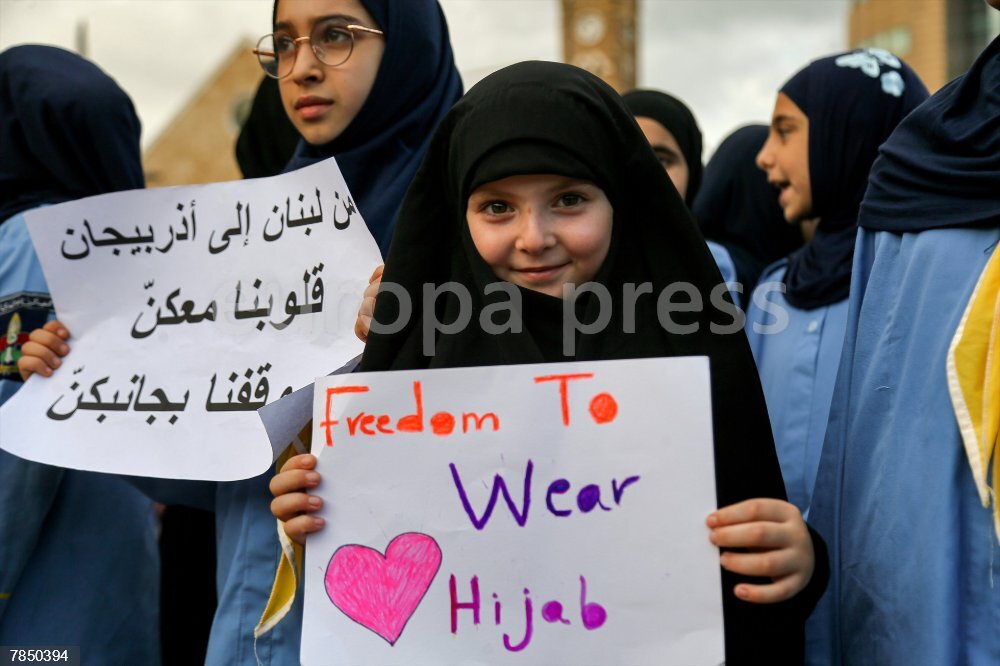
Unusual protests have been ongoing for about a week across various regions of Azerbaijan. Students are demonstrating against a ban on covering their heads in schools. Among those protesting outside the schools are female students wearing the hijab, while other students—including boys—are standing alongside them to show solidarity with their classmates.
In this country, where the police typically disperse public protests, demonstrations are already rare. However, there is no precedent in Azerbaijan for protests involving the participation of children. As videos of the protests began to circulate on social media, access to Instagram and TikTok within the country was disrupted—an indication of how seriously the authorities are taking this matter. Internet monitoring organizations documented these restrictions on access, though the authorities provided no explanation for them.
Government interpretation of the ban on the hijab
This dispute has emerged following a number of legal changes. On July 7, Azerbaijan amended the Law on General Education, placing greater emphasis on the principle of secular education and making adherence to prescribed dress codes mandatory for both students and teachers. On September 21, the government adopted Resolution No. 309, which further tightened the regulations regarding school uniforms.
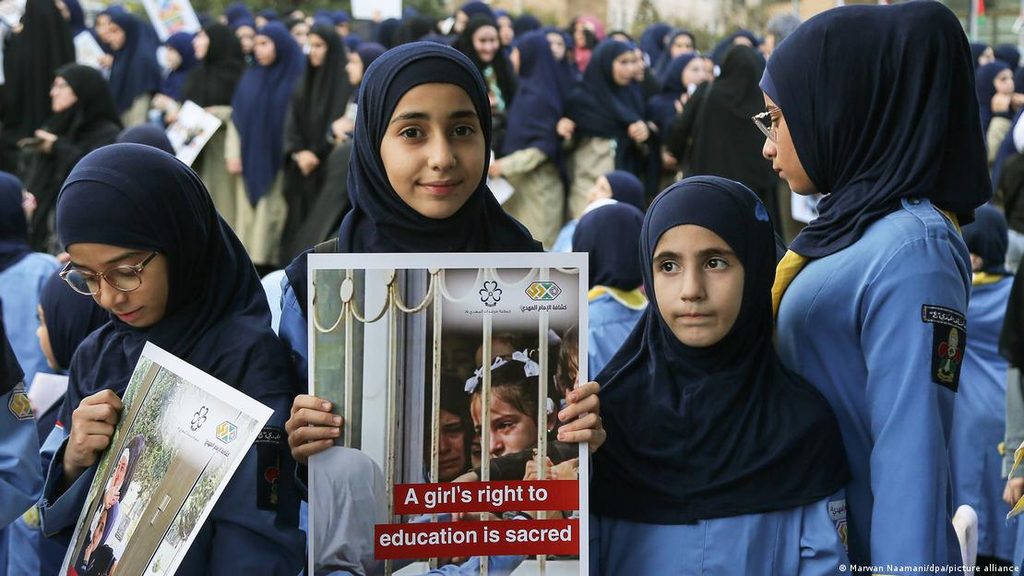
This resolution prohibits any additional attire that disrupts the uniformity of the prescribed uniform or conflicts with secular education. It does not explicitly mention headscarves, nor does it instruct schools to deny admission to female students who wear the hijab. Nevertheless, some school administrators, interpreting these regulations as applicable to the hijab as well, have turned away female students who arrived with their heads covered. According to the regulations, the responsibility for addressing matters related to compliance rests with the teaching council of each school.
On October 6, a separate decision established dress requirements for teachers. Subsequently, reports emerged indicating that female teachers who wear the hijab are being prevented from teaching.
Secular Education and Religious Freedom
The majority of Azerbaijan’s population is Muslim; however, Article 18 of the country’s constitution mandates the separation of religion from the state and requires that public education be secular. Articles 42 and 48 of the constitution guarantee the right to education.
Proponents of the school policies argue that uniform dress codes should apply to all students. Conversely, critics contend that denying female students access to education on the basis of their religious attire constitutes a violation of their rights. Opinions on this issue do not align with traditional political divisions; some critics of the government support these restrictions, while some non-religious citizens oppose them. Protests against the ban on the hijab in schools took place in 2010 and in the years that followed.
Impacts on families and teachers
According to a teacher in Baku with forty years of experience in teaching literature, female students wearing the hijab were not permitted to enter classrooms at his school. Some removed their head coverings, while others returned home or expressed a desire to pursue their education from home. The teacher, who chose to remain anonymous, provided only his initials—M.C. He supported the enforcement of the school uniform policy, arguing that children are too young to make decisions regarding religious attire.
A parent, identified as D.A., told DW that this is not a nationwide ban on the hijab, but rather a matter concerning school uniforms. Another parent, who opposed the restrictions, withdrew their interview prior to publication.
Saraf Jabbarov, a Facebook user from Baku, wrote on his social media account that his daughter, Sevil, was dismissed from her job after she refused to remove her hijab. Sevil was a primary school teacher in the capital of Azerbaijan. He also shared a school directive, which contained a written warning issued to his daughter under new dress code regulations.
Arrests and reactions in Azerbaijan
On October 12, the Ministry of Interior announced that 37 individuals had been taken into custody in connection with the protests. According to a statement from the Ministry, these individuals confronted school staff, damaged property, and attempted to disrupt school activities as well as the flow of traffic. A criminal case was registered under Section 233, which pertains to the disturbance of public order. The Ministry did not disclose the identities of those detained, nor did it specify whether any children were among them.
Artist and social activist Ilkin Huseynov went missing after launching an initiative to connect students affected by the restrictions with volunteer tutors. Local media, citing sources close to him, later reported that he had been sentenced to 30 days of administrative detention for an alleged violation of police orders.
Some observers have linked the new school uniform regulations to efforts by the Azerbaijani government aimed at countering the influence of neighboring Iran, as well as the growing power of religious groups within the country. This perspective is also reflected—albeit implicitly, without explicitly naming Iran—in statements made by government officials.
Fazil Mustafa, head of the parliamentary committee on public associations and religious organizations in Azerbaijan, stated that authorities are concerned about religious groups that draw inspiration from abroad. He also defended the school regulations. Allahshukur Pashazade, head of the Caucasus Muslim Board, likewise warned against foreign interference, while emphasizing the need for a peaceful resolution to the issue.In this matter, no independent verification of any alleged foreign interference has been possible.
The international human rights organization Amnesty International has condemned the exclusion of hijab-wearing female students from schools and demanded the release of all individuals detained solely for engaging in peaceful protest.
The conflict has reached Turkey.
Criticism regarding this dispute has also emerged in Turkey, a close ally of Azerbaijan. On October 3, protesters gathered outside the Azerbaijani consulate in Istanbul. Oktay Saral, an advisor to Turkish President Recep Tayyip Erdoğan, criticized the restrictions, stating that depriving students who wear the hijab of an education is unacceptable. In response, Azerbaijan’s ruling New Azerbaijan Party asserted that close relations do not justify interference in the country’s internal affairs.