Major potential cause discovered for the spread of the most common liver disease.
Fatty liver disease is a chronic condition affecting millions of people worldwide.

It is commonly referred to as “non-alcoholic fatty liver disease” and is the most prevalent type of liver disease.
In this condition, the liver begins to store excessive amounts of fat; if left untreated, liver function can cease.
This liver disease also increases the risk of metabolic disorders, such as type 2 diabetes and obesity.
One of the key reasons for its rapid spread has now been discovered.
In fact, minute particles released from polyethylene—the most common type of plastic—are likely contributing to the prevalence of fatty liver disease.
This finding emerged from a medical study conducted in the United States.
Research from Texas A&M University indicates that polyethylene is the most widely used type of plastic in the world.
According to research, the tiny particles released from polythene can lead to fatty liver disease, particularly in individuals who consume a poor diet.
This study examined the health impacts associated with polythene.
It is estimated that 25 percent of the global population suffers from fatty liver disease, making it one of the most common medical conditions worldwide.
The study found that polythene particles increase fat accumulation in the liver, and this risk rises significantly if an individual consumes a diet high in fats, sugars, and cholesterol.
The findings indicate that environmental pollution and poor dietary habits exacerbate each other’s negative effects, leading to worsened liver damage.
Researchers noted that frequent consumption of fast food significantly increases the risk of developing fatty liver disease.
They stated that these results are unexpected because, traditionally, polyethylene has not been considered particularly harmful to biological systems.
They further stated that the results clearly show polythene affects liver function more significantly than expected.
The findings of this study were published in the journal Science Advances.
It is worth noting that a healthy liver contains very little fat, and even a slight increase is considered a sign of disease.
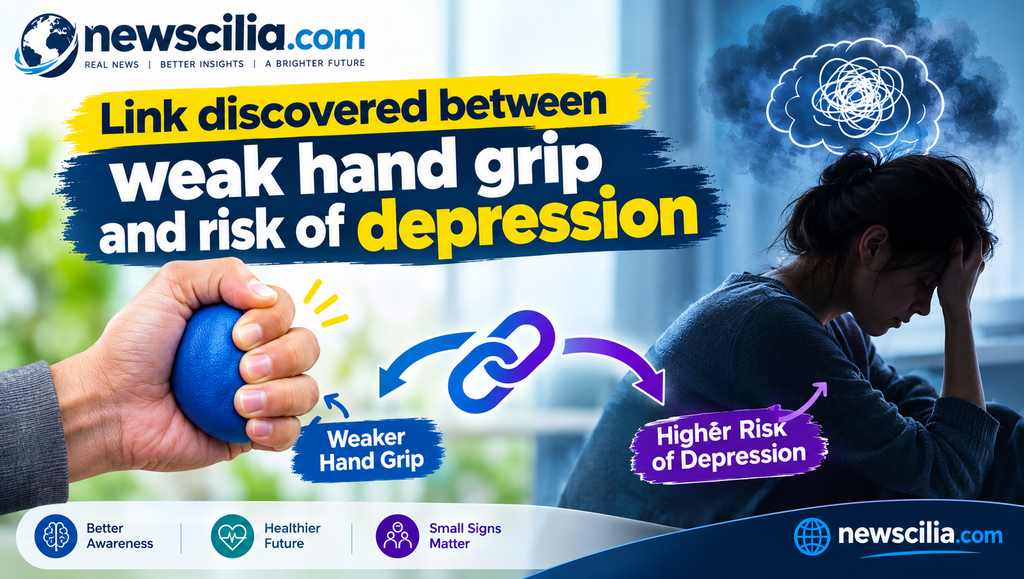
Link discovered between weak hand grip and risk of depression
You have likely never given much thought to your hand grip strength.
It is not something most people care to test or monitor.
However, there are indications that it warrants attention, as it offers insights into mental health.
Research published in the journal ScienceDirect has found that weak hand grip strength points to a higher risk of depression.
This study analyzed data from 12 research reports involving approximately 500,000 individuals from 14 countries.
At the start of the studies, the participants were free from depression.
Handgrip strength has long been used as an indicator of overall muscle health, while a weak grip is associated with various medical conditions, such as heart disease.
However, this new study examined the relationship between weak handgrip strength and mental health.
Handgrip strength has long been used as an indicator of overall muscle health, while a weak grip has been linked to various medical conditions, such as heart disease.
However, this new study examined the relationship between weak handgrip strength and brain health.
The results revealed that individuals with weak hand grip strength face a 26% to 42% higher risk of developing depression over time.
According to researchers, while weak hand grip alone does not necessarily indicate that one will develop depression, it does suggest that a decline in overall health increases the risk of the condition.
According to researchers, various studies have discovered a link between a strong hand grip and improved brain function—specifically, an increase in the volume of the hippocampus.
This is the part of the brain that plays a central role in regulating mood.
Researchers have stated that hand grip strength provides insight into the state of one’s mental health.
They further noted that good muscle strength is an indicator of overall good health and a lower risk of chronic diseases, which in turn benefits mental health.
It is worth noting that depression is a complex mental health condition; those affected often experience persistent sadness and a constant sense of helplessness.
However, depression is not a condition confined solely to the brain; it also affects the body.
This is a mental health condition affecting people of all ages in the modern era.
Earlier, a study conducted by the University of Castilla-La Mancha in Spain in December 2024 revealed that walking not only improves physical fitness but also benefits the brain.
The study indicated that the more steps one takes daily, the greater the reduction in symptoms of depression.
The research involved analyzing data from 33 studies covering more than 96,000 individuals from around the world.
The relationship between the walking habits of these individuals and the impact on their mental health was examined.
The findings revealed that even by walking a relatively small number of steps daily, you can reduce the risk of developing depression.
The study indicated that individuals who walk 5,000 steps a day experience fewer symptoms of depression.
According to research, you can reduce the risk of depression by 9% for every additional 1,000 steps you walk.
Walking 7,000 steps daily can lower the risk of depression by 31%, while walking 7,500 steps can reduce it by up to 43%.
The study indicates that people of all ages benefit from this.