What is Turkey going to do to help Saudi Arabia?
In light of the escalating Houthi attacks on Saudi Arabia, Turkey is considering various options to assist Riyadh under a joint defense arrangement.
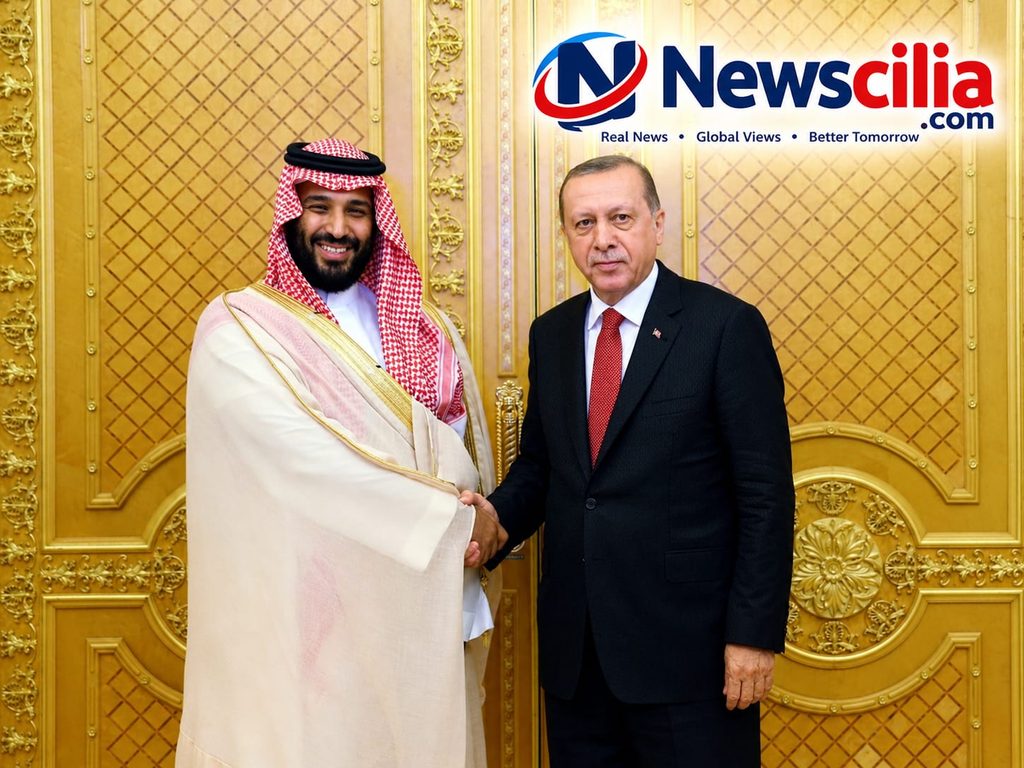
In a statement issued on Thursday, the Turkish Ministry of National Defense indicated that the specific options for potential military support—to be provided under agreements reached with Saudi Arabia and Pakistan—will be determined based on operational requirements, following the completion of the necessary constitutional processes and approval by the Grand National Assembly of Turkey.
In this context, Ankara’s priorities are, first, to secure parliamentary approval for the joint defense agreement, and subsequently, to resubmit the resolution authorizing the deployment of troops abroad for parliamentary ratification.
Meanwhile, there is a plan to define the scope of support to be provided in alignment with the needs and demands of Saudi Arabia.
A key option involves activating air defense systems and other military logistical capabilities to bolster Saudi Arabia’s defensive capacity.
Military support from Saudi Arabia
Clashes between the Houthis and Saudi Arabia have intensified, particularly over the past two weeks.
In these clashes, Saudi Arabia’s energy infrastructure and airports, as well as certain holy sites, have been targeted.
Several countries, including Turkey and Pakistan, have responded to the attacks by the Iranian-backed Houthis.
On October 7, while answering questions from journalists at the White House, U.S. President Donald Trump—addressing a query regarding the decision by “both countries” to provide military support to Saudi Arabia—remarked: “I think they want to help Saudi Arabia, and that is a good thing.”
Turkey has specifically included the provision of military support to Saudi Arabia—within the framework of the ‘Mecca Alliance’—on its agenda.
President Recep Tayyip Erdoğan and Foreign Minister Hakan Fidan have made it clear, through their statements, that there is a strong political commitment in Ankara to provide this support.
In a telephone conversation with Saudi Crown Prince Mohammed bin Salman on October 13, Erdoğan stated that Türkiye would stand by Saudi Arabia.
The process regarding potential support for Saudi Arabia is being handled by the Ministry of Foreign Affairs and the Ministry of Defense.
The legal process will be completed first.
In a statement issued on Thursday, the Ministry of National Defence outlined a legal and military roadmap regarding the modalities for providing assistance to Saudi Arabia.
The Ministry’s statement indicates that the process concerning the potential military capabilities and assets to be provided by Türkiye to Saudi Arabia will be carried out in accordance with constitutional provisions.
To this end, it is necessary to first secure the Turkish Parliament’s approval of the joint defence agreement, followed by the ratification of a resolution authorizing the deployment of the Turkish Armed Forces abroad.
Article 92 of the Constitution of the Republic of Turkey stipulates that the authority to send Turkish armed forces abroad, or to station foreign forces within Turkey, rests with the Turkish Parliament.
President Erdoğan also stated on October 12 that the agreement would be presented to Parliament in the coming days.
A simple majority is sufficient for the approval of the agreement and the resolution by Parliament.
Regarding how military support will be determined once the legal process is complete, the Ministry of National Defense stated:
The principles governing the scope of potential cooperation will be determined based on assessments by our respective institutions and the consensus reached between the parties, while taking into account Saudi Arabia’s needs and demands, developments on the ground, and operational requirements.
A direct confrontation with the Houthis is not expected.
According to assessments in Ankara, Turkey’s cooperation with Saudi Arabia will primarily focus on enhancing the latter’s defense capabilities. Specifically, priority will be given to air defense, logistics, and intelligence support.
A statement made by Foreign Minister Hakan Fidan on October 8th serves as a key reflection of Ankara’s position in this regard.
Fidan stated: “The Makkah Agreement is a defense agreement; it is not an agreement for launching attacks. If a party to the agreement comes under attack, you stand by them for their defense.”
He further added, “Turkey will not launch any attacks by sending troops onto the territory of another country.”
For Turkey, Pakistan, and Saudi Arabia, joint defense and the capacity to deter enemy attacks are key priorities within the Makkah Alliance.
Furthermore, the agreement among the three nations—much like Article 5 of NATO—incorporates the principle that an attack on any one member shall be considered an attack on all allies.
The primary decision-making body of the Makkah Alliance is the Strategic Political and Defense Committee (SSSK).
During a meeting held on October 5, this committee decided to provide immediate military support to Saudi Arabia.
However, it is being suggested that measures concerning military support may take some time, given that the alliance is very new and its institutional processes are not yet fully established.
It is expected that, by the time of the next meeting of the Strategic, Political, and Defence Committee, the parties will have further solidified their consultations regarding military support.
Developments on the ground could affect Ankara’s cooperation.
Clashes between Saudi Arabia and the Houthis—who control large parts of Yemen—have been occurring intermittently since 2014.
Efforts by the Houthis to restrict the movement of tankers through the Bab el-Mandeb Strait—particularly within the context of the conflict involving the US/Israel and Iran—have highlighted the international dimension of the Saudi-Houthi conflict.
Reports have emerged in the American media suggesting that Washington, in coordination with Riyadh, is considering launching military action against the Houthis, while Israel is also evaluating options such as providing intelligence and military support.
A statement from the Ministry of National Defense indicated that “developments on the ground” would be taken into account when determining the scope of cooperation.
Turkey may conduct a final assessment regarding its potential military involvement by taking all these options into consideration.
Dialogue with Iran also continues
In this process, Turkey is also mindful of another important balance: avoiding potential tension in the relationship between Ankara and Tehran.
On October 12, President Erdoğan stated: “Turkey’s position, its sensitivities, and the principles we uphold are all clear. We never view events through an ethnic or sectarian lens.”
Erdoğan further added: “May peace and stability prevail throughout our entire region. Moving forward, we will continue to champion peace—grounded in our regional responsibilities—and persist in our efforts to foster it.”
In a telephone conversation on October 13 with Iranian Foreign Minister Abbas Araghchi, Foreign Minister Fidan discussed the measures required to de-escalate rising tensions in the region.
Discussions between officials from the two countries regarding regional developments are expected to continue in the coming period.