
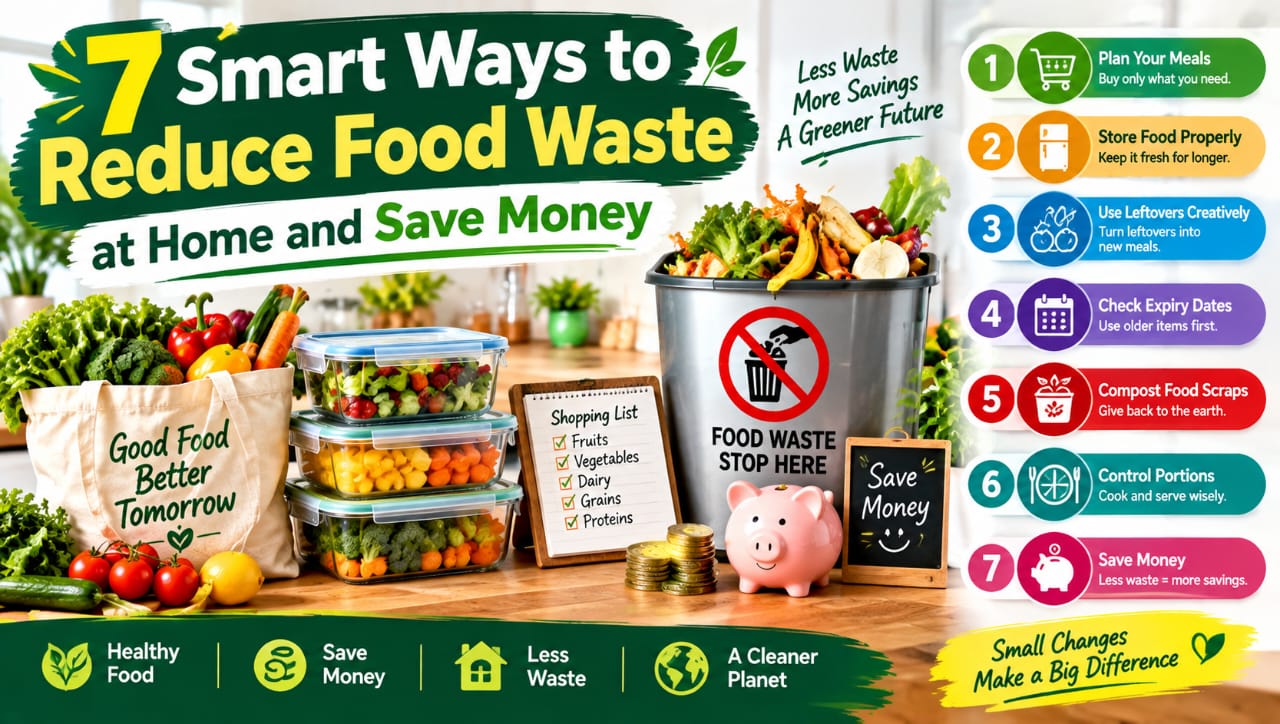
Ways to reduce food waste at home can help families save money, manage groceries better, and create a more sustainable kitchen. Simple changes in shopping, cooking, storage, and meal planning can prevent edible food from ending up in the trash.
Ways to reduce food waste at home are not complicated or expensive. By understanding what you already have, buying appropriate quantities, storing food correctly, and using leftovers creatively, you can reduce household food waste while making your grocery budget go further.
Food Waste & Household Waste
Food waste includes edible food, spoiled ingredients, food scraps, and meals that are prepared but never eaten. Household food waste can increase when people buy more than they need, forget food in the refrigerator, or prepare oversized portions.
Ways to reduce food waste at home begin with becoming aware of what gets thrown away. Keep track of wasted food for one week and identify common problems, such as unused vegetables, forgotten leftovers, expired products, or excessive portions.
Reducing household waste is useful for both your budget and the environment. Food production requires land, water, energy, labor, transportation, and other resources. When food is wasted, many of those resources are wasted as well.
Meal Planning & Smart Shopping
Meal planning is one of the simplest ways to control grocery spending and prevent unnecessary purchases. Before visiting a store, plan several meals around ingredients you already have in your pantry, refrigerator, and freezer.
Ways to reduce food waste at home include preparing a shopping list based on planned meals. A list helps you focus on necessary products instead of buying items because they look attractive or are temporarily discounted.
Check your refrigerator inventory and pantry planning before every major grocery trip. Look for ingredients that need to be used soon and build meals around them. This approach can prevent forgotten food from sitting unused until it spoils.
Food Storage & Freshness
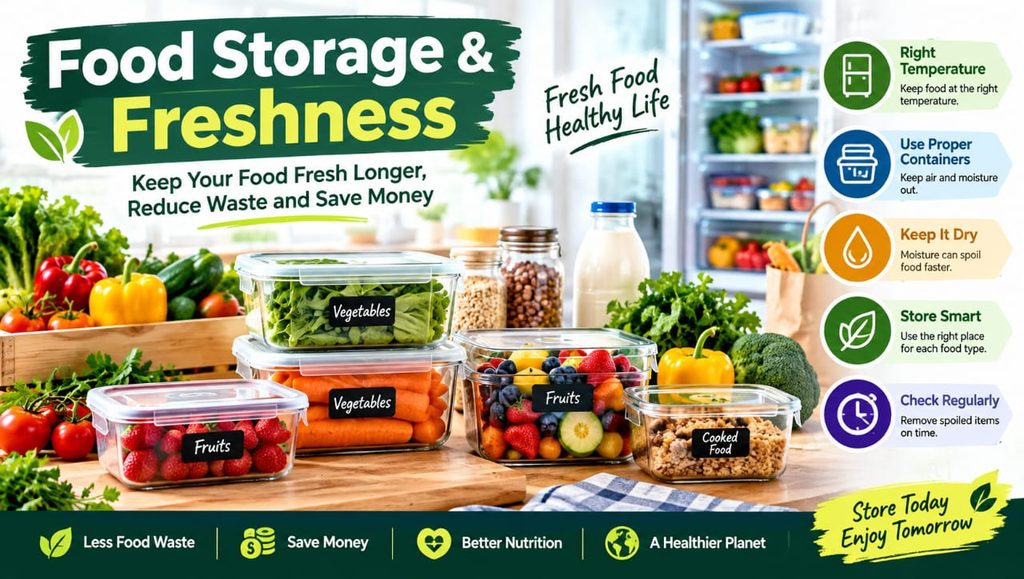
Proper food storage can significantly extend the shelf life of many ingredients. Refrigerate foods that require cooling, keep dry products in cool areas, and use airtight containers for ingredients that lose freshness quickly.
Ways to reduce food waste at home also involve organizing your refrigerator and pantry. Keep older products where they are easy to see and place newer purchases behind them. This encourages a simple first-in, first-out storage habit.
Reusable containers can protect leftovers and prepared ingredients from air and moisture. Labeling containers with storage dates can also help you remember when food was prepared or opened.
Fresh produce often requires different storage conditions. Some fruits and vegetables benefit from refrigeration, while others are better kept in a cool, dry location. Learning basic produce storage can help prevent premature spoilage.
Leftovers & Food Repurposing
Leftovers are valuable ingredients rather than waste. Instead of throwing away extra food after dinner, store it safely and plan when it will be eaten. A leftover meal can become the foundation of lunch or another dinner.
Ways to reduce food waste at home include repurposing leftovers into completely different meals. Cooked vegetables can be added to soups, casseroles, stir fries, sauces, or frittatas.
Extra grains can become fried rice, grain bowls, or fillings. Leftover meat can be added to sandwiches, wraps, soups, and salads. Soft fruits can be blended into smoothies or used in pancakes and baked goods.
Cooking & Portion Control
Portion control is another practical method for reducing food waste. Cooking too much food can leave large quantities sitting in the refrigerator, especially when family members have different eating preferences.
Ways to reduce food waste at home include starting with reasonable serving sizes. You can always serve more if someone is still hungry, while avoiding oversized servings that may be left uneaten.
When preparing meals, measure ingredients according to the number of people eating. This is particularly useful for rice, pasta, grains, meat, and other foods that are easy to prepare in excessive quantities.
Fruits, Vegetables & Imperfect Produce
Imperfect produce is often avoided because of unusual shapes, minor bruises, or cosmetic differences. However, appearance does not automatically determine whether fruits and vegetables are useful or suitable for eating.
Ways to reduce food waste at home include purchasing imperfect produce when it is fresh and safe to consume. Oddly shaped vegetables and mature fruits can be used in everyday meals just like visually perfect produce.
Bruised fruit can sometimes be trimmed and used in smoothies, sauces, jams, or baked goods. Overripe bananas, for example, can work well in pancakes and breads when they remain safe to eat.
Food Dates & Expiration Labels
Food labels can sometimes cause unnecessary disposal when consumers misunderstand what different dates mean. Terms such as best-before, best-by, sell-by, and use-by can have different purposes depending on the product and local regulations.
Ways to reduce food waste at home include checking food labels carefully rather than automatically throwing away every item that has reached a printed date. For safety-sensitive foods, follow appropriate food-safety guidance and storage instructions.
A best-before date may relate primarily to expected quality, while a use-by date can have stronger safety implications for particular foods. Because labeling practices vary, consumers should understand the meaning of dates used in their region.
Freezing & Food Preservation
Freezing is a useful way to preserve food that cannot be consumed immediately. Many leftovers, fruits, vegetables, bread products, and prepared meals can be frozen when handled and packaged appropriately.
Ways to reduce food waste at home include freezing food before it reaches the point where it may spoil. Divide large quantities into practical portions so you can thaw only what you expect to eat.
Use freezer-safe containers or packaging and label each portion with the contents and storage date. Good freezer organization makes it easier to find older food before preparing something new.
Composting & Organic Food Scraps
Not every food scrap can be avoided. Peels, cores, certain vegetable trimmings, and other organic scraps may remain after careful cooking. Composting can provide a useful option for appropriate food waste.
Ways to reduce food waste at home include separating compostable organic scraps from general household waste. A suitable composting system can turn many food scraps into organic matter that supports soil health.
Home composting can help reduce the amount of organic material sent to landfills. When organic waste decomposes under landfill conditions, it can contribute to methane emissions, a greenhouse gas associated with environmental impacts.
Food Sharing & Donation
Sometimes households have safe, edible food that they cannot use before it becomes unnecessary. Sharing surplus food with family members, friends, neighbors, or appropriate community organizations can prevent usable food from being wasted.
Ways to reduce food waste at home include checking whether someone else can use excess food before throwing it away. This can be especially helpful after gatherings, celebrations, or occasions when more food was prepared than expected.
Food donation can also support community food programs when donated products meet their acceptance and safety requirements. Before donating, check the organization’s rules about packaging, freshness, prepared meals, and perishable foods.
Sustainable Food Choices
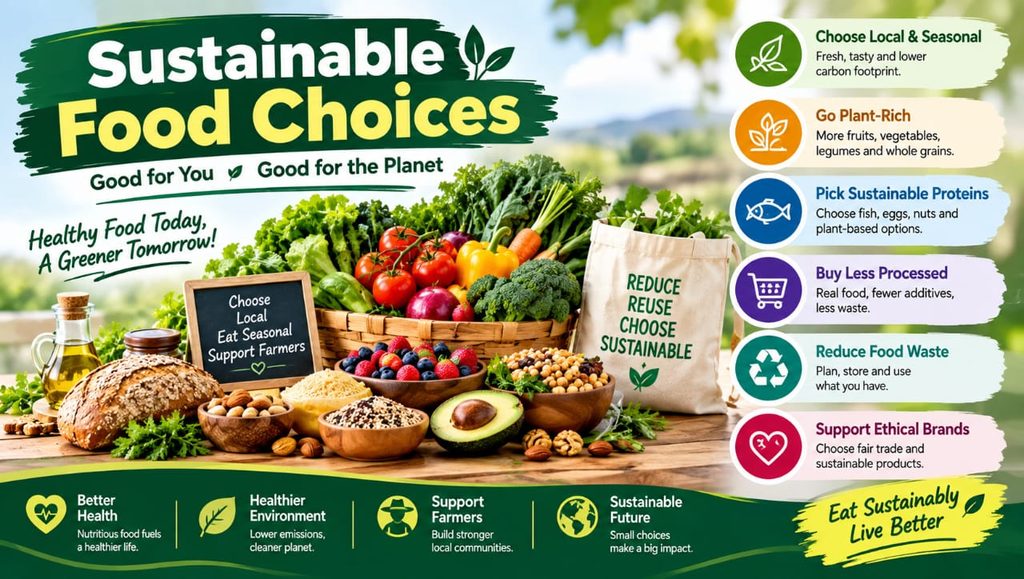
Sustainable food choices can influence both household expenses and environmental impact. Planning meals around available ingredients, choosing seasonal foods, and using food efficiently can support a lower-waste lifestyle.
Ways to reduce food waste at home include buying foods that match your household’s actual eating habits. If certain products repeatedly remain unused, consider purchasing smaller quantities or replacing them with foods your family regularly enjoys.
Plant-based foods such as pulses, vegetables, grains, fruits, and legumes can be incorporated into many affordable meals. Local produce may also provide convenient options depending on availability, season, and location.
Environmental Impact of Food Waste
Food waste has an environmental footprint because food production uses natural resources throughout its lifecycle. Agriculture requires land and water, while food processing, packaging, transportation, refrigeration, and distribution also consume energy.
Ways to reduce food waste at home can therefore contribute to resource conservation. When edible food is consumed instead of discarded, the resources invested in producing and transporting that food are used more effectively.
Food that enters landfills can contribute to landfill emissions as organic material decomposes. Reducing unnecessary disposal can therefore be part of broader efforts to lower household environmental impacts.
See more:Ways to reduce food waste at home
Food Waste Reduction Habits
Building consistent kitchen habits makes food waste reduction easier over time. A quick refrigerator check before shopping, regular pantry organization, and planned leftover meals can become simple parts of a weekly routine.
Ways to reduce food waste at home become more effective when the whole household participates. Children and adults can learn to serve reasonable portions, save suitable leftovers, and understand why food should be treated as a valuable resource.
Try keeping a small record of food that is frequently discarded. If you repeatedly throw away the same ingredient, identify the reason. You may be buying too much, storing it incorrectly, forgetting it, or simply not using it in your normal meals.
FAQs
1. What is the easiest way to reduce food waste at home?
One of the easiest approaches is to plan meals before grocery shopping. Check your refrigerator, freezer, and pantry first, then create a shopping list based on what you actually need. This can reduce impulse buying and prevent ingredients from being forgotten.
2. How can I save money by reducing food waste?
You can save money by buying appropriate quantities, using leftovers, freezing surplus food, and preparing meals around ingredients you already have. Reducing wasted groceries means more of the money spent on food provides actual meals.
3. Is freezing food a good way to prevent waste?
Yes, freezing can be useful for many foods when they are stored properly. Leftovers, bread, fruits, vegetables, and prepared meals can often be frozen in suitable portions. Labeling packages with dates can make freezer organization easier.
4. What should I do with unavoidable food scraps?
Suitable organic scraps can often be composted through a home composting system or an appropriate local service. Composting can return nutrients to soil and divert some organic material from landfill disposal.
5. How can families build better food waste habits?
Families can start with simple routines such as checking food before shopping, planning meals, storing ingredients correctly, using leftovers, controlling portions, and keeping track of frequently wasted items. Consistent small actions can create a more sustainable kitchen.






One Comment