
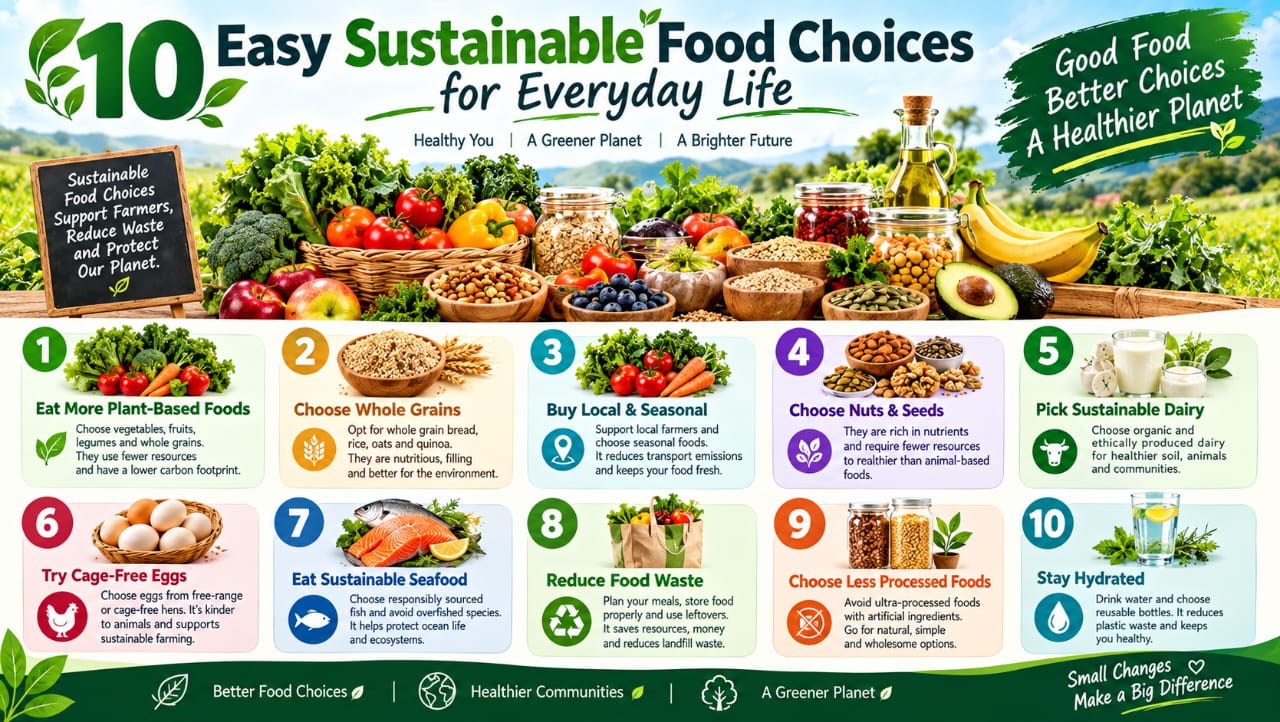
sustainable food choices can make everyday meals healthier while also reducing pressure on natural resources. The food people buy, prepare, and consume can influence farming practices, environmental conditions, food waste, and community wellbeing. Small changes in daily eating habits can create meaningful benefits over time.
Making sustainable food choices does not mean completely changing your diet or spending more money on special products. It can simply involve choosing more seasonal produce, eating more plant-based foods, reducing food waste, and purchasing responsibly produced ingredients when possible.
Sustainable Food & Healthy Eating
A sustainable diet focuses on foods that support both human health and environmental wellbeing. A balanced diet can include vegetables, fruits, whole grains, legumes, nuts, seeds, and other nutritious foods while limiting unnecessary waste and excessive consumption.
Healthy eating and food sustainability can work together. Nutrient-dense foods such as vegetables, pulses, whole grains, and fruits can provide important vitamins, minerals, dietary fiber, antioxidants, and plant nutrients.
Sustainable food choices can also encourage mindful eating. Instead of purchasing food simply because it is heavily promoted, consumers can consider nutritional quality, portion sizes, packaging, origin, and how frequently a product is consumed.
A healthy lifestyle does not require perfection. A person can gradually replace highly processed foods with nutritious foods, increase dietary diversity, and choose ingredients that fit both personal health goals and environmental considerations.
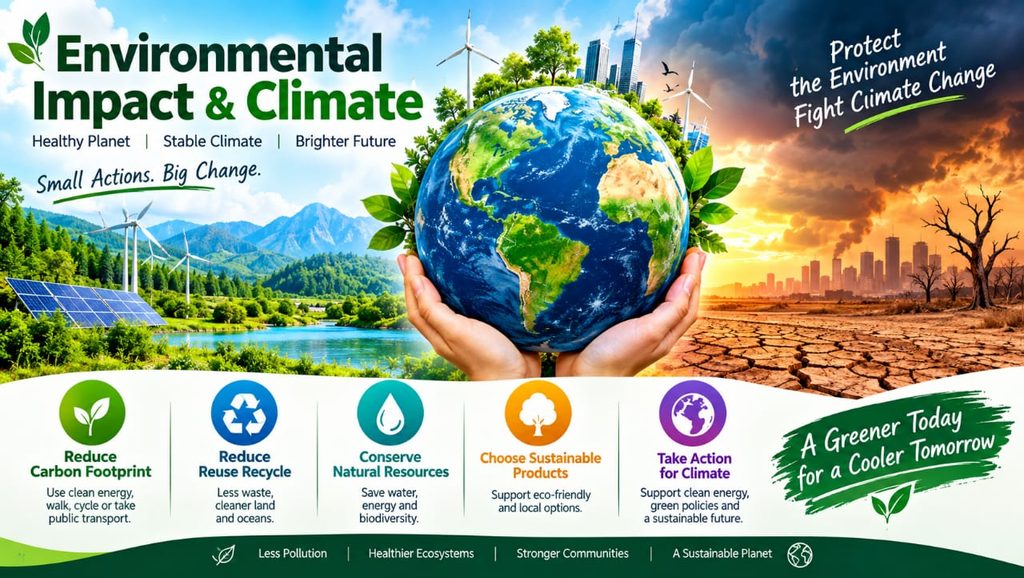
Environmental Impact & Climate
Food production has an environmental impact because agriculture and food supply chains use land, water, energy, and other natural resources. Farming, processing, transportation, refrigeration, and packaging can all contribute to food-related emissions.
Greenhouse gas emissions are associated with different stages of the food system. The amount varies considerably depending on the type of food, production method, location, transportation, storage, and processing involved.
Climate-friendly food choices can help consumers become more aware of their personal food footprint. Low-carbon food options often include more plant-based ingredients and foods that require fewer resources to produce.
Water consumption is another important consideration. Some crops and food products require significant amounts of water, while resource-efficient agriculture can use improved irrigation, soil management, and farming techniques to conserve water.
Sustainable food choices can support climate-conscious eating by encouraging people to think about carbon footprint, land use, energy use, and planetary health when planning regular meals.
Plant-Based & Protein Sources
Plant-based foods can form an important part of a sustainable eating pattern. Vegetables, fruits, whole grains, beans, lentils, chickpeas, peas, nuts, and seeds provide different combinations of protein, fiber, vitamins, minerals, and other nutrients.
Plant proteins can be especially useful for creating affordable and nutritious meals. Pulses and legumes can be added to soups, curries, salads, rice dishes, wraps, and many traditional recipes.
Whole grains and cereals can also contribute to dietary diversity. Foods such as oats, brown rice, whole wheat, barley, and other grains can provide carbohydrates, dietary fiber, minerals, and other nutrients.
Mushrooms, seaweed, algae, and alternative proteins are additional foods receiving attention in discussions about sustainable nutrition. Their environmental impact can differ according to production methods and supply chains.
Sustainable food choices may include replacing some meat-based meals with plant-based alternatives rather than eliminating animal products completely. This flexible approach can make sustainable eating easier for many households.
Local, Seasonal & Diverse Foods
Local food can provide consumers with a closer connection to farmers, producers, markets, and regional food traditions. Buying locally grown food may also support local economies and community food systems.
Seasonal produce is another practical option. Seasonal eating encourages people to purchase fruits and vegetables when they are naturally available in their region, although modern storage and international trade can make many foods available throughout the year.
Local produce may sometimes involve shorter supply chains and fewer food miles, but transportation is only one part of the overall environmental impact. Farming methods, storage, processing, and the type of food also matter.
Diversified crops can support agricultural biodiversity and help reduce dependence on a narrow range of crops. Traditional foods can also contribute to dietary diversity while preserving cultural food knowledge.
Sustainable food choices can therefore include local food, seasonal produce, regional foods, and culturally appropriate ingredients that fit the climate, availability, and eating habits of a community.
Sustainable Agriculture & Food Production
Sustainable agriculture aims to produce food while protecting important natural resources for future generations. Responsible farming can involve practices that improve soil health, conserve water, protect biodiversity, and maintain productive farmland.
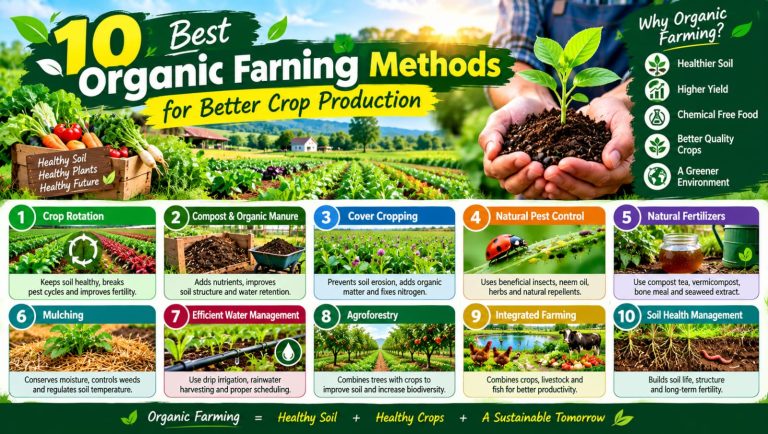
Regenerative agriculture is one approach that focuses strongly on soil health, healthy soil structure, biodiversity, and long-term ecosystem health. Practices can include cover crops, reduced soil disturbance, crop rotation, and diversified farming.
Organic farming uses specific production standards and restrictions on certain synthetic inputs. Organic production can have environmental benefits in some circumstances, but its overall impact depends on crop type, yields, land use, transportation, and other factors.
Natural fertilizers, compost, crop rotation, and integrated farming practices can contribute to soil fertility and resource conservation. Healthy soils can support plant growth, water retention, and agricultural resilience.
Consumers can support sustainable farming practices by learning about how food is produced and considering sustainability information provided by reliable producers, certifications, and transparent supply chains.
Food Waste & Resource Efficiency
Food waste reduction is one of the simplest ways households can improve food efficiency. Throwing away edible food also wastes the water, energy, labor, land, transportation, and money used to produce and deliver it.
Reducing food waste can begin with simple habits. Planning meals, checking existing ingredients before shopping, storing food properly, freezing suitable items, and using leftovers creatively can help households consume more of what they purchase.
Food loss can happen before products reach consumers, while household food waste often occurs because of overbuying, poor storage, oversized portions, or confusion about dates and freshness.
Surplus food can sometimes be donated, shared, or redirected through food rescue and food recovery programs. These approaches can help keep edible food within the food system rather than sending it to disposal.
Sustainable food choices also involve responsible consumption. When households purchase realistic quantities and use ingredients efficiently, they can reduce unnecessary spending while supporting more sustainable food systems.
Sustainable Seafood & Alternative Foods
Sustainable seafood focuses on producing or harvesting aquatic foods while considering marine ecosystems, fish populations, biodiversity, and long-term resource management. The sustainability of seafood can vary significantly by species and production method.
Mussels and some other shellfish can provide nutrient-dense food and protein. Aquaculture can also produce seafood, although environmental outcomes depend on species, feed, water quality, farm management, and local ecological conditions.
Seaweed and algae are alternative marine foods that can be used in different dishes and food products. They can provide minerals and other nutrients, while their production systems vary in environmental characteristics.
Omega-3 fatty acids are important nutrients associated with several types of seafood. Plant foods such as certain seeds and nuts can also provide omega-3 fats in different forms.
Sustainable Food System & Society
A sustainable food system is not only about environmental protection. It also involves food security, food access, food affordability, food safety, and the ability of communities to obtain nutritious food.
Food equity recognizes that access to healthy food can differ between communities. Economic conditions, geography, infrastructure, availability, and social factors can influence what foods people can realistically purchase.
Social sustainability considers the people working throughout the food supply chain. Farmers, farm workers, processors, transport workers, retailers, and other participants all contribute to the global food system.
Community food systems can strengthen connections between consumers, producers, local markets, schools, and community organizations. These relationships can improve awareness of food production and encourage responsible consumption.
Sustainable food choices can support a resilient food supply when consumers consider affordability, nutrition, responsible sourcing, food access, and environmental effects together rather than focusing on only one factor.
Consumer Choices & Mindful Consumption
Conscious consumers often look beyond price and appearance when buying food. They may consider where ingredients come from, how products are produced, how they are packaged, and whether supply-chain information is available.
Food labeling can help shoppers understand information about ingredients, nutrition, production methods, certifications, and sourcing. However, labels can differ between countries, so consumers should understand what specific claims actually mean.
Ethical sourcing and transparent supply chains can provide greater information about how products move from producers to consumers. Reliable certifications and producer information may help people compare products more carefully.
Sustainable shopping does not require buying expensive specialty products. Consumers can start with practical changes such as buying only what they need, choosing durable staples, selecting seasonal foods, and reducing unnecessary packaging.

Health & Nutrition
Nutrient-dense foods are important for maintaining nutritional quality while providing useful vitamins, minerals, dietary fiber, protein, healthy fats, and other nutrients. Vegetables, fruits, legumes, whole grains, nuts, and seeds can contribute to a varied diet.
Dietary diversity is valuable because different foods provide different nutrients. Eating a wide range of vegetables, grains, pulses, fruits, seeds, and other nutritious ingredients can help create balanced meals.
Protein supports many functions in the body, while healthy fats can provide essential fatty acids and help with nutrient absorption. Omega-3 sources can be included through suitable seafood or plant-based foods.
Gut health can also benefit from diets containing adequate dietary fiber and a variety of plant foods. Meanwhile, heart health is associated with several dietary and lifestyle factors, including overall food quality and dietary patterns.
See more: sustainable food choices
10 Easy Sustainable Food Choices for Everyday Life
- Eat more seasonal vegetables: Choose vegetables that are naturally available during the current season when practical.
- Add more plant proteins: Include beans, lentils, chickpeas, peas, nuts, and seeds in regular meals.
- Buy local produce: Purchase locally grown foods when they are affordable and readily available.
- Reduce food waste: Plan meals, store ingredients correctly, and use leftovers before buying more food.
- Choose whole grains: Replace some refined grains with oats, whole wheat, barley, brown rice, or other whole-grain options.
- Eat a diverse diet: Include different vegetables, fruits, legumes, grains, nuts, and seeds throughout the week.
- Choose responsible seafood: When eating seafood, consider information about species, sourcing, and responsible production.
- Avoid unnecessary packaging: Select products with practical packaging and consider reusable shopping options where possible.
- Support responsible farmers: Look for producers using sustainable farming practices, soil conservation, biodiversity protection, or responsible resource management.
- Buy only what you need: Check your kitchen before shopping and create a simple list to avoid unnecessary purchases.
Frequently Asked Questions
1. What are sustainable food choices?
They are everyday food decisions that consider nutrition, environmental impact, resource use, food waste, responsible production, and social factors.
2. Are plant-based foods more sustainable?
Many plant-based foods can require fewer resources than certain animal-based foods, but environmental impact varies by crop, farming method, location, processing, and supply chain.
3. How can I reduce food waste at home?
Plan meals, check your kitchen before shopping, store food properly, use leftovers, freeze suitable foods, and purchase quantities that your household can realistically consume.
4. Is local food always more sustainable?
Not necessarily. Local sourcing can reduce transportation distances in some situations, but farming methods, storage, processing, and the type of food can also have major environmental effects.
5. Can sustainable eating be affordable?
Yes. Beans, lentils, seasonal vegetables, whole grains, and other basic ingredients can be affordable options. Buying only what you need can also reduce household food expenses.




One Comment