eat more vegetables is a simple habit that can improve the nutritional quality of everyday meals. Vegetables provide important vitamins, minerals, dietary fiber, antioxidants, and plant compounds that support a balanced diet and healthy eating.
Adding vegetables does not have to mean preparing complicated recipes or completely changing your usual meals. Small changes, such as adding leafy greens to breakfast, choosing colorful produce, preparing vegetable snacks, and keeping frozen vegetables available, can make healthy food choices easier.
Vegetable Intake & Healthy Eating
A healthy vegetable intake can contribute to a balanced diet and provide a wide range of essential nutrients. Different vegetables contain different combinations of vitamins, minerals, fiber, and beneficial plant compounds.
A vegetable-rich diet can include fresh, frozen, or canned produce. The important goal is to create regular opportunities for eating vegetables throughout the day.
Eating vegetables with meals can increase dietary variety and make plates more colorful. Combining vegetables with whole foods, plant-based foods, grains, legumes, and suitable protein sources can create nutritious meals.
One practical way to eat more vegetables is to include at least one vegetable with breakfast, lunch, and dinner. Gradually increasing portions can make this habit feel natural.
Vegetable Nutrition & Health Benefits
Vegetable nutrients include vitamins, minerals, dietary fiber, antioxidants, and phytochemicals. Vegetables can provide nutrients such as potassium, folate, vitamin A, vitamin C, and vitamin K.
Dietary fiber found in many vegetables supports digestive health and can contribute to feelings of fullness. Fiber-rich foods can also be part of an overall healthy eating pattern.
Vegetables are also associated with heart health and cardiovascular health because many provide potassium, fiber, antioxidants, and other beneficial plant compounds.
Including vegetables regularly can support appetite control and healthy weight management when they are part of an overall nutritious eating pattern. Individual nutritional needs can vary, so variety remains important.
To eat more vegetables, focus on adding nutrient-rich produce to meals rather than thinking only about removing other foods. This makes the change easier to maintain.

Colorful Vegetables & Eat the Rainbow
Colorful vegetables provide different nutrients and plant compounds. Eating a variety of colors can help increase nutrient diversity and make meals more appealing.
Dark green vegetables such as spinach, kale, and broccoli can provide folate, vitamin K, vitamin C, and other nutrients. Leafy greens can be added to salads, eggs, soups, and sandwiches.
Red vegetables such as tomatoes and some peppers provide different plant compounds. Orange vegetables such as carrots and sweet potatoes are well known for providing carotenoid compounds.
Yellow vegetables, green vegetables, cabbage, cauliflower, Brussels sprouts, and zucchini can further expand vegetable variety.
The “eat the rainbow” approach is a simple reminder to choose colorful produce throughout the week. It does not require eating every color at every meal.
Easy Ways to Add Vegetables
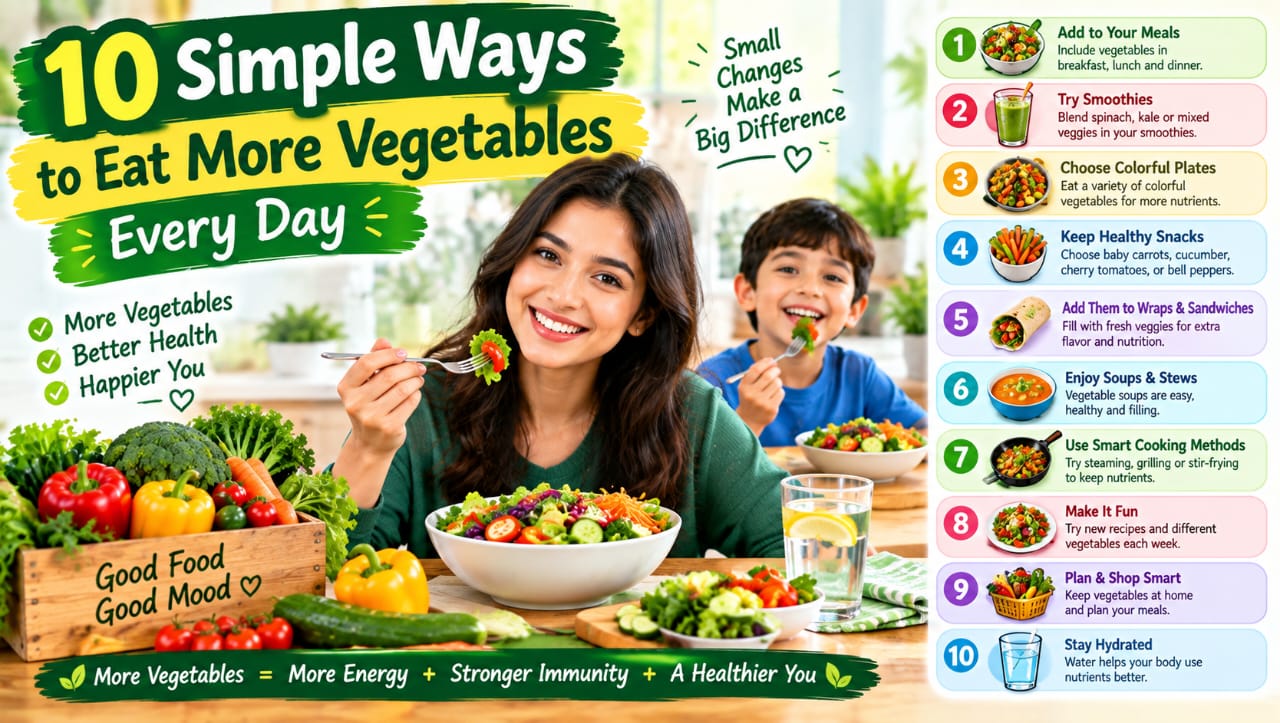
There are many simple ways to add vegetables to familiar meals. Vegetable toppings can be added to sandwiches, wraps, rice dishes, pasta, eggs, and homemade pizzas.
Extra vegetables can also be mixed into soups, sauces, stews, and casseroles. Chopped carrots, onions, spinach, tomatoes, peas, or zucchini can increase the vegetable content of many recipes.
Vegetable side dishes can make lunch and dinner more balanced. A simple salad, cooked greens, roasted vegetables, or steamed broccoli can be prepared alongside the main meal.
Vegetables can also be added to breakfast. Spinach, tomatoes, onions, peppers, and mushrooms work well in omelets and scrambled eggs.
Another easy way to eat more vegetables is to add them to meals you already enjoy. Familiar recipes often require only small changes to include additional produce.
Vegetable Snacks & Meal Prep
Raw vegetables can make convenient snacks when they are prepared in advance. Cucumber slices, baby carrots, celery sticks, bell pepper strips, and cherry tomatoes are easy options.
Vegetable snacks can be paired with hummus dip, yogurt dip, or salsa. These combinations can make fresh vegetables more enjoyable while adding variety to snack time.
Meal prep can make healthy choices easier during busy days. Chopping vegetables ahead of time and storing them correctly can reduce preparation time.
Pre-cut vegetables and ready-to-eat vegetables can also be useful when convenience is important. Prepared vegetables can be placed where they are easy to see and reach.
A practical way to eat more vegetables is to prepare several vegetable options during the week. Having ready-to-use produce reduces the need for preparation whenever hunger arrives.
Cooking Methods & Vegetable Recipes
Roasted vegetables can develop a rich flavor and work well as side dishes. Broccoli, cauliflower, carrots, zucchini, and sweet potatoes can be roasted with suitable seasonings.
Steamed vegetables are another simple option. This cooking method can work well for broccoli, peas, green beans, and other vegetables that cook quickly.
Sautéed vegetables can be prepared with onions, peppers, spinach, mushrooms, cabbage, or zucchini. Grilled vegetables can also add variety to meals during outdoor cooking.
Vegetable soup and vegetable stew can combine several ingredients in one dish. Vegetable stir-fry is another flexible recipe that can include whatever suitable produce is available.
Air-fried vegetables, baked vegetables, vegetable omelets, vegetable frittatas, vegetable pasta, and vegetable rice provide additional options for everyday meals.
Fresh, Frozen & Canned Vegetables
Fresh vegetables are widely used because of their texture and variety. Seasonal produce can sometimes offer convenient and affordable options depending on local availability.
Frozen vegetables can be useful because they are convenient, easy to store, and ready to cook. Frozen broccoli, peas, mixed vegetables, and other frozen produce can help households maintain a supply when fresh vegetables are unavailable.
Canned vegetables can also be practical. When choosing canned products, checking food labels and nutrition facts can help identify options with lower sodium or no added salt.
Dried vegetables have different uses and may be suitable for certain recipes. The best option depends on the food, storage conditions, availability, budget, and intended recipe.
Keeping fresh and frozen vegetables available makes it easier to eat more vegetables even when shopping or cooking time is limited.
Fiber, Digestion & Fullness
Vegetable fiber includes both soluble and insoluble forms. Insoluble fiber can contribute to regular bowel movements, while different types of dietary fiber support healthy digestion.
High-fiber vegetables include leafy greens, peas, beans, and many cruciferous vegetables. Legumes such as beans and lentils are also valuable sources of fiber.
Fiber can contribute to fullness and satiety after meals. Including fiber-rich foods in meals may help people feel satisfied while maintaining a nutritious eating pattern.
Vegetables can also provide volume without relying heavily on highly processed ingredients. This can make meals feel more substantial.
To eat more vegetables for better fiber intake, gradually add different vegetables to meals and snacks while also drinking enough fluids as part of a healthy lifestyle.
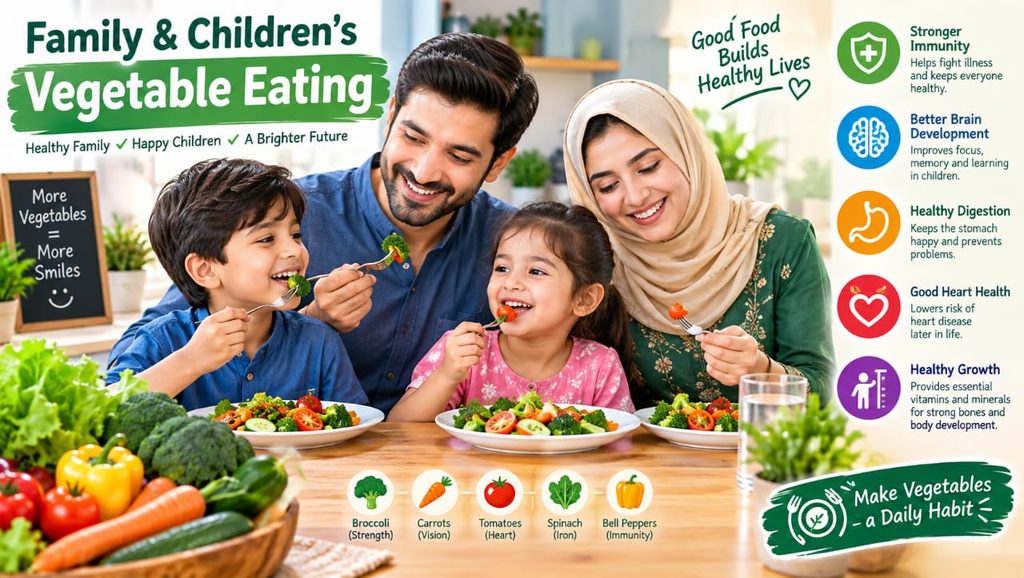
Family & Children’s Vegetable Eating
Children eating vegetables can be encouraged through positive exposure and variety. Offering different vegetables allows children to become familiar with new colors, textures, and flavors.
Family meals provide opportunities for children to observe healthy eating habits. Parents and caregivers can include vegetables alongside foods children already enjoy.
Introducing vegetables repeatedly can help children become more comfortable with unfamiliar foods. Pressure or forcing a child to eat a particular food may make mealtimes less enjoyable.
Colorful plates can make vegetables more interesting. Small portions of carrots, cucumber, tomatoes, broccoli, peas, or sweet potatoes can be offered alongside familiar foods.
Families can also try cooking vegetables together. Children can help wash produce, choose vegetables, or arrange colorful ingredients, making healthy food preparation a shared activity.
Vegetable Shopping & Availability
Fresh produce can be easier to use when shopping is planned around meals. A simple vegetable shopping list can help households remember the produce they actually expect to eat.
The produce aisle often provides many options, including leafy greens, cruciferous vegetables, root vegetables, and seasonal choices. Choosing a mixture can improve dietary variety.
Seasonal vegetables may be more accessible and affordable in some areas. Farmers markets and local sellers can also provide fresh produce depending on location and availability.
Vegetables should be stored appropriately after shopping. Keeping frequently used produce visible in the refrigerator can remind household members to use it.
A useful habit to eat more vegetables is to buy a realistic amount rather than purchasing more produce than the household can consume before it loses quality.
See more: eat more vegetables
Popular Vegetable Examples
Spinach, kale, broccoli, cauliflower, cabbage, Brussels sprouts, carrots, bell peppers, tomatoes, cucumbers, zucchini, asparagus, celery, radishes, mushrooms, sweet potatoes, peas, green beans, onions, and eggplant are versatile options.
Leafy greens can be used in salads, sandwiches, soups, smoothies, omelets, and cooked dishes. Cruciferous vegetables such as broccoli, cauliflower, cabbage, and Brussels sprouts can be roasted, steamed, or stir-fried.
Carrots, cucumbers, bell peppers, and tomatoes can work well as fresh snacks or salad ingredients. Mushrooms can add texture and flavor to many cooked meals.
Legumes, beans, and lentils are also useful plant-based foods. They can provide protein and dietary fiber while working well in soups, curries, salads, rice dishes, and wraps.
Trying different vegetables throughout the week can prevent meals from becoming repetitive and can increase dietary variety.
Practical Vegetable Habits
One practical habit is to fill half your plate with vegetables when appropriate for your overall meal. This can create a simple visual reminder to include more produce.
Another useful strategy is to include vegetables at every meal. Keeping vegetables visible and preparing them in advance can make them easier to choose.
Trying one new vegetable occasionally can expand food preferences. Experimenting with different cooking methods and seasonings can also change the flavor and texture of familiar produce.
Healthy dips such as hummus or yogurt-based options can make raw vegetables more appealing. Vegetable toppings can also transform sandwiches, wraps, rice, pasta, and eggs.
To eat more vegetables consistently, make vegetables convenient. Keep frozen options available, prepare fresh produce ahead of time, and add vegetables to favorite meals whenever practical.
The most effective habits are usually simple enough to repeat. A person does not need to make every meal complicated; small additions made consistently can increase overall vegetable intake.
Frequently Asked Questions
1. How can I eat more vegetables every day?
Add vegetables to breakfast, lunch, and dinner, keep fresh or frozen options available, prepare snacks in advance, and add vegetables to meals you already enjoy.
2. Which vegetables are the healthiest?
No single vegetable provides every nutrient. Eating a variety of colorful vegetables, leafy greens, cruciferous vegetables, and other produce provides broader nutritional diversity.
3. Are frozen vegetables healthy?
Frozen vegetables can be a nutritious and convenient option. Choose products with suitable ingredients and check labels when added sodium or sauces are a concern.
4. How can I get children to eat more vegetables?
Offer vegetables repeatedly without pressure, provide colorful choices, include vegetables in family meals, and involve children in age-appropriate food preparation.
5. What is the easiest vegetable snack?
Cucumber slices, baby carrots, celery sticks, bell pepper strips, cherry tomatoes, and other raw vegetables can be convenient snacks when prepared and stored properly.