
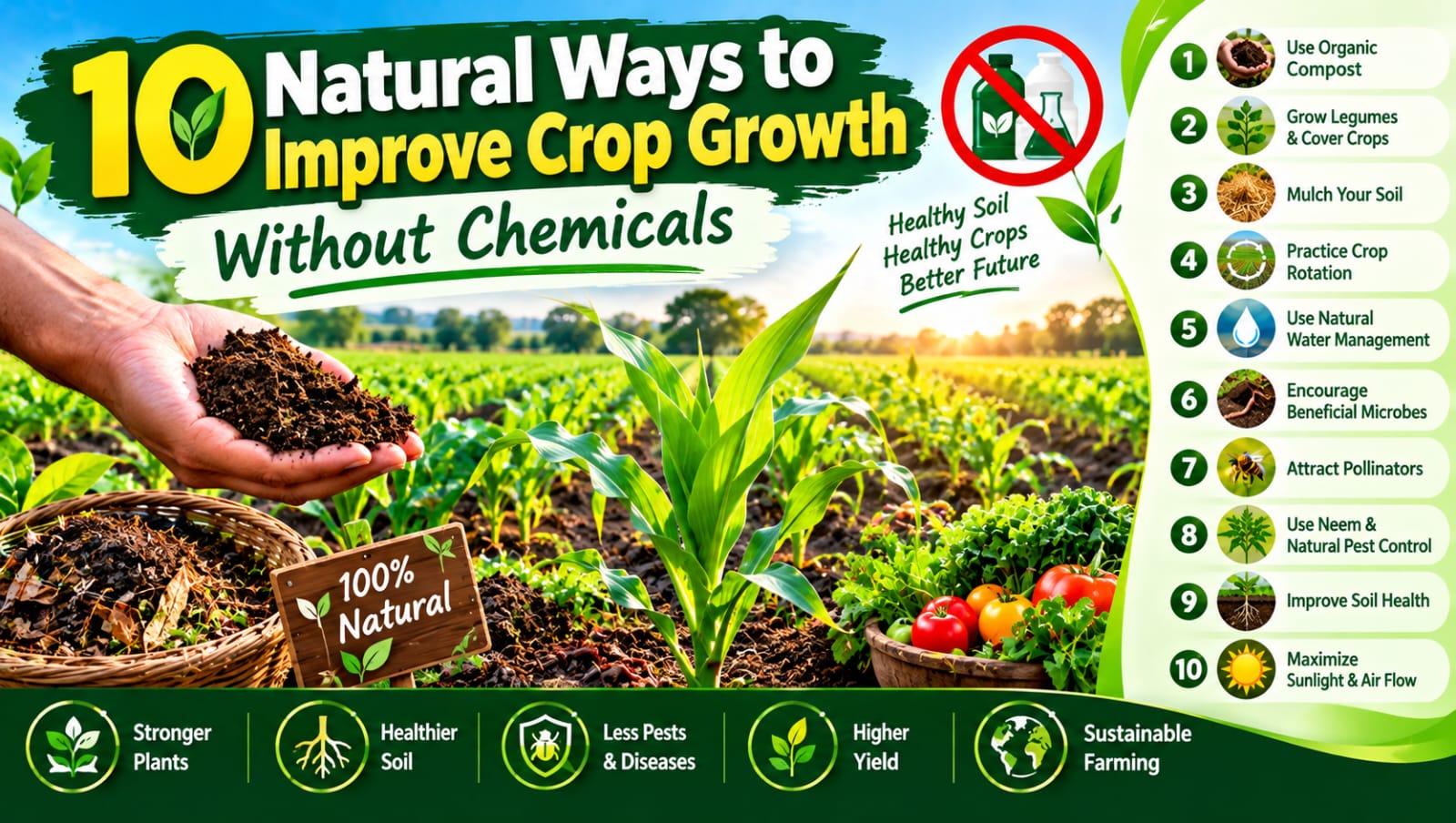
natural ways to improve crop growth can help farmers produce healthier plants while reducing their dependence on synthetic chemicals. These methods focus on healthy soil, organic nutrients, proper water management, biodiversity, and natural farming practices.
Farmers can use natural ways to improve crop growth by combining compost, crop rotation, cover crops, mulching, and responsible irrigation. These approaches can improve soil conditions, support plant health, and contribute to sustainable crop production.
Soil Health & Natural Crop Growth
Healthy soil is essential for strong crops because roots depend on soil for nutrients, moisture, oxygen, and physical support. Natural ways to improve crop growth start with maintaining soil health, soil fertility, and good soil structure.
Organic matter improves the physical and biological condition of soil. Natural ways to improve crop growth can include organic compost and farmyard manure to add nutrients and create favorable conditions for soil microorganisms.
Beneficial microbes help break down organic materials and support nutrient cycling. Natural ways to improve crop growth can encourage microbial activity and biological activity by maintaining sufficient organic matter in agricultural soil.
Earthworms are useful organisms that can improve soil aeration and create channels for water movement. Natural ways to improve crop growth can benefit from healthy earthworm populations and diverse soil organisms.
Regenerative & Sustainable Farming Practices
Regenerative agriculture aims to improve soil and restore natural processes on farmland. Natural ways to improve crop growth can include regenerative farming practices that support soil regeneration and long-term soil health.
Sustainable farming focuses on producing crops while conserving important resources. Natural ways to improve crop growth can support conservation agriculture, ecological farming, and low-input farming systems.
Biodiversity can make agricultural ecosystems more balanced. Natural ways to improve crop growth can encourage biodiversity by maintaining different crops, useful organisms, and suitable habitats around farmland.
Habitat restoration can provide space for beneficial insects and other organisms. Natural ways to improve crop growth can support ecosystem health by creating conditions where natural ecosystem processes can continue.
Resource conservation is important for long-term farm sustainability. Natural ways to improve crop growth can contribute to agricultural sustainability through better soil management, water conservation, and sustainable crop production.
Crop Rotation & Diversified Farming
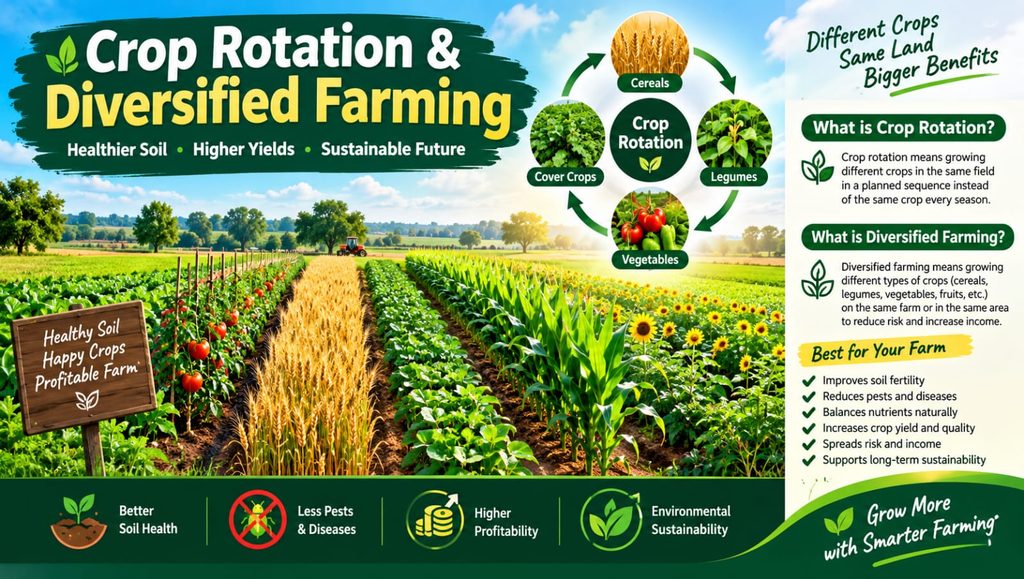
Crop rotation means planting different crops in a planned sequence across growing seasons. Natural ways to improve crop growth can use crop rotation to support soil nutrient balance and reduce repeated pressure from specific pests and diseases.
Crop diversification allows farmers to grow different plant species instead of depending on a single crop. Natural ways to improve crop growth can include mixed cropping, intercropping, and diversified cropping systems.
Companion planting places compatible crops together in the same growing area. Natural ways to improve crop growth can benefit from beneficial plant interactions, improved biodiversity, and natural weed suppression.
Legume crops such as beans and peas can be useful in rotational farming. Natural ways to improve crop growth can include nitrogen-fixing crops to support soil fertility and improve nutrient availability.
Diversified farming can also support resilient farming systems. Natural ways to improve crop growth can combine seasonal crops and crop diversity to make agricultural production less dependent on one crop type.
Cover Crops & Soil Protection
Cover crops are planted primarily to protect soil between main crop cycles. Natural ways to improve crop growth can use living ground cover to reduce exposure to wind and rainfall.
Cover cropping can help protect soil from erosion while improving moisture conservation. Natural ways to improve crop growth can benefit from surface cover that reduces soil erosion and protects exposed farmland.
Green manure can return plant material and nutrients to the soil. Natural ways to improve crop growth can use green manure to contribute organic matter production and support soil fertility.
Cover crop roots can improve soil structure and create pathways for water infiltration. Natural ways to improve crop growth can support root development while helping retain nutrients in the soil.
Some cover crops can contribute nitrogen fixation. Natural ways to improve crop growth can therefore use suitable plant species to support nutrient retention and improve soil conditions.
Natural Fertilization & Nutrient Management
Organic fertilizers provide nutrients while adding organic materials to agricultural soil. Natural ways to improve crop growth can include compost, animal manure, farmyard manure, and other suitable natural fertilizers.
Compost releases nutrients gradually as organic materials decompose. Natural ways to improve crop growth can use compost and compost tea where appropriate to support nutrient cycling and soil biological activity.
Plant residues and crop residues can return nutrients to farmland. Natural ways to improve crop growth can benefit from recycling suitable organic materials instead of removing all plant material from the field.
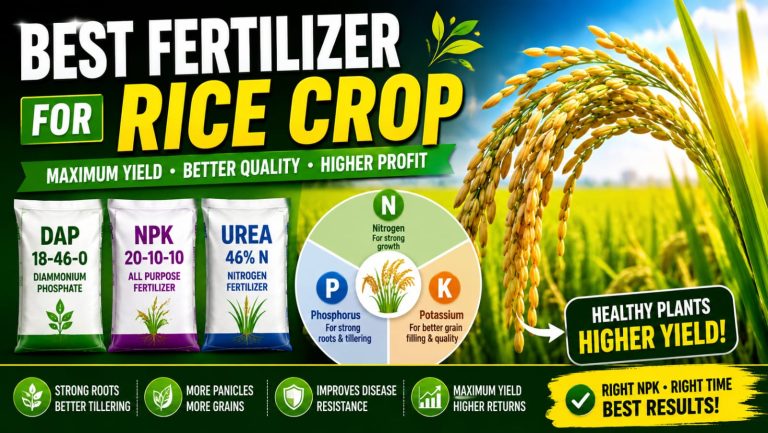
Plants need nitrogen, phosphorus, potassium, and micronutrients for healthy development. Natural ways to improve crop growth should focus on balanced fertilization according to crop requirements and soil conditions.
Soil amendments can improve specific soil properties when selected correctly. Natural ways to improve crop growth can combine soil testing with nutrient management to develop a sustainable nutrient supply.
Water Management & Irrigation
Water is necessary for germination, nutrient movement, photosynthesis, and plant growth. Natural ways to improve crop growth can include water conservation and efficient irrigation to provide suitable moisture without excessive water loss.
Drip irrigation delivers water close to the root zone. Natural ways to improve crop growth can use drip irrigation to improve irrigation efficiency and reduce unnecessary evaporation.
Rainwater harvesting can collect and store water for later agricultural use. Natural ways to improve crop growth can benefit from stored rainwater during periods of low rainfall.
Soil moisture management helps farmers understand when crops need water. Natural ways to improve crop growth can improve water-use efficiency by combining moisture monitoring with suitable irrigation schedules.
Healthy soil can improve water retention and water infiltration. Natural ways to improve crop growth can support drought resilience through organic matter, mulching, and deep root systems.
Mulching & Organic Soil Cover
Organic mulch creates a protective layer over the soil surface. Natural ways to improve crop growth can use straw mulch, leaf mulch, crop residue mulch, and compost mulch to protect soil.
Mulching reduces direct exposure to sunlight and wind. Natural ways to improve crop growth can benefit from improved moisture retention and reduced evaporation during hot weather.
Organic soil cover can also suppress unwanted plants. Natural ways to improve crop growth can use mulch for weed suppression and natural weed management.
As mulch decomposes, it adds organic matter to the soil. Natural ways to improve crop growth can benefit from decomposition because organic materials support microbial activity and nutrient cycling.
Mulching can reduce the impact of heavy rainfall on exposed soil. Natural ways to improve crop growth can use organic soil cover for erosion prevention and better soil protection.
Natural Pest & Weed Management
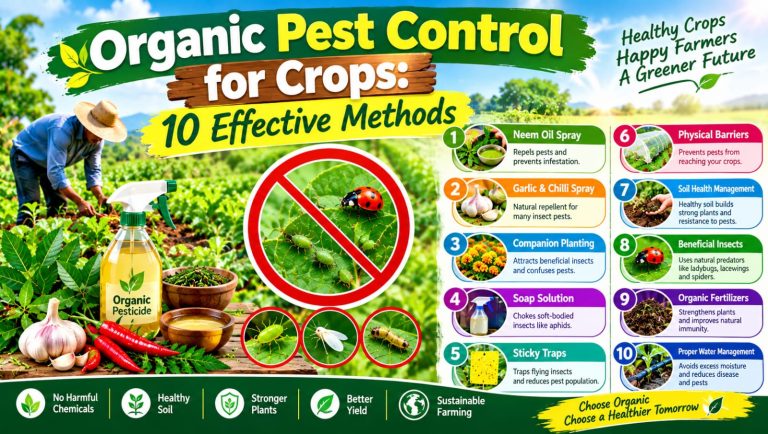
Natural pest control focuses on reducing harmful pest populations while protecting useful organisms. Natural ways to improve crop growth can include pest monitoring and biological pest control.
Beneficial insects and predatory insects can help control certain agricultural pests. Natural ways to improve crop growth can support natural predators by maintaining suitable habitats and avoiding unnecessary disruption.
Pollinators are important for many flowering crops. Natural ways to improve crop growth can encourage pollinators through crop diversity, companion planting, and suitable flowering plants.
Integrated pest management combines prevention, monitoring, and different control methods. Natural ways to improve crop growth can use biological control and other appropriate techniques instead of depending on one pest control method.
Botanical pesticides can provide another option for managing certain pests. Natural ways to improve crop growth can include natural pesticides when they are appropriate for the crop and farming conditions.
Modern & Precision Farming Techniques
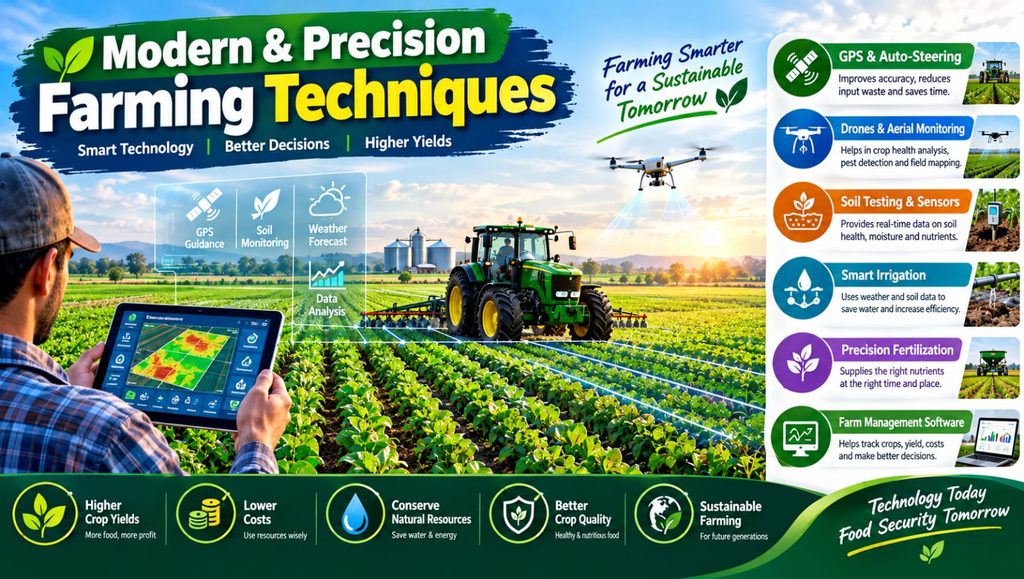
Modern farming techniques can help farmers understand field conditions more accurately. Natural ways to improve crop growth can be supported by precision agriculture and smart farming technologies.
Soil testing provides information about nutrient levels and soil characteristics. Natural ways to improve crop growth can use this information for better nutrient management and resource efficiency.
Precision irrigation can deliver water according to field and crop requirements. Natural ways to improve crop growth can become more efficient when farmers use accurate information to manage irrigation.
Remote sensing and satellite imagery can help monitor large agricultural areas. Natural ways to improve crop growth can benefit from early identification of crop stress and uneven field conditions.
Drones in agriculture can provide aerial images for crop monitoring. Natural ways to improve crop growth can use drone information to identify areas that need closer observation.
Soil Conservation & Regenerative Land Management
Soil conservation protects fertile topsoil from erosion and degradation. Natural ways to improve crop growth can include conservation tillage and reduced soil disturbance to protect soil structure.
Minimum tillage reduces the amount of soil movement caused by farming equipment. Natural ways to improve crop growth can benefit from maintaining soil stability and protecting biological activity.
No-till farming leaves much of the soil relatively undisturbed. Natural ways to improve crop growth can use reduced soil disturbance to support soil organisms and maintain organic matter.
Crop residues can protect the soil surface after harvest. Natural ways to improve crop growth can benefit from residue cover that helps prevent erosion and contributes to organic matter buildup.
Soil carbon is an important part of healthy agricultural soil. Natural ways to improve crop growth can support carbon-rich soil through organic matter management and reduced disturbance.
See more:Natural ways to improve crop growth
Crop Growth & Farm Productivity
Crop productivity depends on seed quality, soil fertility, water availability, nutrition, and suitable growing conditions. Natural ways to improve crop growth can bring these factors together to support healthy crops.
Seed quality affects germination and crop establishment. Natural ways to improve crop growth can begin with suitable seeds, proper planting depth, appropriate moisture, and good field preparation.
Strong root systems help plants absorb water and nutrients. Natural ways to improve crop growth can support healthy root development through suitable soil structure, moisture, oxygen, and balanced nutrition.
Nutrient uptake is essential for plant development. Natural ways to improve crop growth can support nutrient uptake by maintaining soil fertility and providing nitrogen, phosphorus, potassium, and required micronutrients.
Photosynthesis provides energy for plant growth. Natural ways to improve crop growth can support photosynthesis by maintaining healthy leaves, adequate water, balanced nutrition, and suitable growing conditions.
Crop resilience helps plants handle drought, heat, and other environmental stresses. Natural ways to improve crop growth can support environmental stress tolerance through healthy soil, deep roots, water conservation, and crop diversity.
Frequently Asked Questions
1. What are natural ways to improve crop growth?
Natural ways to improve crop growth include composting, crop rotation, cover crops, mulching, organic fertilization, water conservation, soil protection, and natural pest management. These practices focus on creating healthier growing conditions.
2. How does compost help crops?
Compost adds organic matter and nutrients to soil while supporting beneficial microbes. It can improve soil structure, water retention, microbial activity, and nutrient cycling.
3. Can crop rotation improve soil fertility?
Yes. Crop rotation can help maintain soil nutrient balance and reduce repeated pest and disease pressure. Including suitable legume crops can also support nitrogen availability.
4. Does mulching help improve crop growth?
Mulching can conserve moisture, reduce evaporation, suppress weeds, regulate soil temperature, and protect soil from erosion. Organic mulch can also add organic matter as it decomposes.
5. Can farmers grow crops without chemicals?
Farmers can reduce dependence on synthetic chemicals by using compost, crop rotation, cover crops, organic mulch, biological pest control, soil conservation, and efficient irrigation. The most suitable combination depends on the crop and local conditions.


One Comment