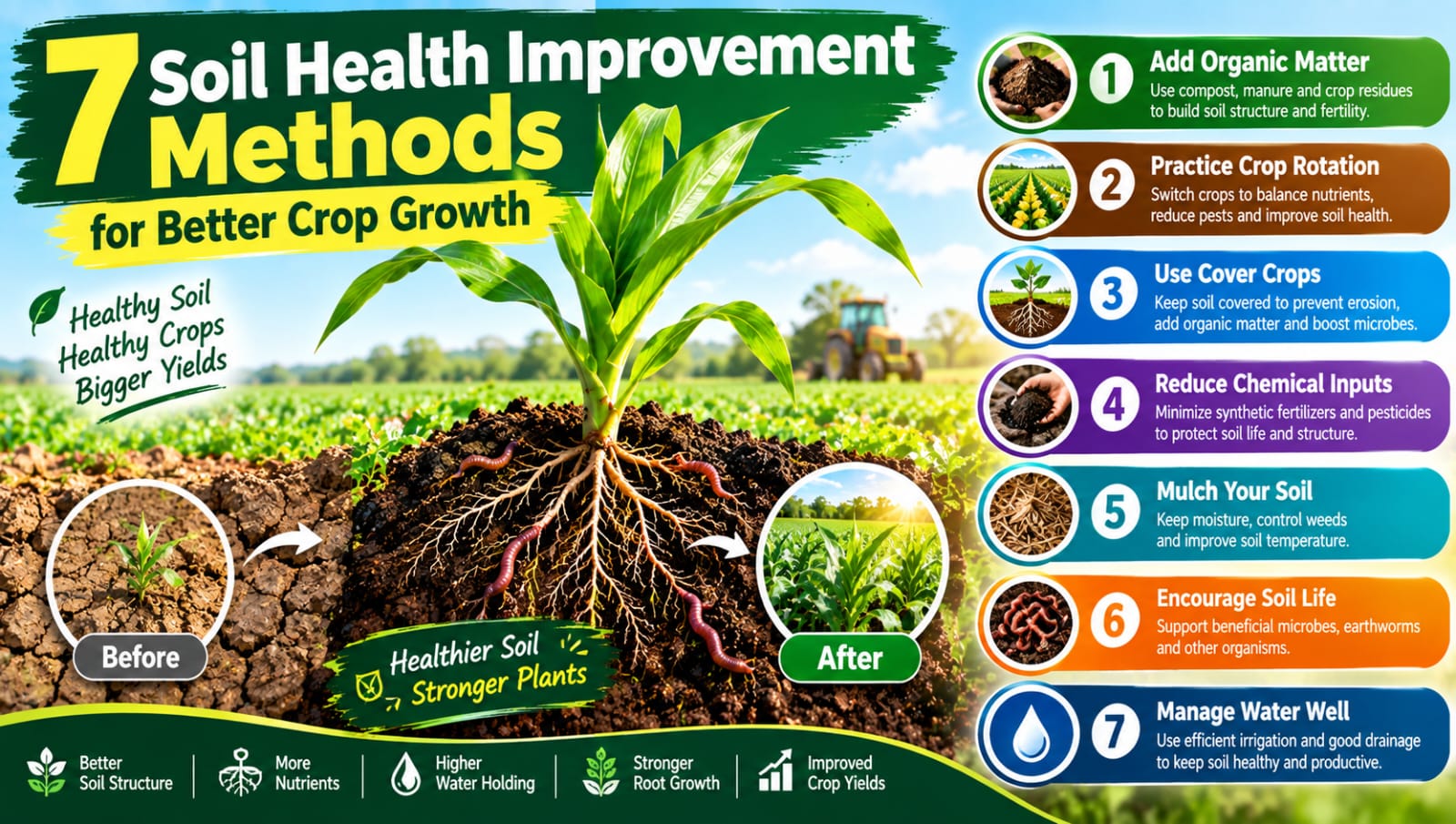
Sustainable food choices begin with healthy soil because productive farmland provides the foundation for growing nutritious and reliable crops. Healthy soil supplies plants with nutrients, water, air, and biological support while helping farmers maintain productive land for longer periods.
Making sustainable food choices also means understanding how responsible farming protects soil, water, biodiversity, and other natural resources. By improving soil health, farmers can create better growing conditions and support sustainable crop production for future generations.
1. Soil Health Fundamentals
Soil health describes the ability of soil to function as a living ecosystem that supports plants, microorganisms, and important environmental processes. Healthy soil has good soil quality, soil productivity, fertility, and resilience.
Soil health improvement focuses on maintaining soil structure, biological activity, nutrient cycling, and water management. Combining conservation practices with sustainable soil management can help maintain productive farmland and long-term soil sustainability.
2. Soil Organic Matter & Carbon
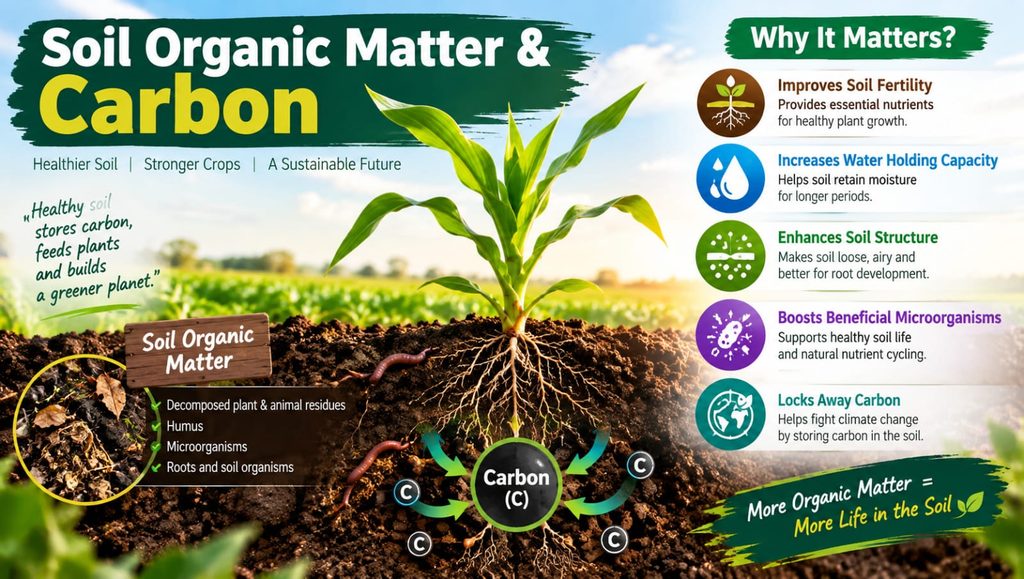
Soil organic matter develops from plant residues, roots, compost, manure, and other organic materials that decompose in the soil. It is an important component of productive agricultural soil.
Increasing organic matter buildup can improve soil structure, water retention, and nutrient availability. Soil carbon management and carbon sequestration can also contribute to carbon storage while supporting healthy biological processes.
3. Soil Biology & Microbial Activity
Soil contains many microorganisms, including beneficial soil bacteria, fungi, and other living organisms. Earthworms and other soil organisms also contribute to the soil food web and support soil biodiversity.
Healthy microbial activity helps decompose organic materials and supports microbial nutrient cycling. Maintaining diverse soil microbes can improve biological activity and contribute to resilient agricultural soils, supporting sustainable food choices.
4. Soil Structure & Physical Health
Good soil structure provides pore space for air, water, and plant roots. Stable soil aggregates can improve infiltration and create favorable conditions for root development and soil aeration.
Soil compaction can restrict root penetration and reduce pore space. Reduced compaction, appropriate tillage management, and conservation practices can improve soil tilth, aggregate stability, and other physical soil properties.
5. Nutrient Management & Fertility
Effective nutrient management helps crops receive essential plant nutrients in suitable amounts and at appropriate times. Nitrogen, phosphorus, potassium, and micronutrients all contribute to healthy crop development.
Balanced fertilization can improve nutrient availability while reducing unnecessary nutrient losses. Soil fertility testing, organic nutrients, and proper fertilizer management can improve nutrient efficiency and support sustainable food choices.
6. Water Management & Infiltration
Healthy soil can improve water infiltration and help store moisture in the root zone. When soil has sufficient pore space, rainfall can enter the soil rather than becoming surface runoff.
Good water holding capacity helps crops access moisture during dry conditions. Soil cover, organic matter, suitable irrigation, and improved drainage can support water conservation, soil moisture retention, and drought resilience.
7. Erosion Control & Soil Conservation
Soil erosion removes valuable topsoil through wind and water. Losing fertile topsoil can reduce soil productivity, damage soil structure, and contribute to long-term land degradation.
Cover crops, crop residue retention, mulching, reduced tillage, and runoff control can reduce erosion. Soil conservation protects agricultural land and supports sustainable food choices by helping preserve the soil needed for future crop production.
8. Cover Crops & Soil Cover
Cover crops provide living or dead plant material that protects the soil surface. Their roots help hold soil particles together, while above-ground growth can reduce the impact of rainfall and wind.
Year-round soil cover can protect soil moisture and reduce erosion. Winter cover crops, organic mulch, and retained crop residues can also support biological activity and contribute to more responsible land management and sustainable food choices.
9. Reduced Tillage & Soil Disturbance
Intensive tillage can disturb soil aggregates, expose organic matter, and affect soil organisms. Reduced tillage limits unnecessary soil movement and can help protect soil structure.
Minimum tillage, conservation tillage, and no-till farming reduce soil disturbance in different ways. The most suitable approach depends on soil type, climate, crop, equipment, and local farm conditions.
10. Crop Rotation & Biodiversity
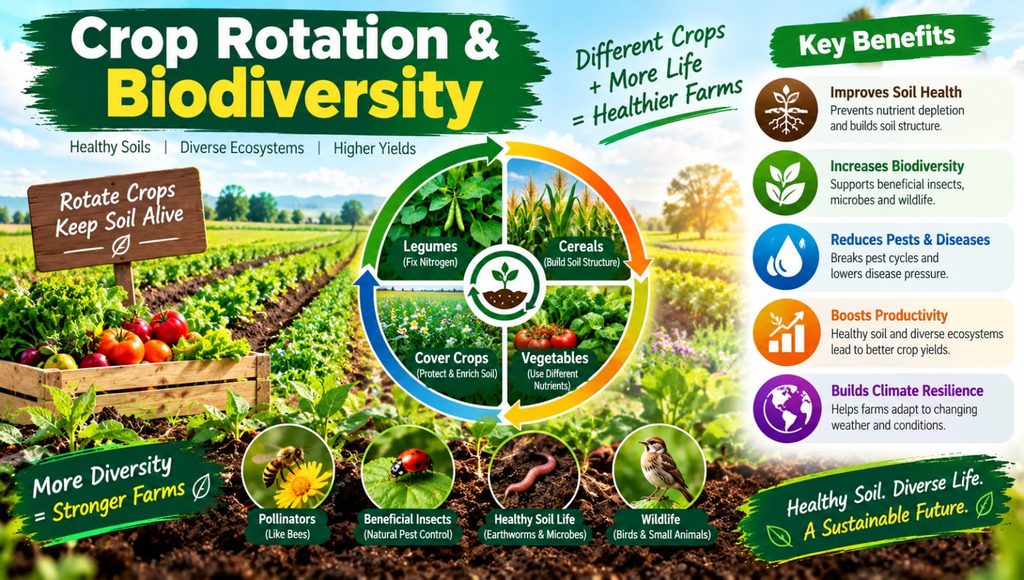
Crop rotation involves growing different crops in a planned sequence. Diverse rotations can improve agricultural biodiversity and create more balanced farming systems.
Different crops have different root systems and nutrient requirements. Crop diversification can help disrupt some pest and disease cycles, improve resource use, and support sustainable food choices over multiple growing seasons.
11. Living Roots & Root Systems
Living roots provide continuous biological activity in agricultural soil. Plant roots release root exudates that interact with microorganisms in the rhizosphere and contribute to biological processes.
Deep roots can improve root penetration and create channels through soil. Maintaining continuous living roots, perennial roots, and cover crops can support microbial root interactions and help plants access water and nutrients.
12. Soil Health Improvement Practices
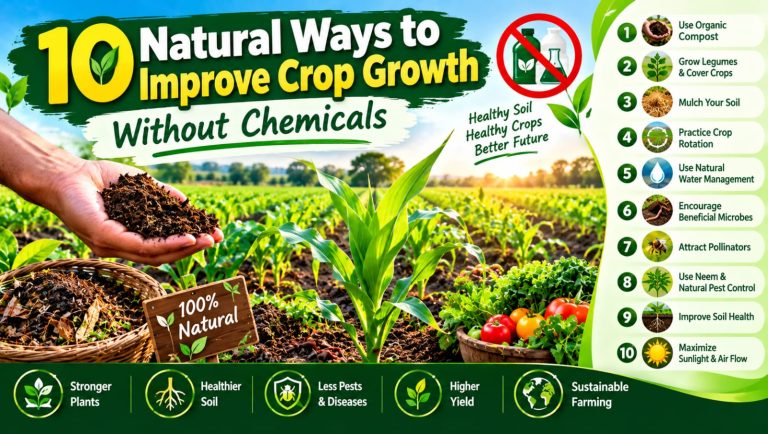
Effective soil health improvement practices combine physical, chemical, and biological management. Farmers can use cover cropping, crop rotation, compost application, residue retention, nutrient management, and erosion prevention together.
Conservation agriculture and regenerative soil practices can help protect soil resources and support soil restoration. Integrated soil management allows farmers to select suitable practices for local soil conditions while supporting sustainable food choices.
13. Organic Inputs & Amendments
Organic amendments can add organic matter and nutrients to agricultural soil. Common examples include compost, composted manure, plant-based materials, animal manure, organic fertilizers, and biomass amendments.
Compost application can improve soil structure and provide organic material for soil microorganisms. Farmers should apply amendments according to soil conditions and crop requirements because excessive applications can increase nutrient losses and environmental risks.
14. Soil Testing & Assessment
Soil testing provides information about nutrient levels, pH, organic matter, and other soil characteristics. Regular soil analysis can help farmers make better fertilizer and amendment decisions.
Soil health assessment can include chemical, physical, and biological indicators such as soil structure, compaction, infiltration, microbial activity, and organic matter. Monitoring these indicators over time can reveal changes caused by management practices.
15. Sustainable Agriculture & Farm Productivity
Sustainable agriculture aims to produce crops while protecting soil, water, biodiversity, and other natural resources. Healthy soil is a major foundation of sustainable crop production and long-term farm productivity.
Productive soils can support strong roots, nutrient cycling, water retention, and improved crop performance. Protecting soil resources can help farmers maintain reliable production while supporting the principles of sustainable food choices.
16. Climate Resilience & Environmental Benefits
Healthy soil can contribute to climate resilience by improving water storage, supporting root growth, and reducing erosion. These functions can help farms manage periods of drought and heavy rainfall.
Soil carbon storage can contribute to climate mitigation by retaining carbon in soil organic matter. Climate-smart agriculture combines soil conservation, water management, crop diversification, and other practices to improve farm resilience and environmental sustainability.
17. Soil Degradation & Restoration
Soil degradation can result from erosion, nutrient depletion, compaction, organic matter loss, and inappropriate land management. Degraded soils may have reduced fertility, weaker structure, and lower water-holding capacity.
Soil restoration focuses on rebuilding soil functions and improving soil condition. Cover crops, compost, crop rotation, reduced tillage, and erosion control can support the recovery of degraded agricultural land when used consistently.
18. Agricultural Ecosystem & Soil Functions
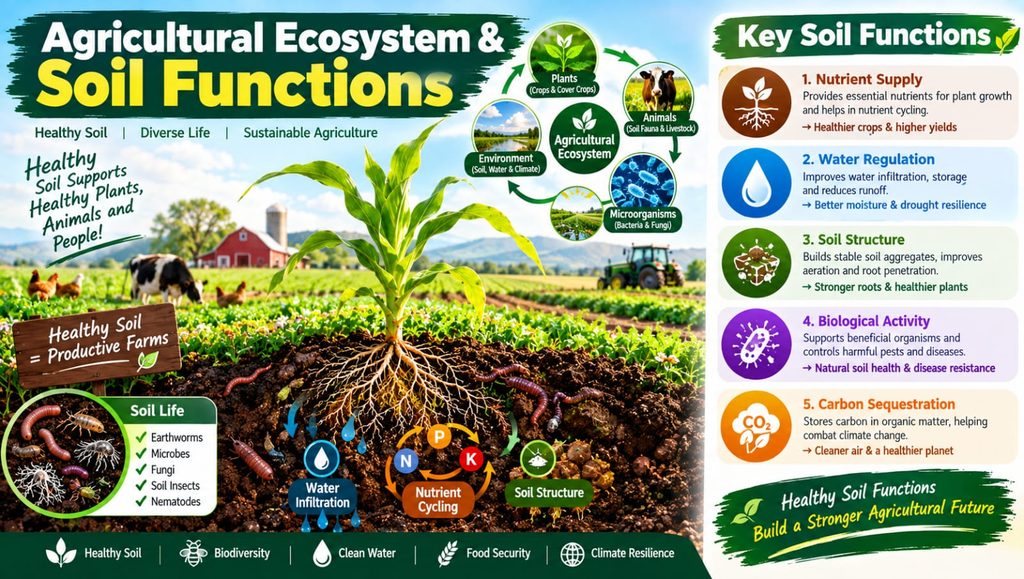
Soil provides important ecosystem services, including nutrient cycling, water filtration, carbon storage, and habitat for soil organisms. These functions support plant growth and wider agricultural ecosystems.
Healthy soil depends on interactions between plants, microorganisms, nutrients, water, and soil particles. Protecting soil biodiversity and ecological processes can improve ecosystem resilience and support natural resource conservation.
19. Livestock & Grazing Management
Livestock can contribute to soil health when grazing is carefully managed. Rotational grazing allows pasture areas to recover before animals return and can help maintain vegetation.
Managed grazing can distribute manure nutrients and support nutrient recycling, but excessive grazing pressure can remove vegetation and increase erosion. Proper stocking rates, recovery periods, forage availability, and soil conditions are important for healthy pasture systems.
See more: soil health improvement
20. Soil Health Benefits
Improving soil health can provide many benefits, including improved soil fertility, better soil structure, increased organic matter, stronger root growth, and better water retention. These improvements can create more favorable conditions for healthy crops.
Healthy soil can also support improved water infiltration, reduced runoff, reduced erosion, increased biodiversity, and more effective nutrient cycling. In the long term, protecting productive farmland can support sustainable crop yields, environmental quality, and sustainable food choices.
| Soil Health Practice | Main Benefit | Example |
|---|---|---|
| Cover crops | Soil protection and organic matter | Rye, oats, legumes |
| Compost | Organic matter improvement | Mature compost |
| Crop rotation | Biodiversity and nutrient management | Grains and legumes |
| Reduced tillage | Lower soil disturbance | Minimum tillage |
| Soil testing | Better nutrient decisions | Regular soil analysis |
| Mulching | Moisture and erosion protection | Crop residues |
Frequently Asked Questions
1. What is soil health?
Soil health is the ability of soil to function as a living ecosystem that supports plant growth, nutrient cycling, water movement, microorganisms, and important biological and physical processes.
2. What are the best ways to improve soil health?
Useful practices include adding organic matter, using cover crops, rotating crops, reducing soil disturbance, preventing erosion, managing nutrients properly, and regularly testing soil conditions.
3. How do cover crops improve soil health?
Cover crops protect the soil surface, reduce erosion, support living roots, contribute organic residues, and can improve biological activity and soil structure.
4. Does compost improve soil quality?
Properly prepared compost can add organic matter and nutrients while supporting microbial activity. It can also contribute to better soil structure and water retention when used appropriately.
5. Why is soil health important for crop growth?
Healthy soil provides plants with water, nutrients, oxygen, and physical support. Good soil conditions encourage stronger root systems and can contribute to healthier crops, better resilience, and sustainable crop production.