
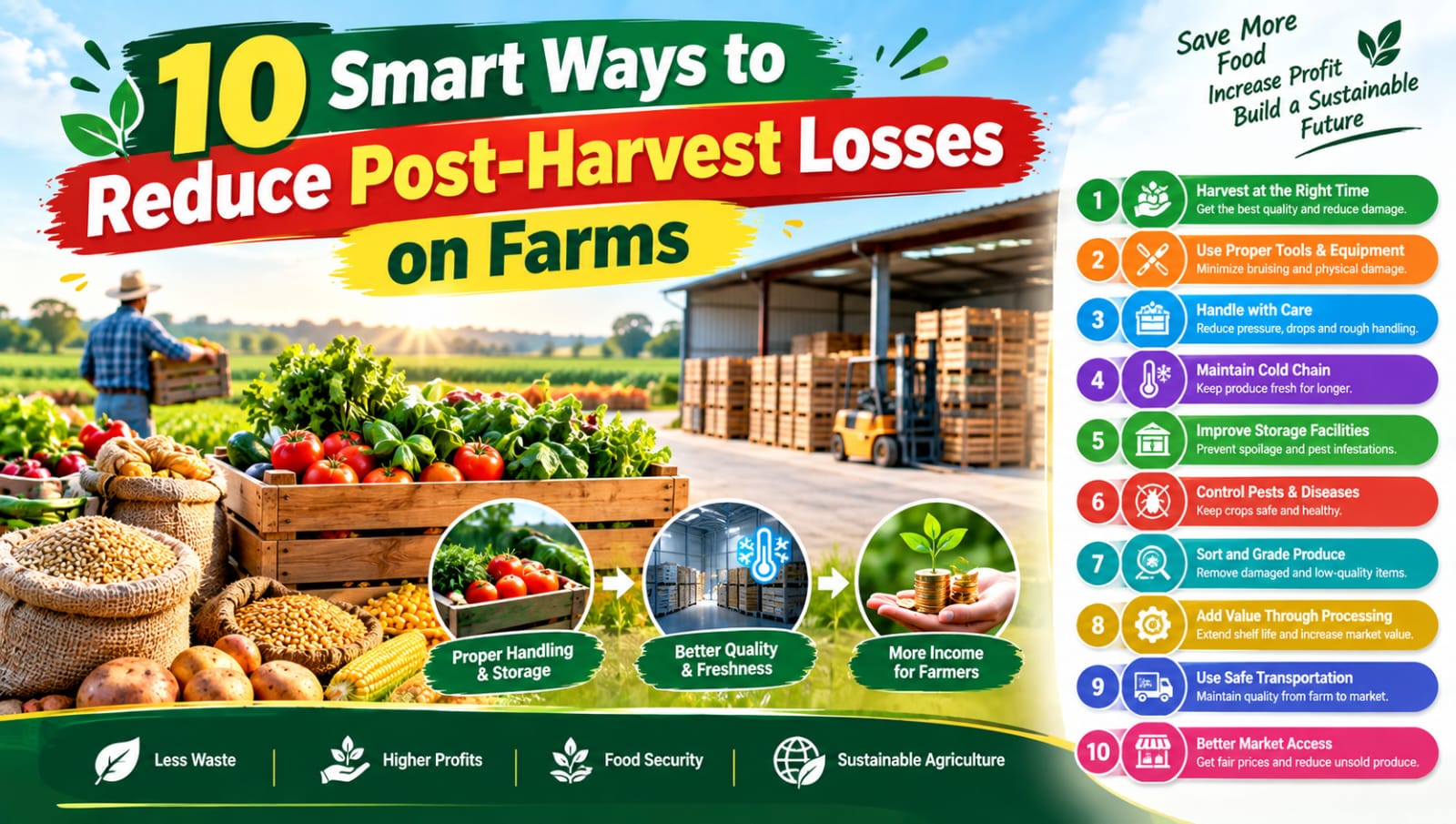
Reducing food loss is an important part of improving farm productivity, protecting farmer income, and strengthening food security. Farmers can reduce post-harvest losses by using better harvesting methods, careful handling, proper drying, safe storage, suitable packaging, and reliable transportation practices. These steps help protect both the quantity and quality of agricultural products.
Post-harvest losses can happen at many stages between harvesting and the final market. Physical damage, moisture, pests, poor storage, spoilage, and transportation problems can reduce crop value. By following practical post-harvest management methods, farmers can preserve crop quality, extend shelf life, and improve their market opportunities.
1. Post-Harvest Losses – Core Terms
Post-harvest losses include the reduction of food quantity or quality after crops are harvested. These agricultural losses can occur during harvesting, handling, drying, storage, transportation, and marketing. Effective postharvest loss reduction helps farmers reduce post-harvest losses, protect food quality, and prevent unnecessary food waste.
Good post-harvest management also supports food security and farmer livelihoods. Reducing farm-to-market losses can increase the amount of food reaching consumers while protecting nutritional value and economic returns. Food preservation and better food supply chain practices are therefore important parts of modern agriculture.
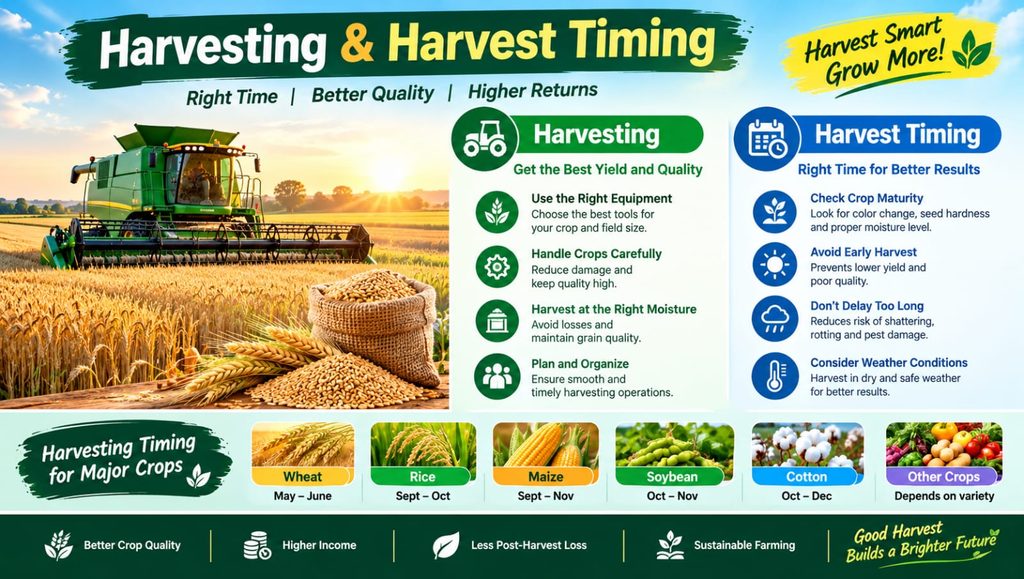
2. Harvesting & Harvest Timing
Harvest timing has a major effect on crop quality and storage life. Farmers should harvest crops at the correct crop maturity and use the proper harvesting methods. Harvesting too early or too late can increase crop losses, reduce quality, and make produce more vulnerable to spoilage.
Careful harvesting can also prevent bruising, cuts, splits, puncturing injury, and impact injury. Trained farm workers should use clean harvesting tools, sharp blades, and suitable harvest equipment. Proper harvest handling reduces mechanical injury and provides a strong starting point for reducing post-harvest losses.
3. Post-Harvest Handling
Proper handling immediately after harvesting helps prevent physical damage and quality deterioration. Produce should be handled carefully during field handling, sorting, loading, and unloading. Clean harvesting tools and protective containers can reduce contamination and handling damage.
Farmers can use baskets, carts, plastic containers, or suitable wooden containers depending on the crop. Sacks should be selected carefully because excessive compression can damage fruits, vegetables, grains, and other products. Good post-harvest practices help reduce post-harvest losses before crops reach storage or markets.
4. Drying & Moisture Management
Proper crop drying is essential for grains, seeds, pulses, and other products that require moisture control. Excess moisture can encourage mold damage, fungal growth, and spoilage. Farmers should monitor moisture content and use safe grain drying methods that match the crop and local conditions.
Sun drying can be useful when weather conditions are suitable, while tarpaulin drying and protected drying can provide cleaner surfaces and better protection from rain. Farmers can also use drying equipment and improved drying facilities where available. Effective moisture management helps reduce post-harvest losses and improves long-term storage quality.
5. Storage & Grain Protection
Proper storage protects crops from insects, rodents, moisture, and microbial infection. On-farm storage should be clean, dry, well-maintained, and suitable for the type of crop being stored. Safe storage facilities can significantly reduce grain spoilage and storage losses.
Farmers can use hermetic bags, metal drums, suitable storage containers, or commercial storage facilities where appropriate. Hermetic storage limits air exchange and can help protect stored grains from storage pests. Good grain protection and moisture control allow farmers to reduce post-harvest losses during long-term storage.
6. Cooling & Cold Chain
Fresh fruits and vegetables often lose quality quickly when exposed to high temperatures after harvest. Post-harvest cooling can remove field heat and slow down spoilage. Rapid cooling is particularly important for temperature-sensitive produce and highly perishable crops.
Cold storage, room cooling, hydro-cooling, forced-air cooling, and ice cooling are different approaches used for suitable products. A reliable cold chain infrastructure can extend produce shelf life and support refrigerated storage. Better temperature management helps farmers reduce post-harvest losses while maintaining fresh produce quality.
7. Packaging & Transportation
Protective packaging can prevent damage during storage and transportation. Proper packing materials should provide enough strength, ventilation, and protection for the specific crop. Rigid containers and individual cushioning can reduce impact and compression injuries during handling.
Safe transport is equally important because vibration, rough roads, and poor loading practices can damage agricultural products. Ventilated packaging can help manage heat and airflow, while modified atmosphere packaging (MAP packaging) may be useful for certain fresh products. Better crop transportation practices help reduce post-harvest losses during the journey to market.
8. Spoilage & Quality Protection
Food spoilage can result from microbial spoilage, fungal contamination, bacterial contamination, insect damage, rodent damage, or physical damage. Farmers should maintain clean storage areas and use safe produce handling practices to reduce contamination risks.
Quality protection also helps maintain edibility, food safety, nutrient value, and shelf life. Regular inspection can identify early signs of spoilage before a larger quantity of produce is affected. Spoilage control and pathogen prevention are practical ways to reduce post-harvest losses and protect produce quality.
9. Farmers, Training & Skills
Farmer training can improve knowledge about harvesting, drying, storage, packaging, and food safety. Small-scale farmers and smallholder farmers can benefit from practical post-harvest training that demonstrates suitable equipment and handling techniques.
Producer training, cooperative training, and farmer education can also improve technical knowledge and handling skills. Farmers who understand moisture management, storage skills, and harvest procedures can make better decisions throughout the post-harvest system. Building these skills is an important way to reduce post-harvest losses over time.
10. Market Access & Value Chain
Better market access can help farmers move crops quickly to reliable buyers. Strong farmer-market linkages, market connectivity, and producer linkages can reduce delays that may cause spoilage. Reliable buyers also give producers more opportunities to sell crops before quality declines.
Agricultural value chains connect farmers with markets, transportation services, processors, and consumers. Value addition can increase farm income by allowing producers to process or package suitable products before selling them. Improved value chains can therefore reduce post-harvest losses while supporting rural livelihoods and economic development.
11. Finance, Technology & Infrastructure
Investment in post-harvest facilities can provide farmers with access to better storage, drying, cooling, packaging, and transportation solutions. Post-harvest equipment such as threshers, drying technology, cooling equipment, and packing houses can improve efficiency and reduce unnecessary crop damage.
Access to finance is important because many smallholder farmers cannot purchase expensive equipment individually. Shared equipment, cooperative facilities, commercial facilities, and affordable technology can make modern post-harvest solutions more accessible. Investment in rural infrastructure and post-harvest technology can help farmers reduce post-harvest losses and improve agricultural productivity.

Post-Harvest Loss Reduction Methods
| Post-Harvest Stage | Common Risk | Smart Solution | Main Benefit |
|---|---|---|---|
| Harvesting | Bruising, cuts, impact injury | Harvest at proper maturity and use clean tools | Better crop quality |
| Handling | Physical and compression damage | Use protective containers and careful handling | Less damage |
| Drying | Excess moisture and mold | Use proper drying and moisture control | Safer storage |
| Storage | Insects, rodents, and spoilage | Use suitable storage facilities and hermetic bags | Longer shelf life |
| Cooling | Heat damage and rapid spoilage | Use rapid cooling and cold storage | Fresher produce |
| Packaging | Vibration and compression | Use rigid and ventilated packaging | Better protection |
| Transportation | Rough handling and delays | Use safe transport and proper loading | Fewer transport losses |
| Training | Poor post-harvest practices | Provide farmer training and technical knowledge | Better management |
| Market Access | Delayed selling and spoilage | Build reliable farmer-market linkages | Faster market movement |
| Technology | Limited equipment and infrastructure | Invest in drying, storage, cooling, and packing facilities | Improved efficiency |
12. Loss Assessment & Management
reduce post-harvest losses requires farmers to understand where food is being lost and why. A proper food loss assessment and post-harvest loss assessment can measure loss quantities at different stages. Through loss measurement, loss monitoring, and loss analysis, farmers can identify critical loss points and understand the main loss causes. Regular data collection creates useful food loss data for better decisions.
Supply chain analysis and value chain assessment can reveal where improvements are needed. Farmers can then develop practical loss reduction strategies and intervention strategies based on their findings. Post-harvest assessment also helps identify suitable loss prevention measures and improve post-harvest management strategies. By focusing on the most important problem areas, producers can reduce post-harvest losses, improve efficiency, protect crop value, and strengthen the overall food supply chain.
FAQs
1. What are post-harvest losses?
Post-harvest losses are reductions in the quantity, quality, nutritional value, or economic value of agricultural products after harvesting. They can occur during handling, drying, storage, transportation, processing, and marketing.
2. How can farmers reduce post-harvest losses?
Farmers can reduce post-harvest losses through timely harvesting, careful handling, proper drying, moisture control, suitable storage, cooling, protective packaging, and safe transportation. Training and access to appropriate technology can further improve results.
3. Why is proper storage important after harvesting?
Proper storage protects crops from moisture, insects, rodents, fungi, bacteria, and physical damage. Good storage conditions can maintain quality and extend the shelf life of agricultural products.
4. How does packaging help prevent crop losses?
Suitable packaging protects produce from compression, vibration, impact, contamination, and excessive moisture. Ventilated and protective containers can be especially useful for fruits and vegetables during transportation.
5. Can technology help reduce post-harvest losses?
Yes. Drying equipment, storage technology, cooling systems, hermetic bags, threshers, improved packaging, and cold-chain infrastructure can help reduce damage and spoilage. Affordable and shared equipment can make these technologies more accessible to smallholder farmers.




One Comment