
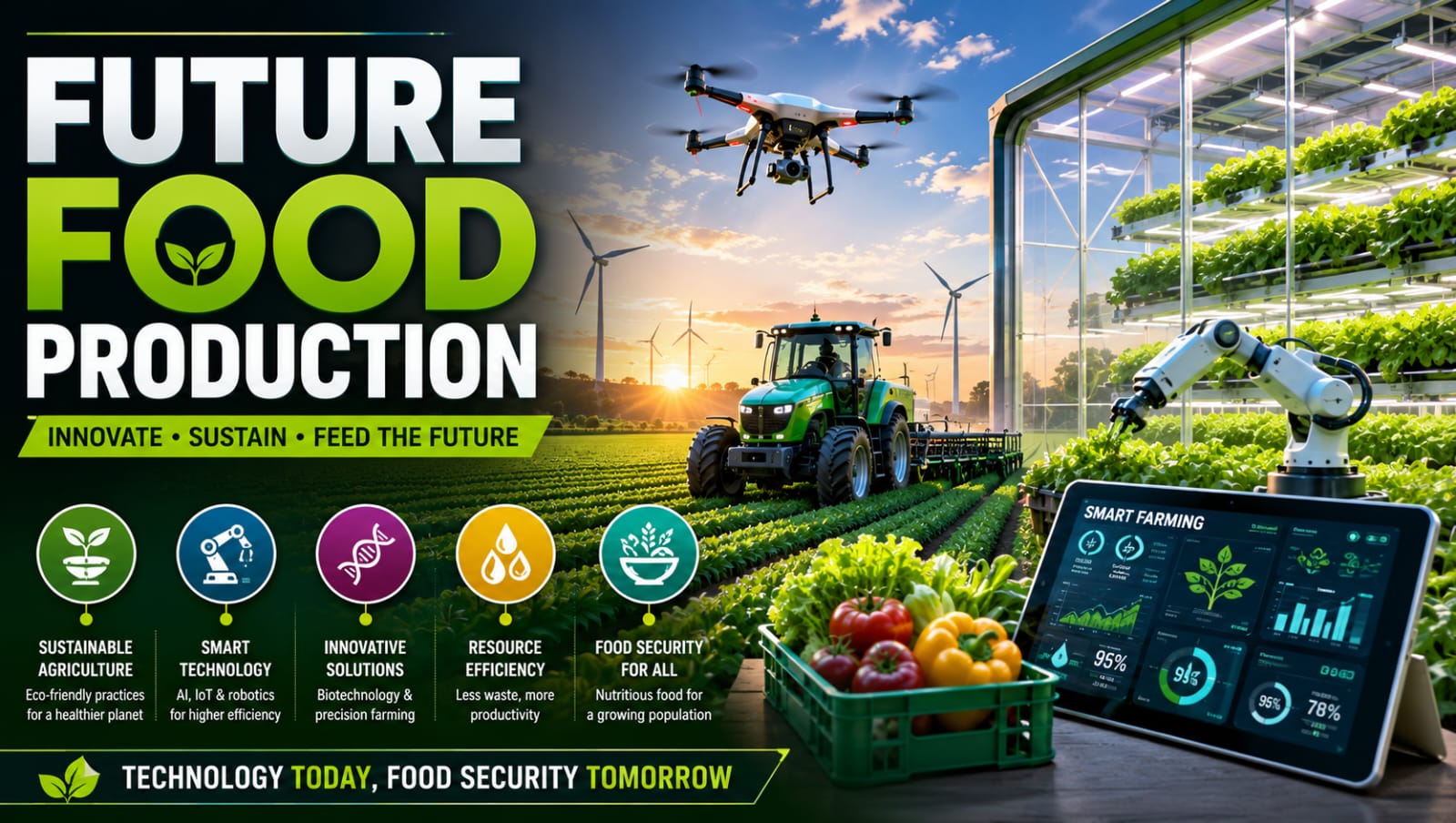
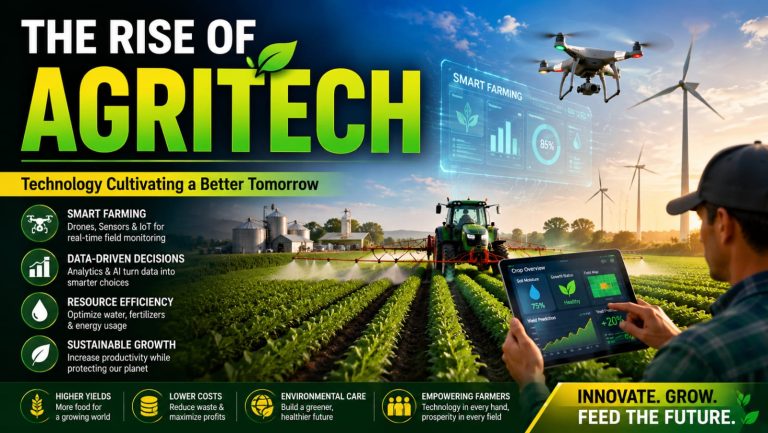
Future Food Production is changing agriculture through sustainable farming, smart farming, precision agriculture, and advanced technology. With a growing population, climate change, and limited natural resources, farmers are adopting artificial intelligence, robotics, drones, and data-driven solutions to produce more food efficiently.
The goal of Future Food Production is to improve food security while protecting soil, water, and the environment. Innovations such as vertical farming, hydroponics, biotechnology, and alternative proteins can help create a more sustainable, efficient, and resilient food system.
Future Food Production and Global Food Demand
The Future Food Production landscape must evolve to meet rising global food demand and increasing food demand from a growing population. The future of food will depend on efficient food production systems, improved agricultural production, and stronger agrifood systems. Sustainable methods can help increase global food production while protecting natural resources and maintaining a reliable food supply.
As future food demand continues to grow, modern food and agriculture systems will need to improve food availability and strengthen food security. The future of food production will focus on sustainable food production and resilient global food systems that can provide enough nutritious food despite climate change, resource limitations, and other challenges.
Sustainable and Resilient Food Systems
Future Food Production depends on building sustainable food systems that can meet growing food needs while protecting natural resources. Sustainable agriculture, sustainable food production, and regenerative agriculture improve soil health and resource efficiency. Climate-smart agriculture and climate-resilient agriculture also help farmers adapt to changing weather and create resilient food systems.
Strong sustainable agrifood systems should be environmentally, socially, and economically responsible. Environmentally sustainable agriculture protects ecosystems, while economically sustainable agriculture supports farmers. Socially sustainable food systems and inclusive food systems can improve access to nutritious food and create a more resilient and equitable global food system.
Agricultural Productivity and Higher Yields
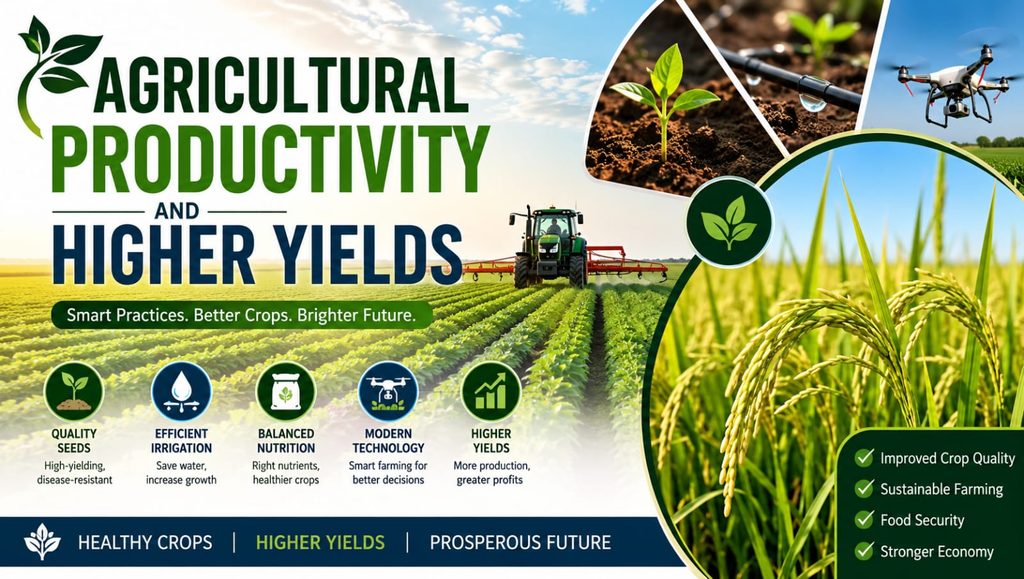
Future Food Production depends on improving agricultural productivity and achieving higher crop yields without putting additional pressure on natural resources. Farmers can increase crop productivity and farm productivity through sustainable intensification, agricultural intensification, high-yielding crop varieties, improved crop varieties, plant breeding, and better crop production efficiency. These approaches support yield improvement, crop yield growth, and productivity gains on productive farmland.
Modern technologies and efficient farming practices can further improve agricultural efficiency, livestock productivity, and pasture productivity. By focusing on efficient food production, yield optimization, and sustainable resource management, farmers can produce more food from existing farmland while supporting long-term agricultural development.
Future Foods and Alternative Food Production
Future Food Production is driving the development of future foods and innovative foods that can meet growing nutritional and environmental needs. Alternative foods, including alternative proteins, plant-based foods, plant-based protein, and sustainable protein, offer new ways to diversify the global food supply. Novel foods, functional foods, and other next-generation foods can also provide nutritious options while supporting healthy food production.
Advances in food innovation and food product innovation are creating more nutritious foods and affordable foods with improved sustainability. Emerging food technologies such as precision fermentation, cellular agriculture, and advanced food processing are helping develop new ingredients and production methods. These innovations can make future food systems more efficient, diverse, healthy, and environmentally responsible.
Livestock, Fisheries and Aquaculture
Future Food Production must include sustainable livestock, fisheries, and aquaculture to meet growing food demand while protecting natural resources. The following steps can help create more productive and resilient systems:
1. Improve Livestock Health and Nutrition
Focus on animal health, balanced animal nutrition, and suitable animal breeds to improve livestock productivity and support sustainable livestock production.
2. Manage Pastures Efficiently
Use better pasture management practices, including rotational grazing and responsible stocking rates, to maintain sustainable pasture and improve livestock performance.
3. Reduce Livestock Emissions
Better feed, herd management, enteric fermentation strategies, and proper manure management can help reduce livestock emissions and livestock methane emissions.
4. Promote Sustainable Fisheries
Responsible wild fisheries management can protect aquatic ecosystems while maintaining sustainable fisheries, stable fish production, and a reliable fish supply.
5. Develop Sustainable Aquaculture
Aquaculture can increase fish production when managed responsibly. Sustainable aquaculture practices can improve resource efficiency, protect water quality, and provide nutritious seafood for growing populations.
Food Loss, Waste and Supply Chains
Future Food Production requires efficient food supply chains that reduce food loss and food waste from farms to consumers. Improving food storage, food processing, food transportation, and food distribution can help address post-harvest losses and support reducing food loss. Strong agricultural supply chains and sustainable food supply chains can also improve supply chain efficiency and overall food system efficiency.
Practical food waste reduction depends on better food waste management, food recovery, and responsible sustainable consumption. Developing circular food systems and resource-efficient food systems can turn food by-products and organic waste into useful resources. Combined with reducing food waste and sustainable production, these approaches can create a more efficient and environmentally responsible food system.
Nutrition, Health and Food Accessibility
Future Food Production should focus not only on producing more food but also on improving food security and nutrition security. Access to nutritious food, affordable food, and healthy diets can improve nutrition outcomes and support public health. Better food accessibility, food availability, dietary diversity, and food affordability can help people make healthy food choices and reduce hunger reduction, malnutrition, undernourishment, and global hunger.
Building equitable food systems and inclusive food production can improve food access for vulnerable communities while supporting sustainable diets. At the same time, strong standards for food safety, food quality, and nutritional quality are essential for consumer health. A sustainable food system should therefore make healthy and safe food accessible and affordable for everyone.
Water and Input Efficiency
Future Food Production requires smarter use of water, fertilizers, energy, and other agricultural inputs to increase productivity while protecting natural resources. Water-efficient agriculture focuses on water conservation, irrigation efficiency, water productivity, and efficient water use. Farmers can also improve freshwater conservation through drip irrigation, rainwater harvesting, soil moisture monitoring, and better irrigation scheduling.
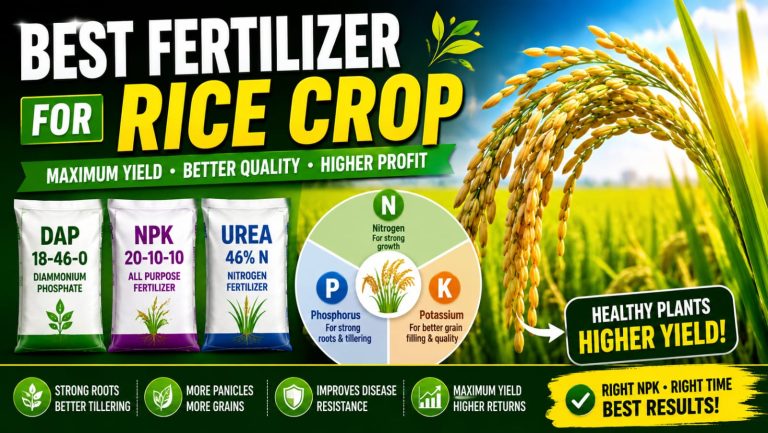
Efficient input management is equally important. Fertilizer efficiency, nitrogen use efficiency, nutrient management, and fertilizer management can reduce waste and improve crop performance. Using sustainable fertilizers, responsible pesticide management, and efficient agricultural inputs supports input efficiency and resource-efficient farming. Meanwhile, energy efficiency, agricultural energy efficiency, renewable energy in agriculture, and nonfossil energy can reduce energy use and encourage the adoption of sustainable farm inputs.
see more:Future Food Prodution
Regenerative and Nature-Positive Agriculture
Future Food Production can become more sustainable by adopting regenerative farming and regenerative agriculture practices that restore rather than degrade natural resources. Soil restoration, ecosystem restoration, conservation agriculture, and natural resource conservation can improve soil health, protect water resources, and support long-term agricultural productivity. Biodiversity-friendly farming and ecological farming also help create healthier and more resilient agricultural landscapes.
Nature-positive agriculture can be strengthened through agroforestry, agricultural tree crops, and integrated farming systems that combine crops, trees, and livestock. Diversified farming systems can reduce environmental pressure, improve biodiversity, and make farms more resilient to climate challenges. Together, these approaches can support productive agriculture while restoring ecosystems and protecting natural resources for future generations.
Food Production Without Agricultural Land Expansion
Future Food Production must find ways to increase food production and increase agricultural productivity without depending on agricultural land expansion. Through sustainable intensification, productivity-driven agriculture, improved crop varieties, and modern farming technologies, farmers can produce more food while improving food production efficiency. The goal is to produce more with less land, avoid land expansion, and achieve food production without expanding farmland through efficient land use.
A land-sparing approach can help protect valuable natural resources while meeting growing food demand. Better agricultural land conservation, sustainable land use, and efforts to restore degraded land can protect natural ecosystems, reduce pressure on forests, and prevent deforestation. By improving productivity on existing farmland, agriculture can meet future needs while conserving land for biodiversity and ecosystem protection.
see more:Future Food Prodution
Policy, Investment and Food System Transformation
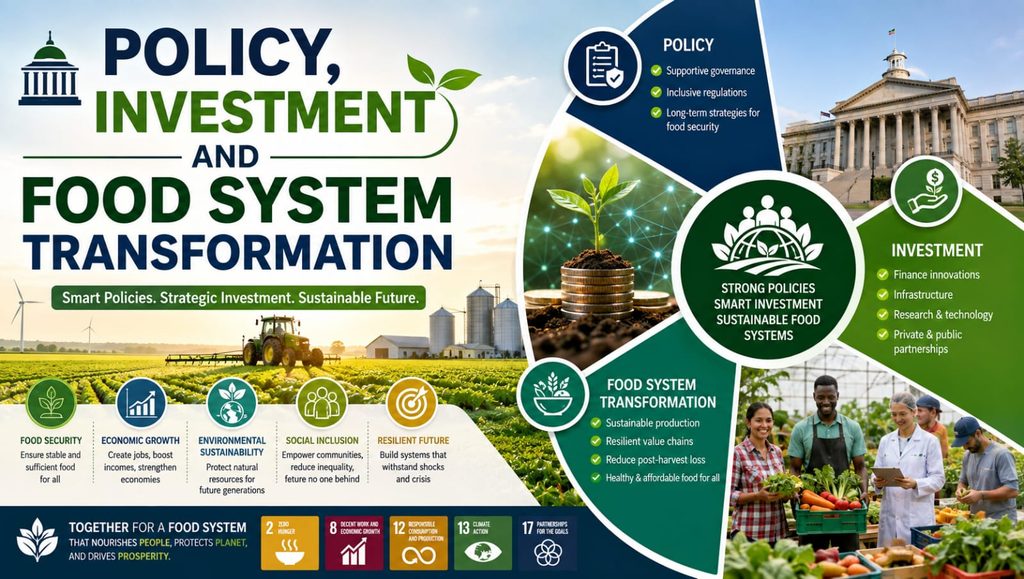
Future Food Production requires strong food policy and agricultural policy to create efficient and sustainable food systems. Effective food system governance and agricultural governance can encourage sustainable food policies and climate-smart policies that support farmers, protect natural resources, and strengthen food security. Government support, public policy, and better agricultural finance can also help farmers adopt modern technologies and sustainable practices.
Long-term agricultural investment and food system investment are essential for transforming food production. Increased research investment, agricultural research, and research and development can accelerate innovation and improve productivity. Private sector investment, sustainable finance, and climate finance can provide additional resources for resilient agriculture. Together, these investments and policies can build a more sustainable, innovative, and resilient global food system.
Future Scenarios and Food Forecasting
Future Food Production will depend on understanding future scenarios, alternative futures, and changing global food needs. Food production projections, agricultural projections, and food demand projections help researchers estimate how food systems may develop over the coming decades. 2050 food projections, long-term projections, and global food forecasts can support governments, farmers, and businesses in preparing for changes in population, climate, technology, and resource availability.
Modern food forecasting and agricultural forecasting use scenario analysis, future trends, and global trends to explore possible outcomes. Foresight methods and strategic foresight help decision-makers prepare for uncertainty, while food system modeling and agricultural modeling provide data-driven insights into future production and demand. These approaches can help create more resilient and sustainable food systems.
What is Future Food Production?
Future Food Production refers to new and sustainable ways of producing enough food for a growing population while using land, water, energy, and other resources efficiently.
Why is Future Food Production important?
It is important because global food demand is increasing while agriculture faces challenges such as climate change, water scarcity, soil degradation, and limited farmland.
How will technology change food production?
Technologies such as artificial intelligence, robotics, drones, precision agriculture, vertical farming, hydroponics, and biotechnology can improve productivity and resource efficiency.
Can food be produced with less agricultural land?
Yes. Sustainable intensification, higher-yielding crops, vertical farming, efficient irrigation, and improved farming practices can help produce more food without significantly expanding agricultural land.
What will food production look like in 2050?
By 2050, food production is likely to become more technology-driven, sustainable, resource-efficient, and diversified, with greater use of alternative proteins, controlled-environment farming, smart agriculture, and regenerative farming practices.



One Comment