
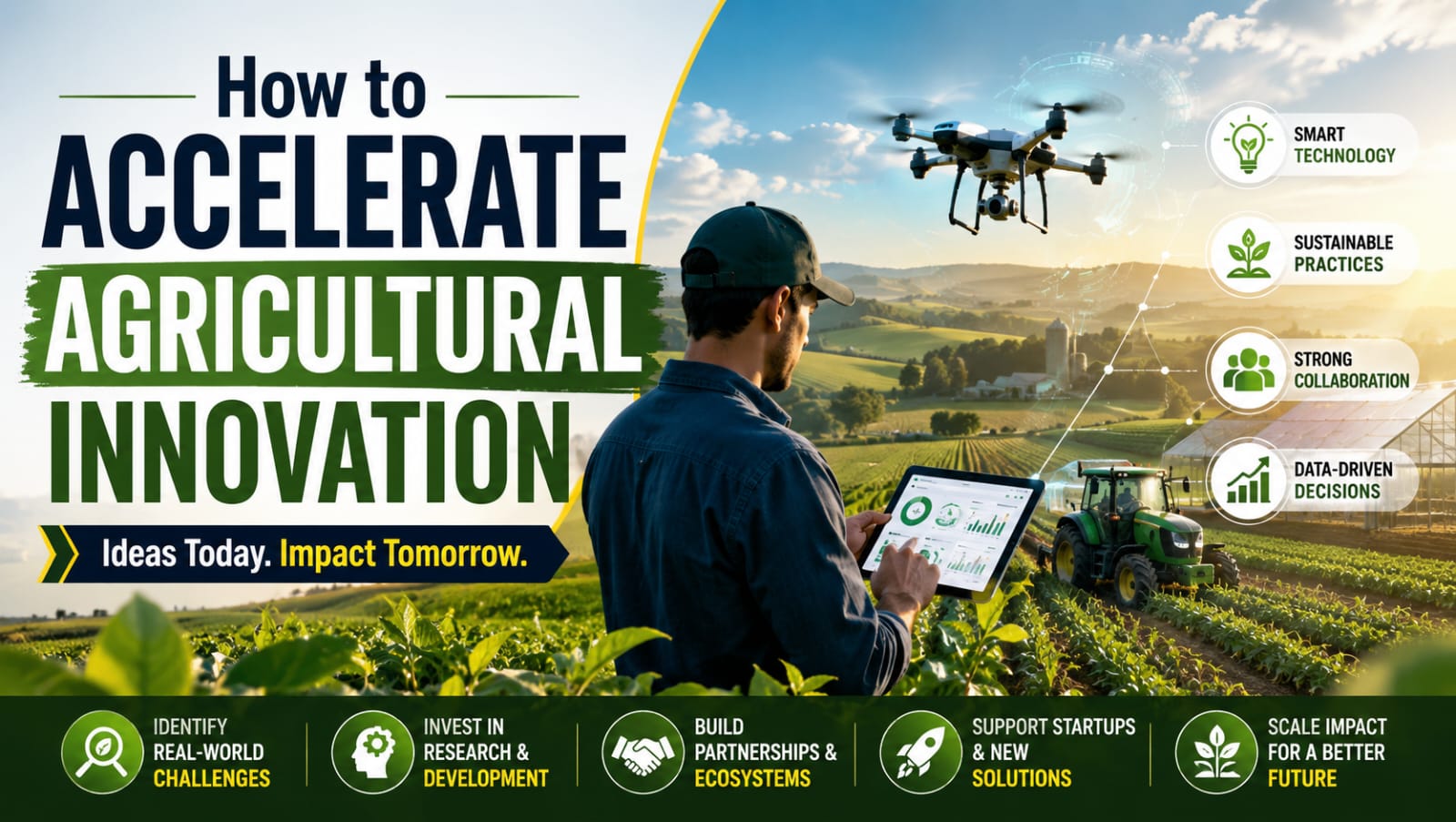
Agriculture is changing rapidly due to climate change, rising food demand, water scarcity, and evolving market needs. Agricultural innovation can help farmers improve productivity, reduce resource use, adopt modern technologies, and build more sustainable and resilient farming systems.
Accelerating innovation requires agricultural research, digital farming, precision agriculture, improved crop varieties, smart irrigation, farmer education, technology adoption, investment, and collaboration among farmers, researchers, governments, and agribusinesses. By connecting practical farming needs with new ideas and technologies, agriculture can become more productive, profitable, and sustainable.
Agricultural Innovation & Productivity
How to Accelerate Agricultural Innovation depends on improving productivity through better technology, research, and farming practices. Agricultural innovation, agriculture innovation, agricultural technology, smart agriculture, and modern agriculture can help farmers increase farm productivity, achieve productivity growth, and use land, water, and other resources more efficiently.
Strong agricultural innovation systems can connect farmers, researchers, governments, startups, and agribusinesses to support farming innovation and innovative agriculture. These efforts promote productivity improvement, sustainable productivity, sustainable agriculture, and agricultural transformation while contributing to food system transformation and shaping the future of farming.
Research, Development & Knowledge
How to Accelerate Agricultural Innovation requires strong agricultural research, agricultural R&D, and effective research and development focused on real farming challenges. Farm research, agricultural science, scientific research, and applied research help develop practical solutions, while research institutions, public research, and private research contribute to technology development and innovation research.
Strong agricultural knowledge, knowledge transfer, and knowledge infrastructure help farmers access and apply new ideas. Research collaboration, research networks, and agricultural education can connect farmers, scientists, universities, governments, and businesses, making it easier to share knowledge and turn research findings into useful agricultural technologies and practices.
Digital Agriculture & Emerging Technologies
How to Accelerate Agricultural Innovation increasingly depends on digital agriculture, digital farming, and digital transformation. Technologies such as precision agriculture, precision farming, smart farming, agricultural technology, agtech, and farm technology help farmers make better decisions and improve efficiency. Artificial intelligence in agriculture, AI in farming, machine learning, agricultural data, and farm data analytics can support crop monitoring, yield prediction, resource management, and early problem detection.
Modern tools such as remote sensing, satellite technology, drones in agriculture, agricultural sensors, Internet of Things agriculture, IoT farming, and GPS technology provide real-time information from farms. Automated farming, robotics in agriculture, farm automation, and digital advisory services can further reduce labor requirements and improve farm management, making agriculture more productive, precise, and sustainable.
Climate-Smart & Resilient Innovation
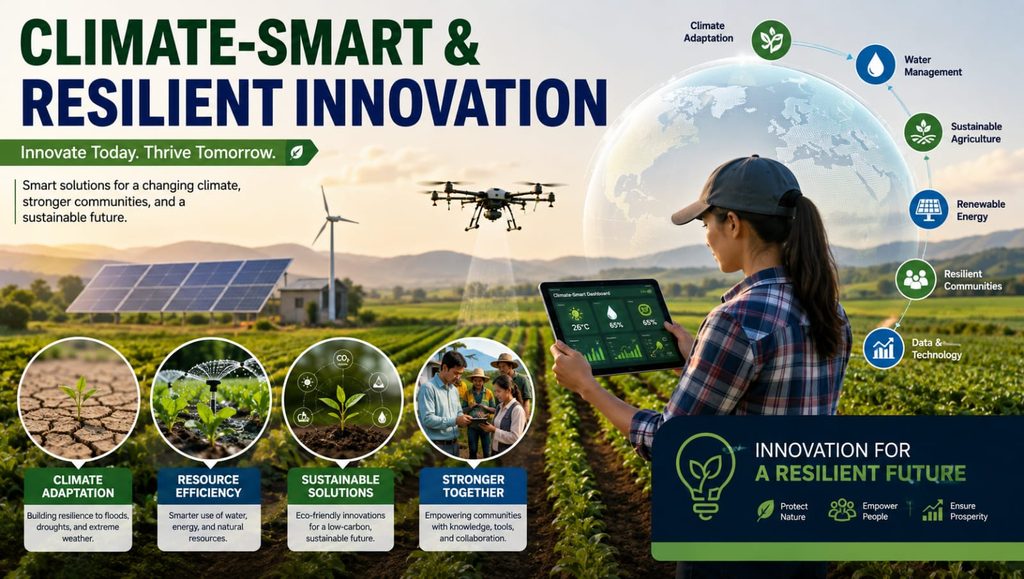
How to Accelerate Agricultural Innovation requires farming systems that can respond effectively to changing weather and climate risks. Climate-smart agriculture and climate-resilient agriculture support climate adaptation and climate resilience through climate-smart technologies, drought-tolerant crops, drought-resistant seeds, climate information, and weather-based farming. These solutions help farmers prepare for extreme weather and improve agricultural resilience.
Effective climate risk management can strengthen resilient farming systems through sustainable farming practices, resource conservation, improved soil health, and water efficiency. By promoting efficient resource use and adopting innovative technologies, farmers can protect natural resources, maintain productivity, and build stronger agricultural systems that are better prepared for future climate challenges.
Agribusiness & Innovation Scaling
How to Accelerate Agricultural Innovation requires moving promising ideas from testing to real-world markets. Agribusiness innovation, agribusiness accelerators, agricultural startups, and agtech startups can help farmers and businesses turn new technologies into practical solutions. Agribusiness development, innovation accelerators, accelerator programs, and business incubation provide mentoring, funding, market connections, and technical support for emerging agricultural enterprises.
Guideful Steps to Scale Agricultural Innovation
- Identify real farming problems: Focus on challenges faced by farmers, especially smallholder agribusinesses, rather than developing technology without a clear market need.
- Test and improve solutions: Develop market-ready innovations and scalable innovations through field testing, farmer feedback, and continuous improvement.
- Build partnerships: Create a strong innovation ecosystem and agribusiness ecosystem by connecting startups, farmers, researchers, investors, governments, and private companies.
- Support innovation adoption: Provide training, demonstrations, financing, and extension services so farmers can confidently adopt new solutions.
- Scale successful models: Use innovation scaling, scaling agricultural innovations, and scaling solutions to expand proven technologies into new regions and markets.
- Strengthen entrepreneurship: Encourage entrepreneurship in agriculture by helping agricultural enterprises develop sustainable business models, access investment, and reach customers.
see more:How to Accelerate Agricultural Innovation
Finance, Investment & Public-Private Partnerships
How to Accelerate Agricultural Innovation requires reliable agricultural financing, agricultural investment, and innovation funding to turn promising ideas into practical solutions. Agricultural R&D funding, research funding, public funding, private investment, and private-sector investment can support agricultural research, technology development, and commercialization. Better agricultural finance and access to finance also help farmers and startups adopt innovative technologies and expand successful projects.
Guideful Steps for Financing Agricultural Innovation
- Improve investment readiness: Help agricultural startups and enterprises develop strong business plans, financial models, and market strategies.
- Increase innovation funding: Use de-risking grants, innovation grants, and startup funding to support promising ideas during early development.
- Mobilize private capital: Encourage venture capital agriculture and private-sector investment in scalable agricultural technologies and businesses.
- Strengthen public support: Use public funding, agricultural R&D funding, and financial support to reduce risks and encourage long-term innovation.
- Build public-private partnerships: Connect governments, investors, research institutions, agribusinesses, and startups to combine resources, expertise, and market access.
Farmers, Adoption & Extension Services
How to Accelerate Agricultural Innovation depends heavily on farmer adoption, technology adoption, and innovation adoption. Farmers need to be actively involved through farmer participation, farmer-led innovation, and farmer engagement so that new technologies and practices address real farming needs. Effective farmer training, farmer education, capacity building, and skills development can improve confidence and help farmers understand how to use innovative solutions successfully.
Strong agricultural extension and extension services can provide technical assistance, farm advisory services, and reliable agricultural advisory systems. Digital advisory services can further improve access to timely information, while knowledge sharing and technology transfer help farmers apply research-based solutions in their fields. A farmer-focused approach can make innovation more practical, accessible, and beneficial for farming communities.
Agricultural Policy & Governance
How to Accelerate Agricultural Innovation requires a supportive agricultural policy, innovation policy, and agricultural innovation policy that encourage research, investment, technology adoption, and sustainable farming. A clear policy framework, policy reform, and enabling policy environment can create a supportive regulatory environment through effective agricultural regulations, policy coherence, and policy coordination. Strong government support and government incentives can also reduce barriers and encourage farmers and businesses to adopt innovative solutions.
Effective innovation governance and agricultural governance help ensure that policies are implemented consistently and that different stakeholders work toward shared goals. A national innovation strategy and long-term innovation strategy can provide direction for agricultural transformation, while stakeholder engagement strengthens collaboration between farmers, researchers, businesses, and public institutions. Building institutional capacity and maintaining a clear regulatory framework can further create the conditions needed for long-term agricultural innovation.
Collaboration & Innovation Ecosystems
How to Accelerate Agricultural Innovation requires a strong agricultural innovation ecosystem where farmers, researchers, businesses, governments, and other organizations can work together. Innovation networks, stakeholder collaboration, and farmer-researcher collaboration help connect practical farming needs with scientific knowledge and new technologies. Public-private collaboration, government-private partnerships, research partnerships, and industry partnerships can also bring together expertise, funding, infrastructure, and market opportunities.
Strong university-industry collaboration can support research and technology development, while international cooperation and knowledge networks encourage the exchange of ideas and successful practices across regions. Agricultural organizations can further strengthen innovation networks by connecting stakeholders and supporting collaboration. A well-connected ecosystem makes it easier to share knowledge, test solutions, and scale innovations that can benefit farmers and the wider agricultural sector.
see more:How to Accelerate Agricultural Innovation
Modern Farming Technologies
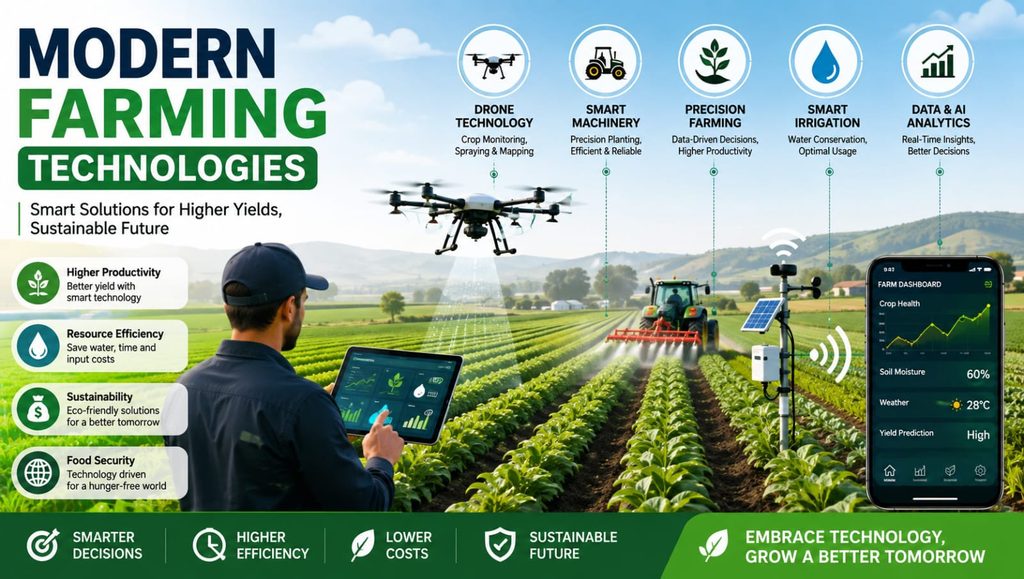
How to Accelerate Agricultural Innovation increasingly depends on adopting precision farming and precision agriculture technologies that improve efficiency and decision-making. Smart irrigation and automated irrigation help optimize water use, while agricultural drones, farm robotics, autonomous machinery, and GPS-guided machinery can reduce labor requirements and improve field operations. Variable-rate technology, soil sensors, crop sensors, satellite monitoring, and remote crop monitoring provide valuable information for managing crops and resources more precisely.
Advanced digital tools are also transforming farm management. Computer vision, AI-powered agriculture, and machine learning agriculture can support crop monitoring, disease detection, and yield analysis. Digital farm management and farm management software help farmers organize field activities and analyze agricultural data, while agricultural apps and digital marketplaces improve access to information, services, and markets. Blockchain in agriculture can also improve traceability and transparency across agricultural supply chains.
Agricultural Inputs & Production Innovation
How to Accelerate Agricultural Innovation involves improving the quality and efficiency of agricultural inputs and production practices. The use of improved seeds, improved crop varieties, drought-tolerant varieties, and disease-resistant crops can help farmers achieve better yields and greater resilience. Improved fertilizers, biological fertilizers, biofertilizers, and other sustainable inputs can improve nutrient availability while supporting more environmentally responsible farming. Modern crop protection and biological crop protection can also help reduce losses from pests and diseases.
Efficient resource management is equally important for sustainable production. Precision fertilizer application, efficient irrigation, and water-saving technologies help farmers use nutrients and water more effectively. Better soil management and soil health technologies can maintain soil fertility and improve long-term productivity, while improved crop management supports sustainable crop production. Combining these innovations can help farmers increase efficiency, reduce resource waste, and build more productive agricultural systems.
What is agricultural innovation?
Agricultural innovation involves developing and adopting new technologies, farming practices, research-based solutions, and business models to improve productivity, sustainability, and farmer livelihoods.
How can technology accelerate agricultural innovation?
Technologies such as precision agriculture, artificial intelligence, drones, sensors, smart irrigation, robotics, and digital farm management can improve decision-making, resource efficiency, and farm productivity.
Why is farmer participation important for agricultural innovation?
Farmer participation ensures that new technologies and farming solutions address real-world challenges, are practical to use, and provide meaningful benefits to farming communities.
How can agricultural innovation become more sustainable?
Innovation can support sustainability through efficient irrigation, improved seeds, soil health technologies, sustainable inputs, resource conservation, renewable technologies, and climate-smart farming practices.
How can governments support agricultural innovation?
Governments can support innovation through research funding, agricultural policies, infrastructure, farmer education, extension services, incentives, public-private partnerships, and supportive regulatory frameworks.




One Comment