

Urban Agriculture is the practice of growing crops and producing fresh food within cities, suburbs, and peri-urban areas. It includes urban farming, community gardens, rooftop gardens, vertical farming, hydroponics, aquaponics, and small-scale food production. These methods help people use limited urban spaces to grow vegetables, fruits, herbs, and other crops close to consumers.
With growing urban populations and increasing food demand, Urban Agriculture can support food security, healthy diets, local food systems, and sustainable city development. Modern techniques such as vertical farming and hydroponics can save land and water while creating new income opportunities and greener urban environments.
Urban Agriculture Basics
Urban agriculture refers to growing crops and producing food within cities and nearby areas. It includes urban farming, city farming, urban gardening, urban cultivation, urban horticulture, and other forms of urban food production carried out in spaces such as vacant plots, rooftops, balconies, gardens, and containers.
The broader concept of urban and peri-urban agriculture also includes peri-urban farming, metropolitan agriculture, city-based agriculture, and local food production around urban centers. These activities form urban agricultural systems that support urban food systems by bringing fresh food closer to consumers. When managed responsibly, sustainable urban agriculture can improve food access, support livelihoods, make better use of local resources, and contribute to more resilient cities.
All semantic terms used naturally: urban agriculture, urban farming, city farming, urban food production, urban cultivation, urban horticulture, urban gardening, metropolitan agriculture, sustainable urban agriculture, urban and peri-urban agriculture, peri-urban farming, city-based agriculture, local food production, urban agricultural systems, urban food systems.
Types of Urban Agriculture
Urban agriculture can take many forms depending on available space, resources, and production goals. Common types include community gardens, backyard gardens, school gardens, institutional farms, urban farms, market gardens, allotment gardens, and home gardens. Rooftop gardens and rooftop farming make use of unused building space, while balcony gardening and container farming allow people to grow food in very small areas.
Modern systems also include vertical farming, indoor farming, greenhouse farming, hydroponic farming, and aquaponic farming, which can produce crops efficiently where land or suitable soil is limited. Other forms include urban orchards for fruit production and urban livestock for raising suitable animals within city environments. Together, these approaches make urban agriculture adaptable to homes, communities, institutions, rooftops, and commercial growing spaces.
Urban Food Production & Supply
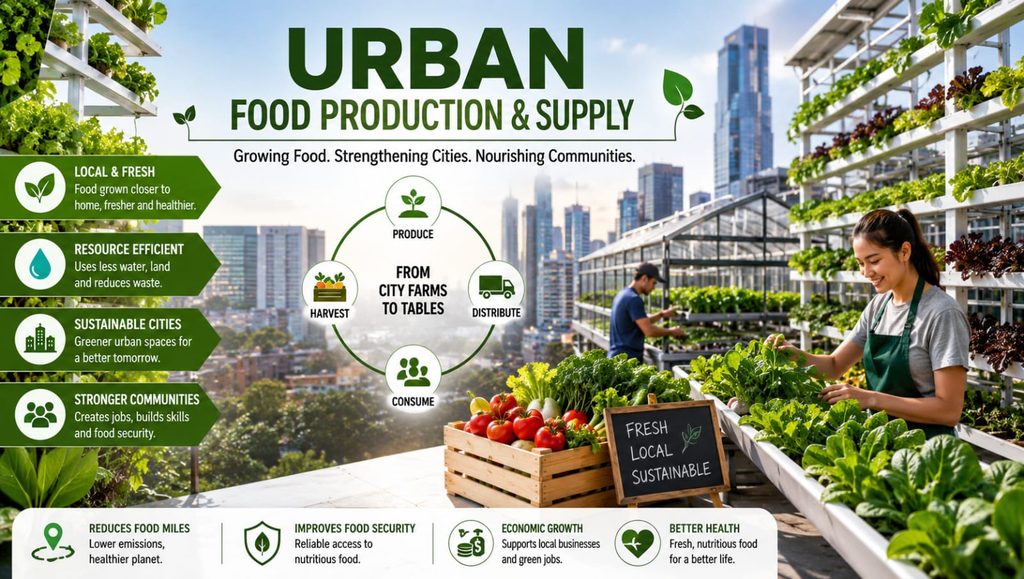
Urban agriculture plays an important role in food production and local food production by bringing fresh crops closer to city residents. Urban farms, community gardens, and other growing spaces can strengthen local food systems and improve food access, food availability, and food affordability. Producing food closer to consumers can also support a fresh food supply and make cities more resilient to disruptions in wider supply chains.
The journey from farms to consumers involves food distribution, food processing, food marketing, local markets, farmers markets, and community-supported agriculture. Together, these activities create urban food networks and connect producers with consumers through city-region food systems. Short food supply chains can reduce unnecessary transportation and food miles, while helping local producers reach nearby customers more directly. This approach can strengthen local economies and support a more sustainable urban food supply.
Food Security & Nutrition
Urban agriculture can support urban food security by making fresh and nutritious food more accessible within cities. Growing fresh fruits and vegetables in community gardens, home gardens, and urban farms can improve healthy food access and contribute to nutrition security. It can also strengthen household food security by providing families with affordable produce and reducing dependence on distant food sources.
Guideful Steps for Improving Food Security & Nutrition
- Identify local needs: Find areas affected by food insecurity, food deserts, or limited access to fresh food.
- Grow nutritious crops: Focus on nutritious food, especially fresh fruits and vegetables that support healthy diets and better urban nutrition.
- Support vulnerable communities: Prioritize low-income households and other vulnerable communities when developing community gardens and local growing projects.
- Improve local food access: Connect urban farms with neighborhoods through community food systems and local distribution.
- Keep food affordable: Use efficient growing methods to provide affordable food and help families access healthier choices.
see more:Urban Agriculture
Sustainable Urban Farming
Urban agriculture can support sustainable farming by using environmentally responsible methods that conserve water, protect soil, reduce waste, and use available urban resources efficiently. Sustainable agriculture, ecological farming, agroecology, and environmentally friendly farming can help urban growers produce food while reducing pressure on natural resources.
Practices such as resource-efficient agriculture, regenerative agriculture, organic farming, low-input farming, and climate-smart agriculture can improve the long-term sustainability of urban farms. These approaches contribute to sustainable food systems and resilient agriculture by encouraging efficient resource use, healthier growing environments, and reliable local food production.
Urban Agriculture Technologies
Modern Urban Agriculture uses advanced technologies to grow food efficiently in limited spaces. Hydroponics, aquaponics, vertical farming, and soilless cultivation allow crops to grow with less land, while controlled environment agriculture and indoor farming provide better control over temperature, humidity, light, and nutrients.
| Technology | Main Benefit |
|---|---|
| Hydroponics | Uses nutrient solutions without soil |
| Aquaponics | Combines fish farming with plant production |
| Vertical Farming | Maximizes production in limited space |
| Controlled Environment Agriculture | Controls growing conditions |
| Smart Farming | Uses digital tools for efficient management |
| Precision Agriculture | Improves accurate use of water and nutrients |
| Automated Farming | Reduces manual farming tasks |
| LED Grow Lights | Provides efficient artificial lighting |
| Climate-Controlled Systems | Manages temperature and humidity |
| Sensor-Based Farming | Monitors crop and environmental conditions |
Together, these urban farming technology solutions can improve productivity, resource efficiency, and year-round food production in cities.
Land, Water & Resource Management
Effective resource management is essential for successful Urban Agriculture, especially where cities have limited space and water. Proper urban land use can turn vacant lots, underutilized land, and rooftop space into productive growing areas while supporting agricultural land preservation. Considering land availability and establishing secure land tenure can also help urban farmers maintain their growing spaces for the long term.
Water should be managed carefully through efficient water management practices. Urban irrigation, rainwater harvesting, and water conservation can reduce unnecessary water use and support reliable crop production. Combining efficient land and water practices helps urban farms use limited resources responsibly while contributing to sustainable local food production.
Environmental Benefits
Urban Agriculture can provide important environmental benefits by transforming unused urban areas into productive green spaces and strengthening green infrastructure. Urban farms and gardens can support urban biodiversity by providing habitats for plants, insects, birds, and other organisms. They can also contribute to ecosystem services such as improved soil health, water management, and natural cooling.
Urban vegetation can support air quality improvement and urban cooling by reducing heat and increasing plant cover. These benefits can contribute to heat reduction, climate change mitigation, and climate adaptation in growing cities. Sustainable urban farming practices can also support environmental sustainability and carbon reduction by reducing resource use and encouraging more local food production.
see more:Urban Agriculture
Economic & Social Benefits
Urban Agriculture can create valuable economic opportunities by supporting employment generation, income generation, entrepreneurship, and livelihood opportunities. Urban farms can provide work for local residents while helping small producers and local businesses earn income through direct sales and farmers markets. These activities can contribute to local economic development, poverty reduction, and stronger urban livelihoods.
Beyond financial benefits, urban farming can encourage community development, social inclusion, community engagement, and social cohesion. Shared gardens and local farming projects bring residents together, encourage cooperation, and create opportunities for people from different backgrounds to work toward common goals. This makes Urban Agriculture not only a source of food and income but also a practical tool for building stronger urban communities.
Urban Planning & Policy
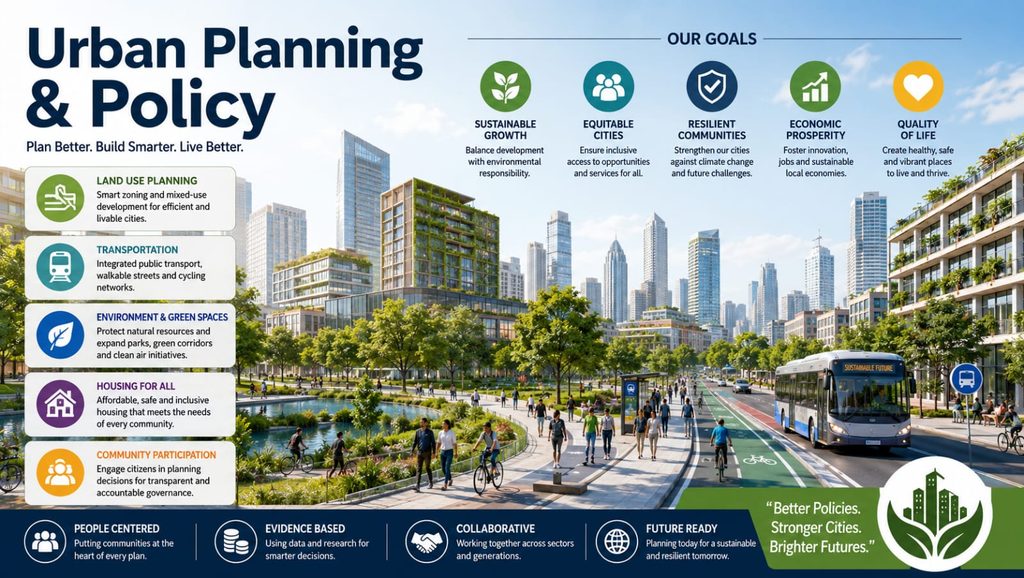
Effective urban planning is important for integrating Urban Agriculture into growing cities. City planning, land-use planning, food system planning, and city-region planning can identify suitable spaces for urban farms, gardens, and other food production activities. Clear planning regulations and land-use regulations can help provide secure and appropriate areas for agriculture while supporting wider public policy goals.
Strong food policy, urban food policy, agricultural policy, and effective urban governance can encourage long-term development of urban farming. Local government, city authorities, and other institutions can provide institutional support through policy development and practical programs. Stakeholder participation and multistakeholder governance can also bring farmers, communities, businesses, planners, and policymakers together to create more inclusive and effective urban food systems.
Community & Educational Agriculture
Urban Agriculture can bring people together through community farming, community gardens, and neighborhood gardens. These spaces encourage community participation by allowing residents to grow food, share knowledge, and work together on local food projects. Community-based farming can also strengthen social connections and encourage healthier, more sustainable urban lifestyles.
School agriculture and educational gardens provide practical learning opportunities for students by teaching them about crops, soil, water, nutrition, and sustainable farming. Through urban farming education, schools and communities can develop valuable agricultural skills while helping young people understand where food comes from and why local food production matters.
What is Urban Agriculture?
Urban Agriculture is the practice of growing crops and producing food within cities and nearby urban areas using spaces such as gardens, rooftops, balconies, and urban farms.
What are the main types of Urban Agriculture?
Common types include community gardens, rooftop farming, vertical farming, hydroponics, aquaponics, backyard gardens, greenhouse farming, and indoor farming.
How does Urban Agriculture improve food security?
Urban Agriculture brings fresh fruits and vegetables closer to consumers, improves local food access, and can support affordable and nutritious food for urban communities.
What are the environmental benefits of Urban Agriculture?
Urban Agriculture can create green spaces, support biodiversity, improve air quality, reduce urban heat, conserve water and other resources, and help cities adapt to climate change while supporting environmental sustainability.
Can Urban Agriculture provide economic benefits?
Yes. Urban Agriculture can create employment and income opportunities, support entrepreneurship and local businesses, and contribute to local economic development and community livelihoods.




One Comment