

Increase Farm Production is one of the main goals of modern farming because it helps farmers obtain more useful produce from available land. Improving production requires better soil management, efficient water use, suitable crops, proper nutrition, and effective farm practices.
Increase Farm Production can become easier when farmers combine traditional knowledge with modern agricultural methods. The following proven approaches can help farmers use land, water, nutrients, and other agricultural resources more efficiently.
Crop Yield Definition and Measurement
Increase Farm Production refers to improving the amount of useful agricultural produce obtained from a specific area of farmland. Production is commonly measured through yield per hectare or yield per acre, depending on the farming region and production system.
Farmers can use Increase Farm Production as a goal when comparing production between fields, seasons, crop varieties, and farming practices. Yield statistics can help identify whether changes in farm management are improving overall productivity.
Actual yield represents the production achieved under real field conditions, while potential yield represents the maximum production possible under ideal conditions. The difference between these values is often called the yield gap.
Factors Affecting Crop Yield
Increase Farm Production depends on climate conditions, soil quality, water availability, crop genetics, and farming practices. Temperature, rainfall, sunlight, and the length of the growing season can strongly influence crop growth and development.
Farm management also supports Increase Farm Production through proper planting dates, suitable spacing, timely irrigation, weed control, and appropriate agricultural inputs. These practices can create better conditions for healthy crop growth.
Environmental and biological factors can limit production. Drought, heat stress, pests, diseases, poor soil conditions, and nutrient deficiencies may reduce farm output when they are not managed properly.
Soil Health and Crop Productivity
Increase Farm Production depends heavily on healthy and fertile soil because plants need adequate nutrients, moisture, oxygen, and physical support. Good soil structure also allows roots to spread and absorb essential resources efficiently.
Increasing soil organic matter can support Increase Farm Production by improving water retention, nutrient cycling, and microbial activity. Compost, green manure, cover crops, and other organic amendments can contribute to long-term soil fertility.
Farmers can support Increase Farm Production by reducing soil erosion and compaction. Conservation tillage, reduced tillage, and no-till farming can help maintain soil structure and support sustainable crop production.
Water Management and Irrigation
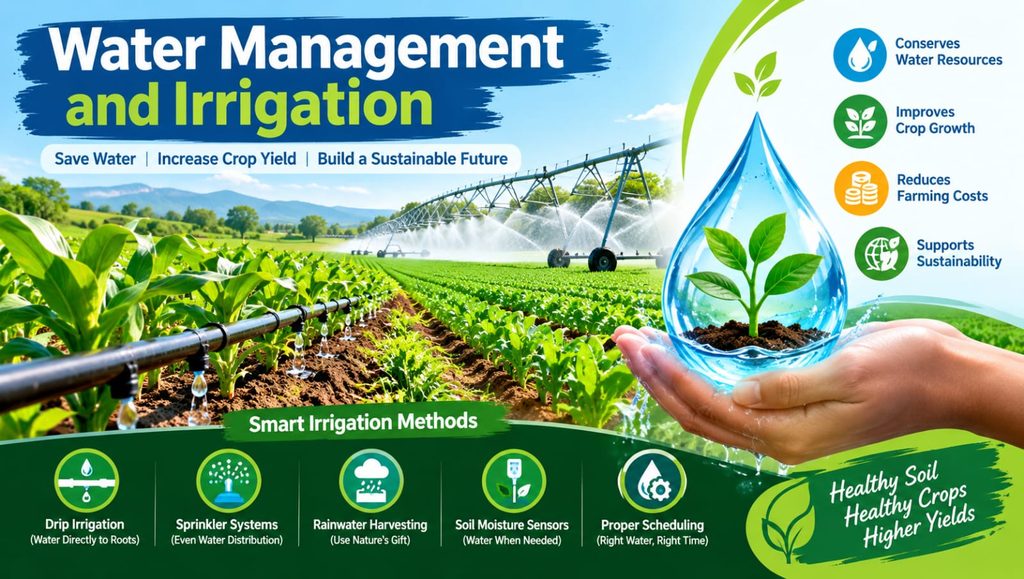
Increase Farm Production can be difficult when crops experience water stress during important growth stages. Efficient irrigation management ensures that plants receive enough water without unnecessary losses through evaporation, runoff, or deep drainage.
Drip irrigation can support Increase Farm Production by delivering water closer to plant roots. This approach can also improve water use efficiency, particularly in areas where water scarcity and drought conditions are major concerns.
Farmers can support Increase Farm Production through rainwater harvesting, proper irrigation scheduling, soil moisture monitoring, and better management of available groundwater. Understanding crop water requirements helps prevent both under-irrigation and over-irrigation.
Crop Nutrition and Fertilization
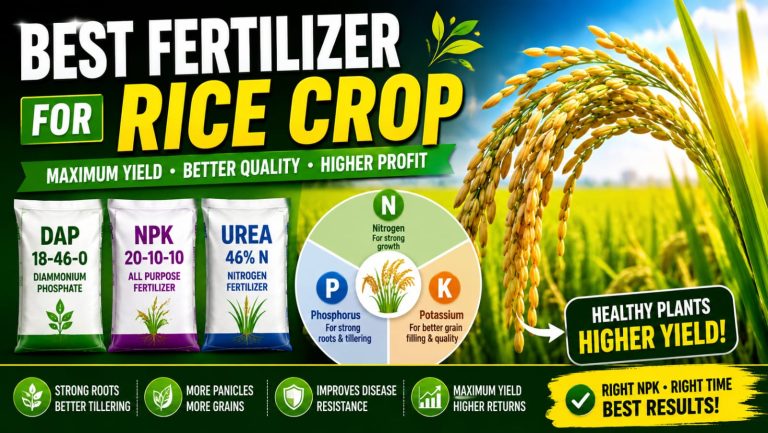
Increase Farm Production requires balanced crop nutrition because plants need macronutrients and micronutrients throughout their growth cycle. Nitrogen, phosphorus, and potassium are particularly important for healthy development and productive harvests.
Farmers can achieve Increase Farm Production by applying fertilizers according to soil nutrient status and crop requirements. Soil testing can help identify nutrient deficiencies and prevent unnecessary fertilizer applications.
Balanced fertilization can support Increase Farm Production while improving fertilizer efficiency. Foliar nutrients may also be useful in certain situations, especially when plants require rapid correction of specific micronutrient deficiencies.
Pests, Diseases, and Yield Loss
Increase Farm Production can be affected by insects, weeds, plant diseases, and other agricultural pests. Pest pressure may increase rapidly when crops are grown continuously without effective crop protection strategies.
Integrated pest management can help Increase Farm Production by combining monitoring, biological control, cultural practices, mechanical methods, and carefully selected pesticides when necessary.
Weed competition can prevent Increase Farm Production because weeds compete with crops for water, nutrients, sunlight, and growing space. Timely weed control can protect crop development and reduce production losses.
Sustainable Farming and Yield Improvement
Increase Farm Production can be achieved through sustainable farming methods that protect natural resources while maintaining productive agricultural systems. Crop rotation is one useful practice because it can improve soil health and disrupt certain pest and disease cycles.
Intercropping and crop diversity can support Increase Farm Production by making better use of available land and resources. Different crops may occupy different root zones or mature at different times, creating more efficient production systems.
Precision agriculture and conservation agriculture can further support Increase Farm Production by helping farmers apply resources more accurately. Efficient resource management can reduce waste while supporting long-term farm productivity.
Crop Genetics and Plant Growth
Increase Farm Production is strongly influenced by crop genetics and the characteristics of the selected variety. High-yielding varieties may offer better production potential when they are well adapted to local soil and climate conditions.
Plant breeding can support Increase Farm Production by developing varieties with stronger disease resistance, drought tolerance, improved plant vigour, and better reproductive performance.
Healthy root growth, canopy development, photosynthesis, flowering, fruit set, and grain filling all contribute to Increase Farm Production. Strong plant development allows crops to capture sunlight and utilize water and nutrients more effectively.
Climate and Environmental Stress
Increase Farm Production can be negatively affected by climate change, changing weather patterns, extreme temperatures, drought, flooding, and precipitation variability. These environmental pressures can interfere with important stages of crop development.
Climate-smart agriculture can protect Increase Farm Production by combining improved varieties, efficient water management, better soil practices, and appropriate planting strategies.
Farmers can support Increase Farm Production by choosing stress-tolerant crop varieties. Drought resistance, heat tolerance, and improved adaptation can be especially valuable in regions facing frequent environmental stress.
Precision Agriculture and Technology
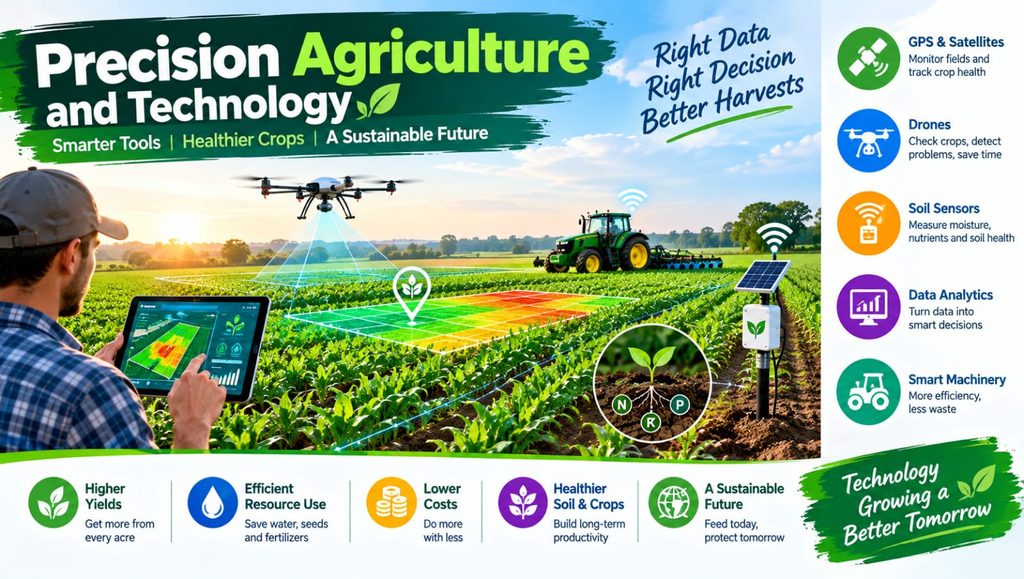
Increase Farm Production can benefit from precision agriculture technologies that help farmers understand field-level differences. Remote sensing, satellite imagery, crop monitoring, and digital agriculture tools can provide useful information about crop conditions.
Yield monitoring can support Increase Farm Production by identifying areas with higher or lower production. Farmers can use this information to investigate differences in soil fertility, irrigation, pest pressure, or crop development.
Modern technologies can also support Increase Farm Production forecasting through vegetation indices such as NDVI and EVI. Satellite data and field observations can help farmers make better decisions during the growing season.
Crop Yield Forecasting and Data Analysis
Increase Farm Production can be supported by forecasting agricultural output using crop monitoring, weather information, and predictive models. Accurate forecasting can help farmers plan harvesting, storage, transportation, and marketing activities.
Machine learning and regression models can help Increase Farm Production when they are trained with reliable crop-specific data. Satellite imagery and seasonal weather information can also provide valuable inputs for forecasting systems.
In-season forecasting can support Increase Farm Production by helping farmers identify possible production problems before harvest. Monitoring spatial and temporal variability can reveal areas where production may be lower than expected.
See more:Increase Farm Production
Yield Potential and Yield Gap
Increase Farm Production can often be achieved by reducing the difference between actual yield and attainable or potential yield. This difference is known as the yield gap and may result from limitations in water, nutrients, pests, diseases, soil, climate, or farm management.
Yield gap analysis helps farmers identify the main constraints affecting Increase Farm Production. For example, a field may have good soil but poor irrigation, while another field may have sufficient water but inadequate nutrients.
Reducing these limitations can support Increase Farm Production without necessarily expanding farmland. Better management of existing agricultural land can contribute to higher productivity and more efficient food production.
Crop Quality and Marketable Production
Increase Farm Production is not only about the quantity harvested; crop quality also affects the economic value of agricultural production. Farmers need to consider fruit size, grain quality, uniformity, appearance, and market requirements.
Improving Increase Farm Production while maintaining quality can increase marketable production and farm profitability. Proper harvesting, storage, handling, and transportation can help protect produce after it leaves the field.
Farmers should therefore focus on both productivity and quality. A high harvest may have limited economic value if a large portion is damaged, poorly graded, or unsuitable for the target market.
Frequently Asked Questions
1. What is Crop Yield?
Increase Farm Production is closely connected with the amount of agricultural produce harvested from a specific area of farmland. Production is commonly expressed as output per hectare or per acre.
2. What is the most important factor affecting Crop Yield?
Increase Farm Production is influenced by several factors, including soil fertility, water availability, climate conditions, crop genetics, nutrients, pests, diseases, and farm management.
3. How can farmers increase Crop Yield naturally?
Farmers can achieve Increase Farm Production naturally through compost, crop rotation, cover crops, organic amendments, beneficial microorganisms, improved soil management, and integrated pest management.
4. Does irrigation increase Crop Yield?
Proper irrigation can help Increase Farm Production when water availability is a limiting factor. Efficient irrigation provides crops with suitable moisture while reducing unnecessary water losses.
5. Can technology improve Crop Yield?
Yes, technology can help Increase Farm Production through precision agriculture, satellite imagery, remote sensing, yield monitoring, crop models, and predictive analytics.




One Comment