
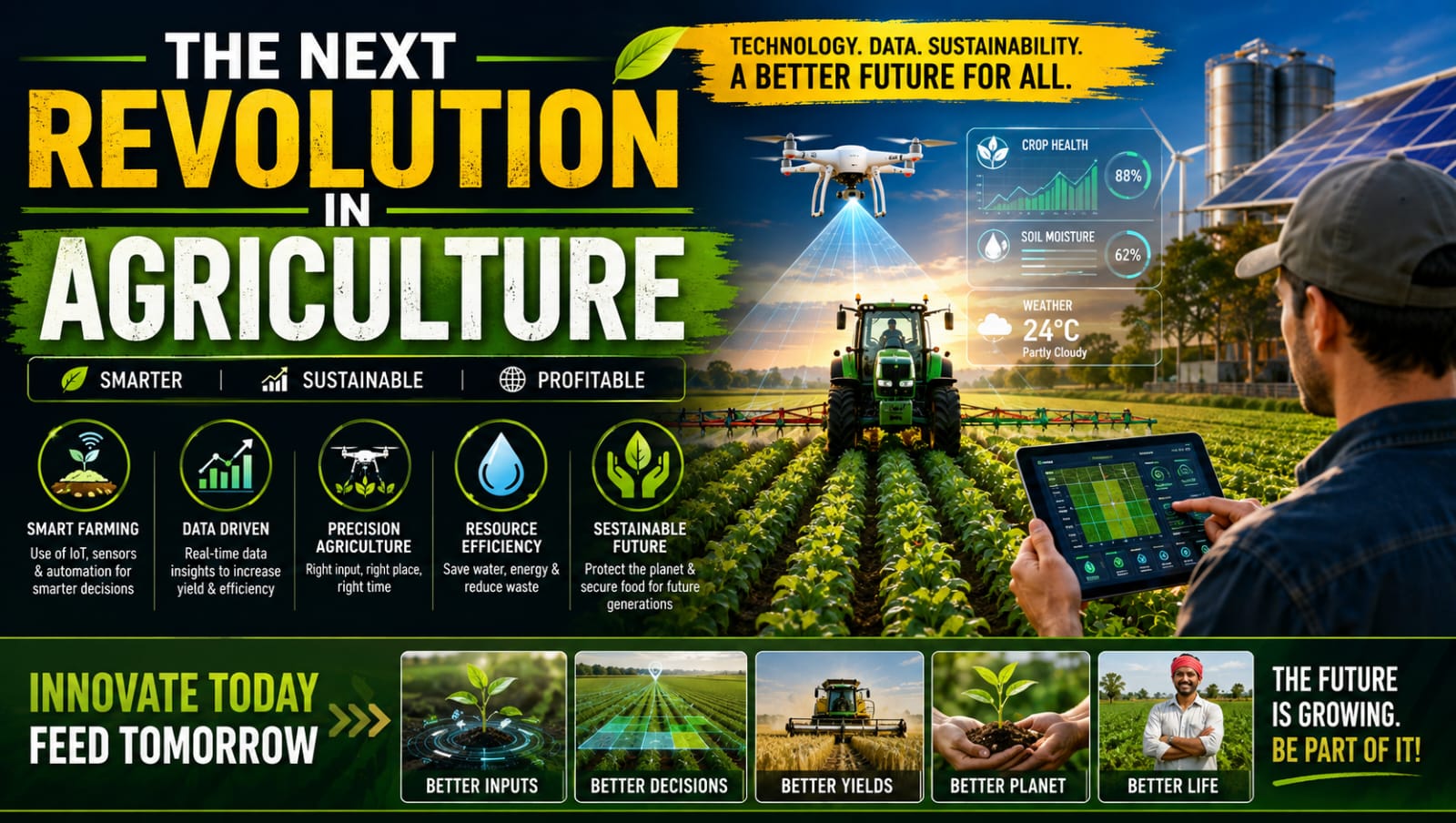
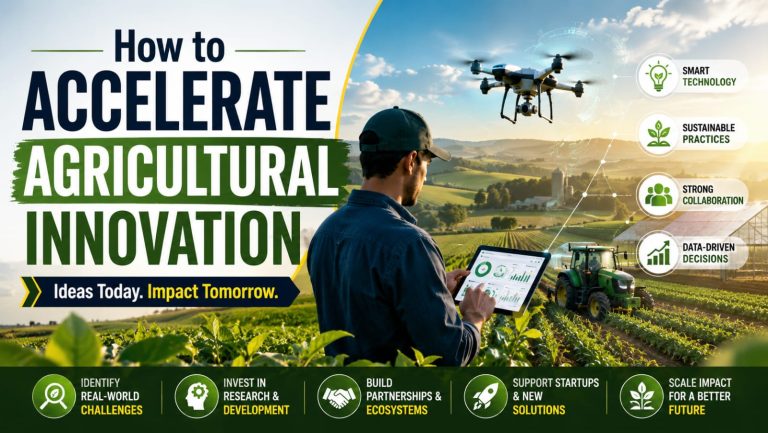
The Next Revolution in Agriculture is transforming traditional farming through technology, innovation, sustainability, and data-driven farming. Modern farmers are increasingly using precision agriculture, artificial intelligence (AI), IoT sensors, drones, robotics, automation, and data analytics to monitor crops, improve productivity, and make smarter farming decisions. These technologies help farmers use water, fertilizers, pesticides, and energy more efficiently while reducing costs.
At the same time, agriculture must address climate change, water scarcity, soil degradation, rising input costs, and growing food demand. The future of farming will combine smart technologies with regenerative agriculture, climate-smart practices, crop diversification, soil health management, and resource conservation to create a more productive, resilient, and sustainable agricultural system for future generations.
Agricultural Revolution & Future of Farming
The Next Revolution in Agriculture is bringing a major agricultural revolution through technology, science, and sustainable practices. The next agriculture revolution and next agricultural revolution will combine modern agriculture with agriculture innovation, agricultural innovation, and farming innovation to improve productivity and resource efficiency. These developments are driving agricultural transformation and farming transformation while supporting better modern farming systems and long-term agricultural development.
The future of agriculture and future of farming will focus on increasing food production while protecting natural resources across global agriculture. Sustainable agriculture, smart farming, future farming technologies, and agricultural breakthroughs can support greater agricultural progress and help farmers respond to climate change, resource shortages, and rising food demand. Together, these innovations are creating a more productive, resilient, and sustainable future for farming.
AI, Data & Digital Agriculture
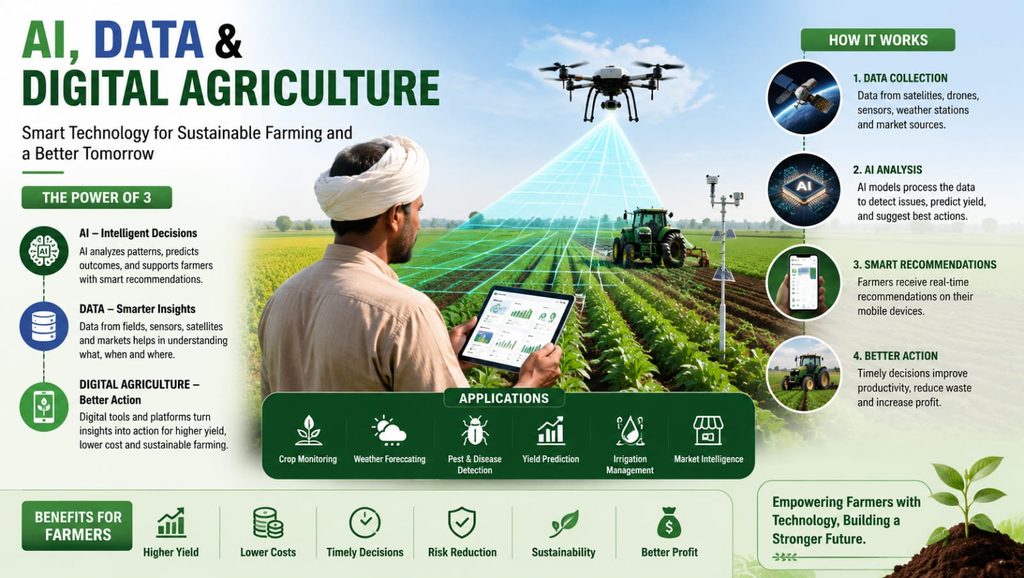
The Next Revolution in Agriculture is being accelerated by artificial intelligence in agriculture, AI in agriculture, and agricultural AI. AI-powered agriculture helps farmers analyze large amounts of farm data and agricultural data to improve crop monitoring, irrigation, pest management, and yield planning. Through data-driven agriculture and data-driven farming, farmers can use farm analytics, predictive analytics, and data visualization to identify problems earlier and make more accurate decisions.
Digital agriculture and digital farming are also driving digital transformation across modern farms. Technologies such as farm management software, digital tools, and decision-support systems can help farmers manage crops, resources, equipment, and field activities from a single platform. By combining AI, reliable data, and connected digital technologies, farmers can improve efficiency, reduce resource waste, and build smarter and more sustainable farming operations.
Better Decisions & Precision Farming
The Next Revolution in Agriculture is helping farmers make better farming decisions through data-driven decisions and improved decision making in agriculture. Precision agriculture and precision farming use precision farming technology, site-specific farming, field-level data, farm intelligence, and field intelligence to understand changing conditions across different areas of a farm. With real-time decision making, farmers can make informed decisions about irrigation, fertilization, planting, and crop protection while using predictive insights for predictive decision making.
Advanced crop monitoring and field monitoring provide greater farm visibility, supporting accurate farm planning and crop production planning. These technologies improve resource optimization and input optimization by helping farmers apply the right resources at the right place and time. As a result, farms can improve farm profitability, operational efficiency, and risk management while adopting evidence-based farming practices that support productive and sustainable agriculture.
Healthy Soil & Regenerative Agriculture
The Next Revolution in Agriculture is placing greater importance on healthy soil and soil health as the foundation of productive farming. Strong soil fertility, soil regeneration, and regenerative agriculture can improve soil quality while supporting regenerative farming systems. Practices such as soil conservation, conservation practices, and sustainable soil management help protect soil organic matter, soil biodiversity, and biological soil health. Maintaining healthy soils also supports better water retention, nutrient cycling, and stronger crops.
Regenerative approaches can increase soil carbon through carbon sequestration, helping create carbon-rich soil while contributing to wider ecosystem health. Along with land restoration and farmland restoration, these practices can strengthen soil resilience and support long-term agricultural productivity. By adopting sustainable land management, farmers can protect natural resources, improve degraded farmland, and build agricultural systems that remain productive and resilient for future generations.
Climate, Sustainability & Resilience
The Next Revolution in Agriculture is increasingly focused on climate-smart agriculture and building climate resilience as farmers face the growing impacts of climate change. Through effective climate adaptation and sustainable farming practices, farmers can improve environmental sustainability and strengthen agricultural sustainability. Resilient agriculture and resilient farming systems can support reliable sustainable food production by using climate-resilient crops, efficient farming methods, and better resource management.
Modern agriculture also requires strong resource conservation and environmental protection to preserve valuable natural resources. Sustainable land use and sustainable water management can reduce pressure on farmland and water supplies while supporting ecosystem resilience. Approaches such as low-input agriculture and climate-smart farming help farmers reduce unnecessary resource use, while environmental stewardship encourages long-term protection of soil, water, biodiversity, and agricultural ecosystems.
see more:The Next Revolution in Agriculture
Water, Inputs & Resource Efficiency
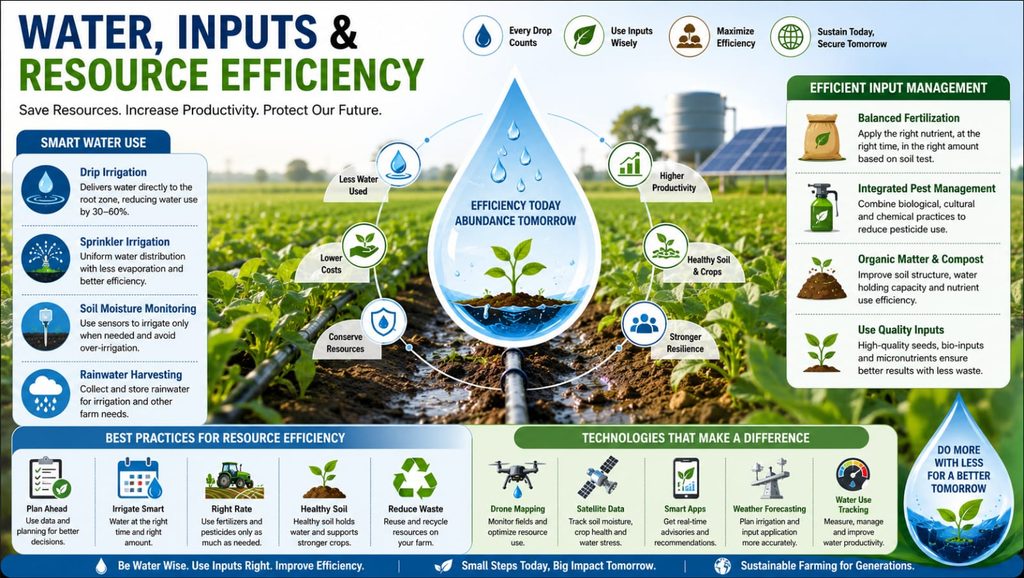
The Next Revolution in Agriculture is helping farmers improve water efficiency, water conservation, and agricultural water use through smarter technologies and better management practices. Follow these practical steps to improve resource efficiency:
- Improve irrigation management: Use smart irrigation and efficient irrigation systems such as drip irrigation to deliver water directly where crops need it.
- Monitor soil moisture: Check soil moisture regularly to avoid unnecessary watering and improve water management, especially in areas affected by water scarcity.
- Improve input efficiency: Apply the right amount of fertilizer based on crop and soil needs to increase fertilizer efficiency and strengthen nutrient management.
- Use crop protection wisely: Follow responsible input use and adopt integrated crop protection methods to minimize unnecessary chemical applications.
- Optimize farm resources: Use optimized inputs and focus on resource optimization to achieve greater input efficiency with reduced inputs.
- Focus on producing more with less: Combine technology, careful planning, and sustainable resource use to increase productivity while reducing waste and protecting natural resources.
These practices can help farmers achieve better resource efficiency, lower operating costs, conserve water, and build more sustainable farming systems.
Crop Production & Food Security
The Next Revolution in Agriculture is reshaping crop production by using advanced technologies and sustainable practices to improve crop yields and agricultural productivity. Farmers can achieve yield improvement through better crop management, while crop yield prediction helps estimate production and plan resources more effectively. As the growing population increases global food demand, improving agricultural productivity growth is essential for maintaining reliable food production and strengthening food security.
| Area | Modern Approach | Key Benefit |
|---|---|---|
| Crop production | Precision farming and smart technologies | Higher agricultural output |
| Crop performance | Data-based monitoring | Better farm productivity |
| Yield management | Crop yield prediction and yield optimization | Improved sustainable yields |
| Farm production | Efficient use of inputs and resources | More efficient farm production |
| Food supply | Sustainable and resilient farming | Stronger food supply |
| Future farming | Technology and sustainable practices | Better future food production |
| Food security | Productive and adaptable agriculture | More resilient food systems |
By combining technology, efficient resource use, and sustainable farming methods, agriculture can increase crop performance, support yield optimization, and maintain productive farms. This approach can help meet future food needs while making the agricultural system more resilient to climate, resource, and economic challenges.
see more:The Next Revolution in Agriculture
Precision Technology & Farm Monitoring
The Next Revolution in Agriculture is making farm management more accurate through precision technology and advanced monitoring systems. Farm sensors, agricultural sensors, and soil sensors can collect information about soil moisture, temperature, nutrients, and crop conditions, while weather sensors and weather models help farmers understand changing weather patterns. Field monitoring systems, remote monitoring, and real-time monitoring give farmers a clearer view of field conditions, allowing them to identify crop stress and make timely decisions.
Modern precision agriculture tools also include satellite imagery, drones in agriculture, GPS technology, smart machinery, and connected farm equipment. These technologies support digital field mapping and detailed farm monitoring, while agricultural automation can reduce manual work and improve operational efficiency. As autonomous farming develops, robotics in agriculture can perform tasks such as crop inspection, weed detection, planting, and harvesting with greater precision. Together, these technologies are creating smarter, more connected, and efficient farming systems.
Farm Profitability & Business Efficiency
The Next Revolution in Agriculture can improve farm profitability by helping farmers adopt profitable farming strategies based on better farm economics and accurate information. Modern agricultural business management uses technology to improve farm management and farm financial management, while effective cost management helps control input costs and production costs. By tracking resources, yields, and expenses, farmers can better understand their return on investment and calculate farm ROI.
Better data and automation can increase economic efficiency, operational efficiency, and productivity, supporting continuous profitability improvement. Farmers can evaluate the risk and reward of different decisions by monitoring farm performance and improving farm decision-making. Accurate farm planning can also support predictable farming, helping agricultural businesses manage changing market and production conditions while strengthening long-term business sustainability.
Sustainable Farming Practices
The Next Revolution in Agriculture is encouraging farmers to adopt sustainable methods that protect natural resources while maintaining productive farms. Conservation agriculture focuses on soil conservation, reduced tillage, and no-till farming, while regenerative farming helps improve soil structure and long-term soil health. Practices such as crop diversification, crop rotation, and cover crops can increase biodiversity, improve nutrient cycling, and support healthier agricultural ecosystems.
Farmers can also use integrated pest management to control pests while reducing unnecessary chemical use, alongside effective nutrient management and organic matter management to maintain productive soils. These approaches support sustainable crop production, natural farming systems, resource conservation, and ecological farming. By combining modern knowledge with responsible land stewardship, farmers can protect ecosystem services, reduce environmental pressure, and build resilient farming systems for the future.
What is the next revolution in agriculture?
The next revolution in agriculture is the transformation of farming through AI, precision agriculture, automation, smart farming, data analytics, and sustainable farming practices to improve productivity and resource efficiency.
How will technology change the future of farming?
Technology will help farmers make better decisions using farm sensors, drones, satellite imagery, artificial intelligence, robotics, and real-time data. These tools can improve crop monitoring, irrigation, pest management, and farm productivity.
Why is sustainable agriculture important for the future?
Sustainable agriculture helps protect soil, water, biodiversity, and other natural resources while maintaining food production. It can also improve long-term farm resilience and profitability.
How can AI help farmers?
AI in agriculture can analyze farm and weather data, predict crop yields, identify crop diseases, monitor field conditions, and support better decisions about irrigation, fertilizers, and crop protection.
Can the next agricultural revolution improve food security?
Yes. By combining precision farming, sustainable agriculture, improved crop production, and resource-efficient technologies, farmers can potentially produce more food while using fewer resources and building more resilient food systems.




One Comment